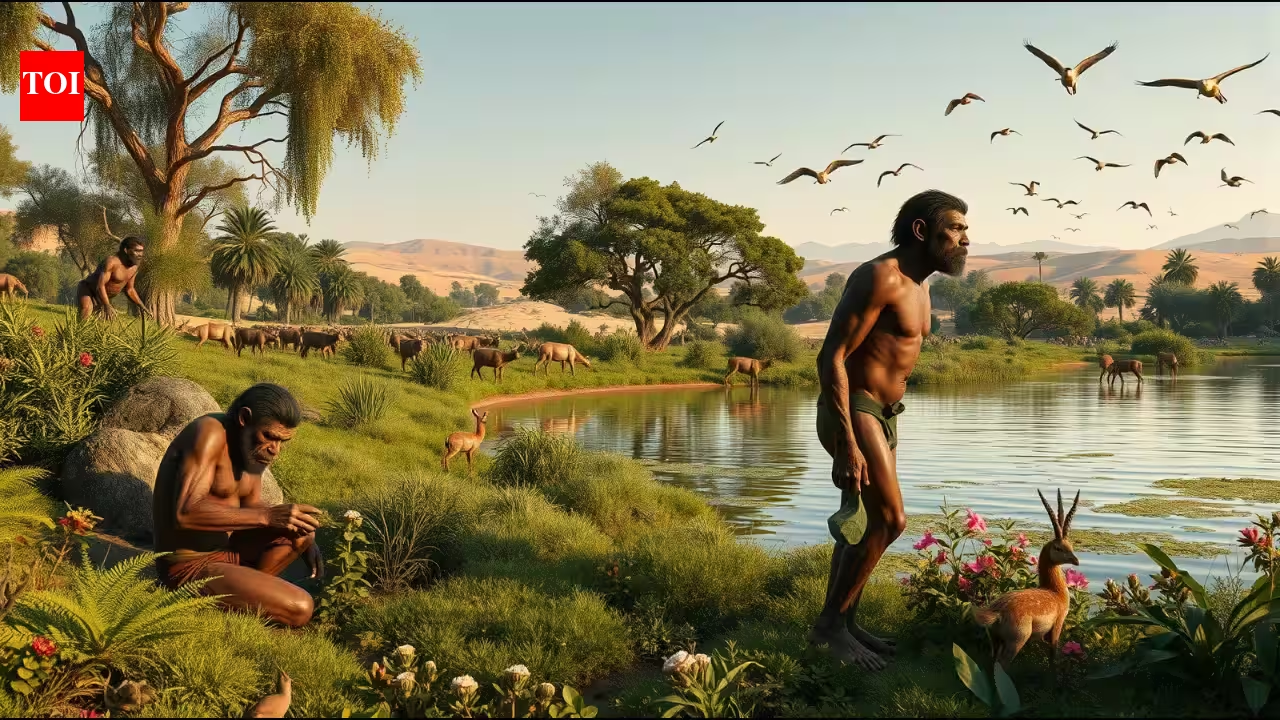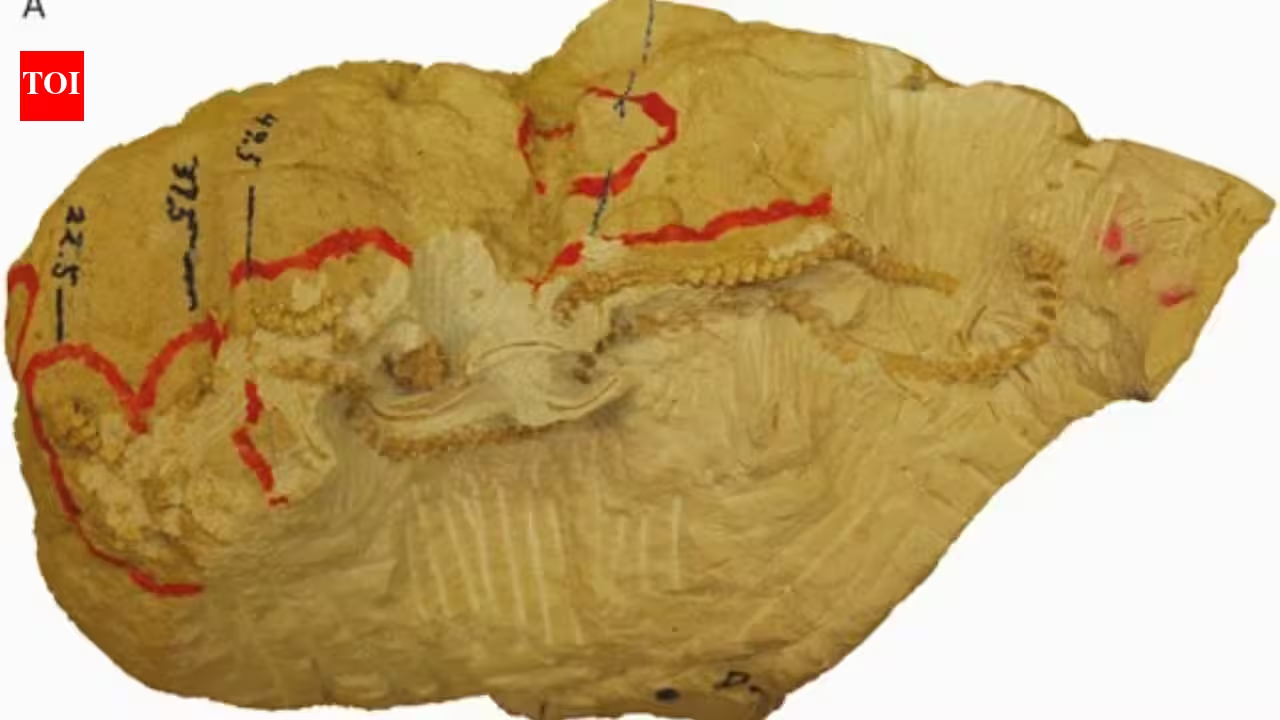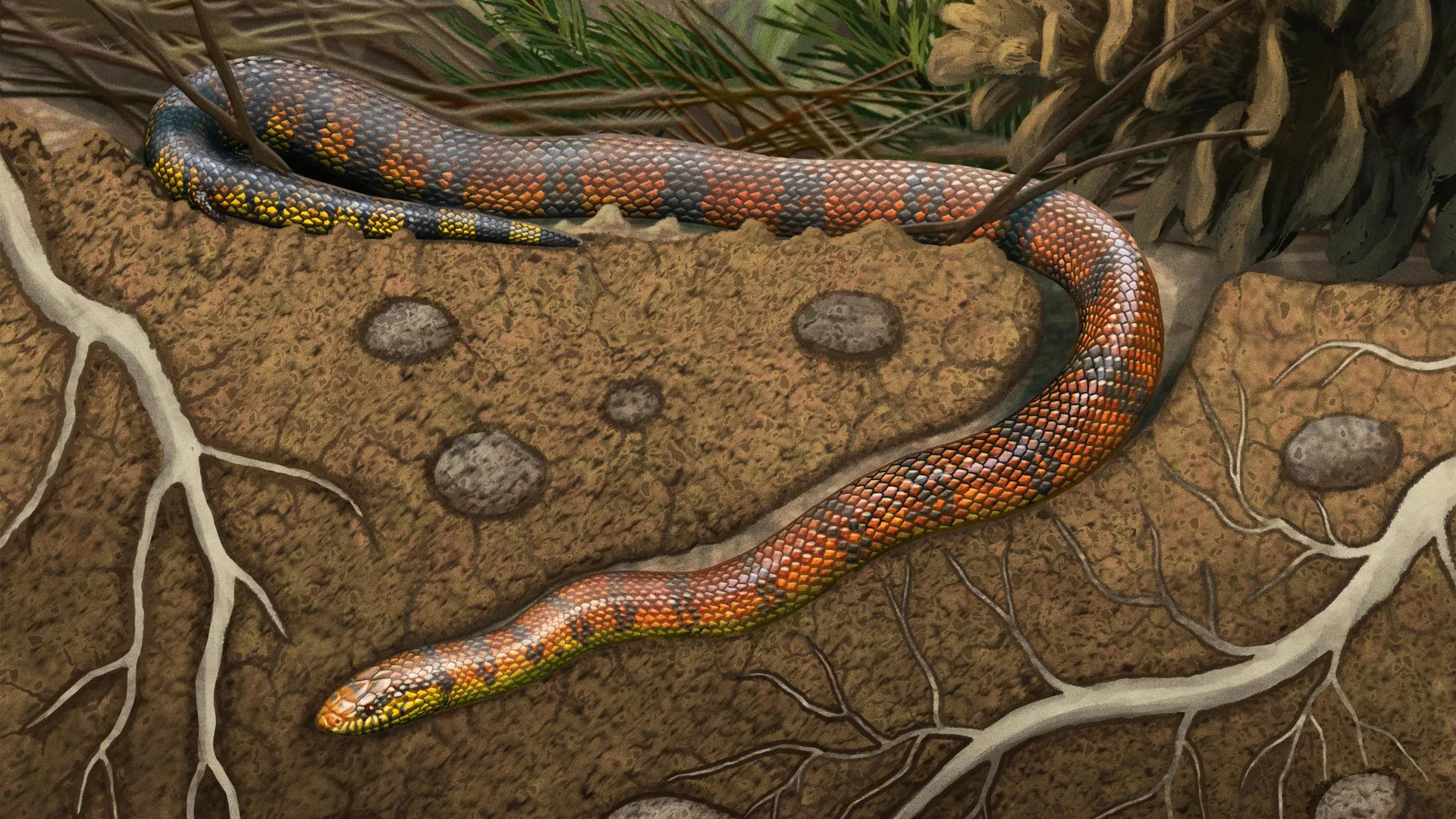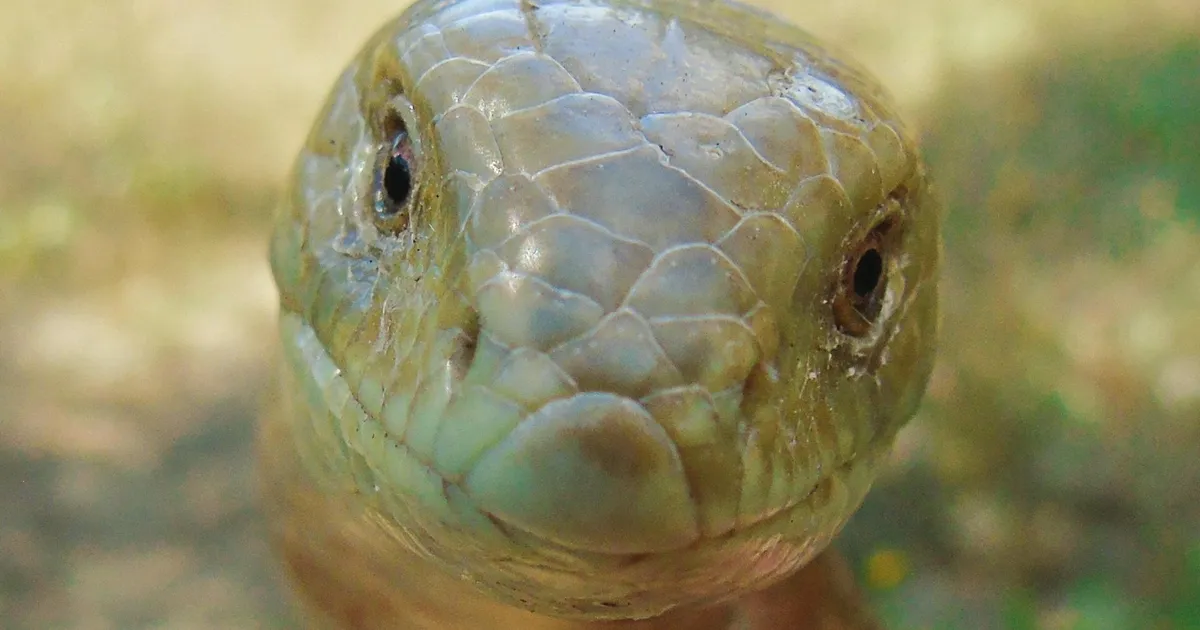
Lizards and snakes comprised almost a third of the Natufian diet in northern Israel 15,000 years ago, but that doesn't mean eating them was a choiceThe snake slithered frantically into the underbrush, but it was too slow. It had been spotted and its fate was sealed. It had become a statistic. Marks of stone tools on bones of reptiles unearthed at the el-Wad Cave on Israel's Mount Carmel show that the hunter-gatherer Natufians living there 12,000 to 15,000 years ago routinely ate snakes and legless lizards. This was the conclusion in a paper published last week in PNAS by University of Haifa researchers Ma'ayan Lev, Mina Weinstein-Evron and Reuven Yeshurun. The question underlying the research had been the degree prehistoric peoples exploited such squamates for food. Reptile and tortoise remains have been identified in various archaeological circumstances, but the scale of the phenomenon was unclear. Latter-day hunter-gatherer societies consume reptiles in desert climes and the American and Asian tropics. It's a bit niche, but in Florida, people hunt down and eat invasive Burmese pythons, though experts warn that one may want to analyze the dearly departed for heavy metal contamination before chowing down.El-Wad Cave in the Nahal Me'arot Nature Reserve. Credit: Reuven YeshurunEl-Wad Cave in the Nahal Me'arot Nature Reserve. Credit: Reuven YeshurunIn other words, reptile is routinely eaten among peoples who are either crazed by TikTok or whose choices are severely constrained. Snake reportedly tastes like chicken, but where modern people have their druthers, they don't go there. But how did ancient peoples in eras before animal husbandry view the scaly set?Similarly to today: somewhat askance, perhaps. The evidence suggests that snakes and the like were not a favored food, not for the Natufians nor for anybody else. The degree of reptile consumption seems to depend on what else the people could catch. But the Natufians' reptile consumption was significant, almost a third of their animal intake in the Early Natufian stage at el-Wad. In fact, squamate on the plate may exhibit not only their dietary flexibility. It may have even contributed to their settling down, the researchers suggest. How is that? Butchery marks on snake vertebrae at a Natufian settlement at el-Wad Cave. Credit: Ma'ayan LevButchery marks on snake vertebrae at a Natufian settlement at el-Wad Cave. Credit: Ma'ayan LevSee snakes, can settle The Natufian culture in the Levant predated agriculture. These hunter-gatherers broke the paradigm that farming must have emerged before permanent settlement. Evidently, it didn't. Thousands of years before the first wheat seed was deliberately planted or the first herbivore was domesticated, Natufian hunter-gatherers had left the cave life behind and settled down.At el-Wad, in the Nahal Me'arot Nature Reserve, the evidence shows three phases of Early Natufian settlement: pre-architectural, architectural and post-architectural. A support wall of an ancient Natufian house in the terrance outside el-Wad Cave on Israel's Mount Carmel. Credit: האיל הניאוליתי (Ha'eyal Haneoliti)/Wikimedia CommonsA support wall of an ancient Natufian house in the terrance outside el-Wad Cave on Israel's Mount Carmel. Credit: האיל הניאוליתי (Ha'eyal Haneoliti)/Wikimedia CommonsIn other words, these folks didn't stride out of the cave, matted heads held high, and start to build stone houses. How did they live outside at el-Wad, for instance, before they built houses? "Maybe in tents," Yeshurun speculates over the phone with Haaretz. Or in simple huts, like separate work detected at Ohalo by the Sea of Galilee from more than 20,000 years ago. But live there they did, and they continued to forage and hunt, as their ancestors had done before, possibly with the help of tame dogs, which we know they had. Hunting was how they gained their protein; they didn't have domesticated goats or cows. What did they hunt?A glass lizard, among the big and slow reptiles targeted by the Natufians at el-Wad. Credit: Kseniia Marianna ProndzynskaA glass lizard, among the big and slow reptiles targeted by the Natufians at el-Wad. Credit: Kseniia Marianna ProndzynskaSome degree of reptile acquisition could have been predicted. Unrelated work at Tel Aviv University has demonstrated that over the last 1.5 million years, the average body mass of animals in the southern Levant shrank by more than 98 percent. Where once our species and ancestors preyed on megafauna, by the time of the Natufians, the biggest game left in town was gazelles and deer. Archaeology of the Natufians has shown that this is exactly what they preferred to eat; gazelles comprised anywhere from 40 percent to 80 percent of the animals they consumed, going by bone finds. Now we learn that the Natufians did not shrink from snake. In fact, they ate reptiles to a degree suggesting that this practice enabled their very settlement, freeing them of the need to roam far in search for more attractive protein, like gazelle. They could stay in their houses all year; the climate was gorgeous and the nutrition was right there for the taking. But would they have eaten the snakes if they had other options?A Natufian support wall, boulder mortars and reconstruction of a burial at el-Wad Cave. Credit: Reuven YeshurunA Natufian support wall, boulder mortars and reconstruction of a burial at el-Wad Cave. Credit: Reuven YeshurunAt the initial settlement stage, one finds some reptile consumption. Exploitation of reptiles increased during the architectural phase, to as much of 40 percent of the acquired animals. Then reptile consumption receded again, the researchers concluded after analyzing thousands of reptile bones throughout the 20-layer archaeological sequence at el-Wad Terrace, all of which date to the Natufians.Actually, to what degree does el-Wad represent all Natufians, a culture that lasted around 3,000 years and was dispersed throughout the Levant? In terms of reptile finds and a few other aspects, el-Wad is the most detailed case study we have of this culture, Yeshurun explains. He adds that not only did the Natufians destroy the paradigm of agriculture before settlement; in their voraciousness, they also disrupted the natural distribution of snakes, frogs and so on. Before them, squamate and amphibian distribution was dictated solely by geography. But Natufian sites are consistently dominated by large squamates; a Natufian site on the Carmel is like one at the Hula Valley to the north, for example, despite the geographical distance. Excavating Natufian layers at the cave. Credit: Reuven YeshurunExcavating Natufian layers at the cave. Credit: Reuven YeshurunSo yes, el-Wad can be taken as representative and it has the best record of cut marks and manipulation of reptile remains in the Epipaleolithic. Lev, who led the research, identified marks on 82 vertebrae, in roughly the same location on the bone, suggesting culinary attention. Note that a cut mark on snake bones refers to lesions on vertebrae because snakes don't have bones below the neck. Okay. El-Wad represents Natufian culture. The reptiles the el-Wadders targeted were the biggest and slowest, the researchers found: the European glass lizard (which is legless and looks like a snake), the large whip snake (which is a snake), and the eastern Montpellier snake (also a snake). The legless lizard appears in all the Natufian layers but the others appear mainly in the architectural phase. Seeking to explain why the legless lizard was found in all layers, while other equally edible squamates were confined to the most intensely occupied layer, Yeshurun consulted a herpetologist (a reptile and amphibian expert). Could the legless lizard might have been attracted to human habitation? But commensal relationships aren't a thing with reptiles, the expert said, which brings us back to options. Reptiles may have been part of the total Natufian subsistence package, but the intensification of their consumption after the Natufians settled down and built homes suggests that the other options had run out. Or away.More butchery marks on snake vertebrae. Credit: Ma'ayan LevMore butchery marks on snake vertebrae. Credit: Ma'ayan LevNote that to this day northern Israel is thronged with wild boars, some of which are bold enough to live in modern cities. Nor have gazelles and deer gone extinct. (Though a host of other decently sized animals such as the hartebeest and hippopotamus most definitely have gone extinct locally – and much later than many assume. They only disappeared forever more as wars raged over the land during the biblical period.)So why didn't the Natufians eat many boars? Why resort to snakes, which may taste like chicken but hardly have any of the fatty layers that humans crave? Slow snakes are relatively easy to acquire, while swine (and even deer) are smart enough to learn to avoid areas with permanent, hungry human habitation. Note that the boars living in Haifa and other Israeli cities are not subject to predation pressure, because we have supermarkets and can't be bothered to chase and kill them, so they don't need to learn to avoid us.But back at el-Wad, the longer the Natufians stayed there, the more they had to rely on the animals that didn't have the smarts to hoof it. Wild boars in Haifa, in 2020. Credit: Ohad ZwigenbergWild boars in Haifa, in 2020. Credit: Ohad ZwigenbergThe Malthusian NatufianIn the post-architectural phase of the Natufian culture, the people seem to have reverted to seasonal occupation of el-Wad. It isn't that they necessarily reverted to total nomadism, Yeshurun notes, but they did abandon the permanent settlement. "I think it was a very local thing," he says. "At el-Wad, we attribute it to the demographic cycle."The model of a settlement is that it starts small; a few people in a great environment surrounded by food. After a few generations, the settlement reaches the maximum population that the environment can sustain, the population advance stops as food grows scarce and conflicts develop, and then some folks move away, some kill each other and, long story short, we have abandonment. At el-Wad that cycle took several centuries at most, Yeshurun says, after which Natufians continued to live sporadically at the site for another 2,000 years. We don't know why the architectural phase collapsed, but plausibly, even without the local serpent population imploding or fleeing, the environment couldn't sustain enough food for a growing sedentary population. Large animals hadn't gone entirely extinct but may have come under regional hunting pressure. It wouldn't pay for a sedentary Natufian to trek far away to hunt down a hartebeest and lug the cadaver home. Peak snake consumption was during the middle phase, the architectural one. All this supports the thesis that the Natufians chose to settle in a lush environment that became progressively less so and ate prolifically of the legless lizards, the snakes, and other small animals like hares when they had no choice. Yeshurun adds that the snakes they targeted were not only slow and large but nonvenomous – there isn't evidence that they doted on viper. After the Natufians and the collapse of their settlement endeavor, what happened? Agriculture started to emerge. In the pre-pottery Neolithic, we find the first stabs at orderly grain cultivation and animal husbandry, while people continued to hunt. But as cows, goat, wheat lentils and the like joined the menu, nobody needed to resort to snake anymore.
Snakes on a plate: Could reptile consumption have freed us to settle down?
Lizards and snakes comprised almost a third of the Natufian diet in northern Israel 15,000 years ago, but that doesn't mean eating them was a choice
1,835 words~8 min read