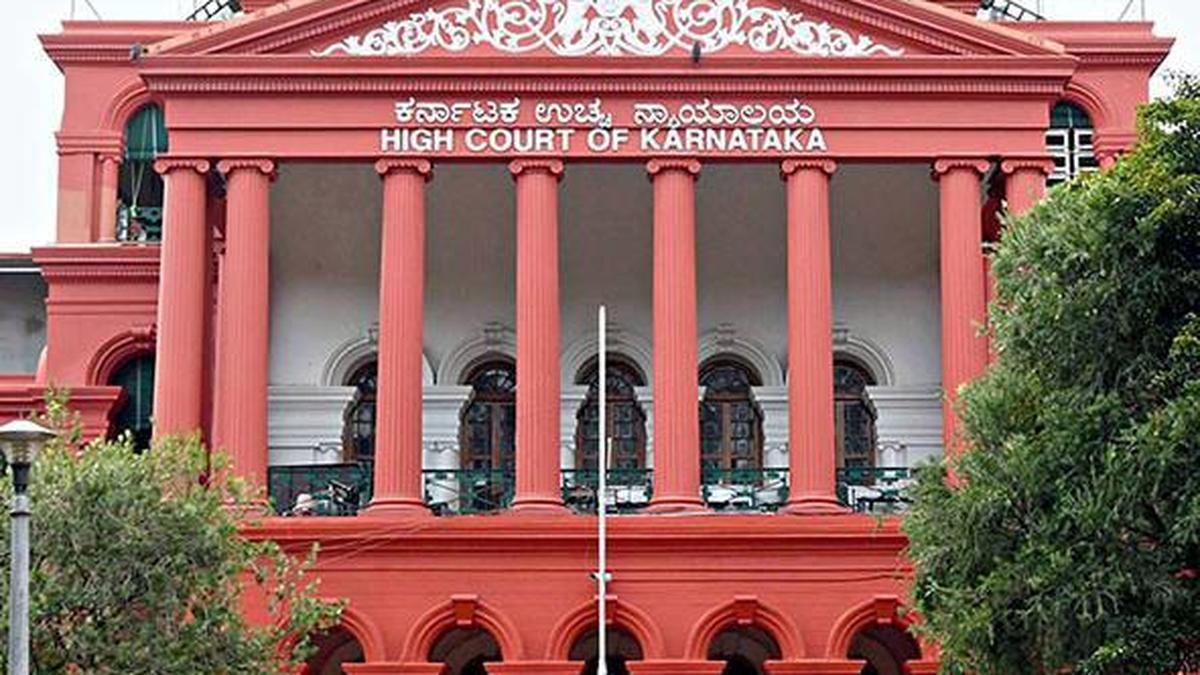
After considering the statutory provisions and submissions of both sides, the Karnataka High Court concluded that the wife's challenge could not succeed.The Karnataka High Court has held that registration of a marriage under Section 15 of the Special Marriage Act, 1954 is not mandatory for maintaining a petition for divorce under Section 27 of the Act.Justice K. Manmadha Rao dismissed a writ petition filed by a woman challenging a Family Court order which had refused to reject her husband's divorce proceedings on the ground that their marriage had never been registered under the Special Marriage Act.The Court held that Section 15 merely lays down the conditions under which a marriage celebrated in another form may be registered. It does not make registration compulsory, nor does Section 27 require registration as a condition for maintaining a divorce petition.The Court observed:“Section 27 of the Special Marriage Act do not contemplate requirement of registration of the marriage under the Act to maintain an application to seek the decree of divorce.”It further held:“Under the provisions of the Special Marriage Act, 1954, registration of marriage is not mandatory but if the marriage is registered, Section 18 of the Act gives certain benefits.”Couple Married Under Customary Rites, Never Registered MarriageThe dispute arose between Rathna P and her husband, Chikkamanchaiah S.M. The parties married on 30.04.2006 at Samudaya Bhavan, Kabbalu, Kanakapura Taluk, according to their community and customary rites. Their marriage was not solemnized under the Special Marriage Act, 1954, nor was it subsequently registered under that Act.The couple lived together as husband and wife and had a daughter, who was residing with the petitioner-wife. The parties subsequently began living separately from 18.02.2009 following matrimonial differences.The judgment records that both parties belonged to the Meda Scheduled Tribe. Consequently, by virtue of Section 2(2) of the Hindu Marriage Act, 1955, the Act did not apply to them unless the Central Government had otherwise directed. This statutory exclusion became important when the husband sought to pursue divorce proceedings after his earlier attempt under the Hindu Marriage Act failed.Husband's Earlier Divorce Petition Under Hindu Marriage Act RejectedThe husband had earlier instituted M.C. No. 46/2015 under Section 13 of the Hindu Marriage Act seeking dissolution of the marriage. That petition was rejected for want of jurisdiction because of the exclusion contained in Section 2(2) of the Hindu Marriage Act, which applies to members of Scheduled Tribes unless otherwise notified.The husband thereafter approached the Family Court seeking dissolution of the marriage under the Special Marriage Act. He invoked Section 27 of the Act, relying upon grounds including desertion and cruelty.The wife then filed an application seeking rejection of the divorce proceedings, contending that the marriage had never been solemnized or registered under the Special Marriage Act.Before the Family Court, the wife asserted that because the marriage had neither been solemnized nor registered under the Special Marriage Act, the provisions of that legislation could not be invoked to seek divorce. She argued that registration under Section 15 was not merely directory and that permitting the husband's divorce petition to continue would dilute the statutory scheme.She further contended before the High Court that continuation of the divorce proceedings would result in harassment through vexatious litigation and multiplicity of proceedings. The wife also relied upon the Calcutta High Court's decision in Amitava Bhattacharya v. Smt. Aparna Bhattacharya, 2009 SCC OnLine Cal 300, in support of her challenge.The Family Court rejected the wife's application on 26.06.2025. It held that Section 15 of the Special Marriage Act prescribes conditions for registration of marriages but does not declare registration to be compulsory.The Family Court further held that the absence of registration did not make the husband's petition for divorce under Section 27 of the Act inherently non-maintainable. Aggrieved, the wife approached the Karnataka High Court under Article 227 of the Constitution.High Court Examines Sections 15 And 27The High Court first noted that it was undisputed that the parties had not registered their marriage under the Special Marriage Act. The question, however, was whether such registration was a mandatory precondition for invoking Section 27 of the Act.Justice Manmadha Rao answered the question in the negative. The Court examined Section 15, which deals with the registration of marriages celebrated in forms other than those solemnized under the Special Marriage Act.Section 15 sets out conditions including that the parties must have undergone a marriage ceremony and lived together as husband and wife, neither party should have more than one living spouse, the parties should satisfy the prescribed age requirement and should not fall within prohibited degrees of relationship, among other requirements.The High Court held that these provisions merely regulate the registration of an existing marriage. They do not state that every marriage must be registered under the Special Marriage Act.The Court specifically rejected the wife's argument that the absence of registration prevented the husband from invoking Section 27.It held:“Section 15 of the Special Marriage Act only prescribes the conditions required for registration of the marriage and do not declare that registration of the marriage is compulsory or that petition for divorce under Section 27 of the Act is not maintainable unless the marriage is registered.”The Court therefore found no statutory basis for reading an additional requirement into Section 27.The absence of registration could not, by itself, defeat the maintainability of the divorce petition.The Court then turned to Section 27 of the Special Marriage Act, which permits either spouse to present a petition for divorce on specified grounds.These include, among others, voluntary sexual intercourse with another person, desertion for the prescribed period, certain imprisonment, cruelty, incurable unsoundness of mind or specified mental disorder, communicable venereal disease and presumption of death.The High Court noted that Section 27 does not contain any requirement that the marriage must have been registered under Section 15 before a divorce petition can be maintained. The Court therefore declined to introduce such a condition judicially.The husband was seeking dissolution on the grounds of desertion and cruelty, both expressly recognised under Section 27.Registration Can Confer Benefits, But Is Not A Condition For DivorceThe High Court drew a distinction between the consequences of registration and the requirement of registration. It held that registration may provide certain statutory benefits, particularly under Section 18 of the Special Marriage Act, but that does not mean that registration is a mandatory prerequisite for every proceeding concerning the marriage.The Court observed:“Under the provisions of the Special Marriage Act, 1954, registration of marriage is not mandatory but if the marriage is registered, Section 18 of the Act gives certain benefits.”Thus, the absence of registration did not automatically prevent the husband from approaching the Family Court under Section 27.The wife relied upon the Calcutta High Court's judgment in Amitava Bhattacharya v. Smt. Aparna Bhattacharya.The Karnataka High Court, however, found that the decision did not advance the petitioner's case.In Amitava Bhattacharya, the issue concerned a purported registration of a marriage where the wife had been below the prescribed age of 21 years at the relevant time. The Calcutta High Court ultimately held that the marriage could not have been registered and that the purported registration was of no effect under Section 24(2) of the Special Marriage Act.The Karnataka High Court found that the factual and legal circumstances were different from the issue before it.The present case concerned whether registration itself was a compulsory precondition for maintaining a divorce petition under Section 27. The Court found no provision in the Act creating such a requirement.After considering the statutory provisions and submissions of both sides, the Karnataka High Court concluded that the wife's challenge could not succeed.The Court held that the husband's petition seeking dissolution of marriage under Section 27 of the Special Marriage Act could not be rejected merely because the marriage had not been registered under Section 15.It accordingly dismissed the writ petition.Case Details: Writ Petition No.33261 of 2025 (GM-FC) Smt. Rathna P v. Sri Chikkamanchaiah S.M.Date of Decision: 17.04.2026Appearance: For Petitioner: SRI. NATARAJ BABA K., ADVOCATEFor Respondent: SRI. RAVISHA M G., ADVOCATE(The author of this article, Vatsal Chandra is a Delhi-based Advocate practicing before the courts of Delhi NCR.)
Karnataka HC: Marriage need not be registered under Special Marriage Act for spouse to seek divorce under Section 27
The Karnataka High Court has held that registration of a marriage under Section 15 of the Special Marriage Act, 1954 is not mandatory for maintaining a petition for divorce under Section 27 of the Act.
1,341 words~6 min read