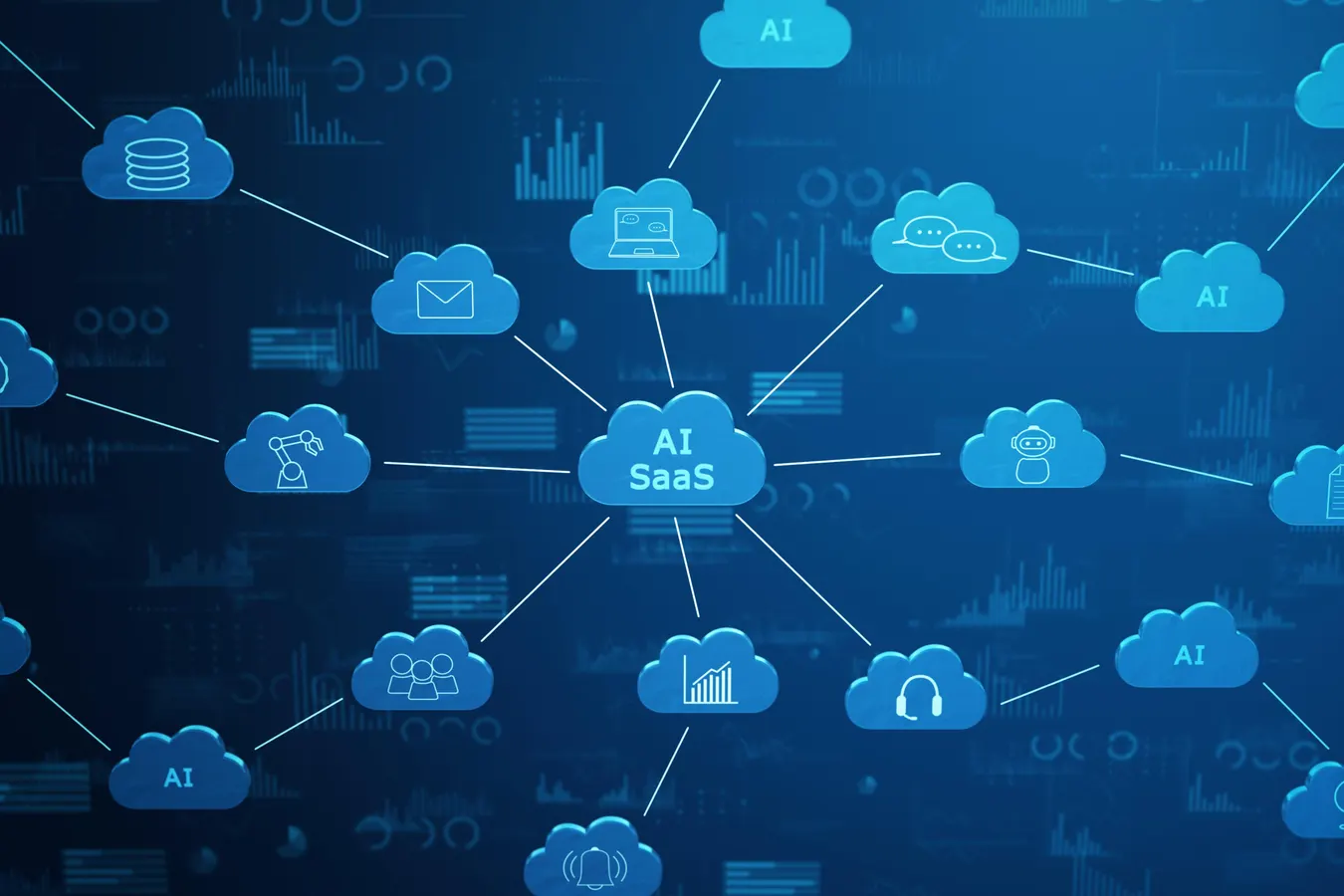
Praerit Garg, CEO, One Identity, trusted leader in identity security, helping enterprises protect and simplify access to digital identities.gettyThe software-as-a-service (SaaS) market is worth $466 billion, and that figure is set to double by 2029. The move from customer-owned software outcomes to vendor responsibility has been so acute that SaaS makes up roughly 85% of all business software. Most SaaS companies still treat support as a post-sale function, but the scale and economics of SaaS have now made it part of the product itself. Under the old “perpetual licensing” model, a vendor could often claim most of the value upfront. Support was important, but it didn’t always sit directly in the revenue line. With SaaS, however, revenue now must be effectively “re-earned” through the service element. Every unresolved support issue carries financial weight because it can show up later as churn or lower net revenue retention (NRR), not to mention the impact on reputation and customer confidence.Customers aren’t just buying products anymore. Procurement teams aren’t shopping for the best features or most capable software; they’re shopping for uptime, responsiveness, reliability and confidence that the product will deliver for their organizations. That’s why, in a SaaS world, there’s no real separation between the product itself and the experience of using it daily, and that’s creating a different kind of accountability for vendors and service providers.This is why customer support belongs in board-level conversations. But instead of asking whether support tickets are being closed quickly enough, the focus should be on whether recurring customer pain is becoming visible in renewal forecasts. Boards don’t need to manage day-to-day support operations, but they should be asking whether the company has a clear line of sight when it comes to retention.Why The Helpdesk Is No Longer EnoughThere are essentially two ways software companies can choose to look at customer issues. The first is to see them as distractions that pull engineering teams away from product development and innovation work. The second is to see them as opportunities to improve the product itself, innovate on behalf of customers and reduce customer churn. Historically, enterprise software organizations have leaned toward the first approach. Support functions were designed as “deflection layers” to shield engineering teams from customer frustration and optimize metrics around ticket handling and resolution times. But that doesn’t work when customers are buying more than just software licenses. They’re relying on platforms that sit directly inside critical business operations, often running continuously across distributed environments where performance issues are experienced in real time instead of during neat maintenance windows.When a customer raises a support issue, the clock is already ticking. Unlike those that have customer-owned, on-prem solutions, SaaS customers expect vendors to respond quickly to any issues because the service element is part of the deal. They won’t spend hours or days investigating issues themselves before escalating, and even if they do, that will only increase their level of frustration and put more pressure on the vendor to resolve things quickly. At this point, users aren’t evaluating the software, but the ability of the vendor to keep things running smoothly.Scalability friction, operational blind spots, configuration complexity and usability gaps rarely surface with the same clarity in controlled testing environments. Customers uncover those weaknesses first because they’re operating the software under real-world conditions and at real-world scale—and vendors should treat these instances as direct learning opportunities rather than a post-sale support ticket to be checked off as quickly as possible. Support As A Feedback EngineOne of the biggest mistakes I see software companies make is treating innovation and customer support as two completely separate functions. They should be deeply connected. Every customer escalation exposes something about how the product behaves outside controlled development environments, whether that’s a usability issue, a scalability limitation, configuration complexity or an operational assumption that doesn’t hold up under real-world conditions. Some of the most valuable product insights a company will ever receive come directly from customers experiencing friction in live production environments. The challenge is that many organizations still structure themselves in ways that prevent those insights from reaching the teams capable of acting on them quickly enough.To better adapt to the SaaS era, I recommend closing the gap between customers, support and engineering. Instead of viewing escalations as interruptions, recognize them as part of the innovation process itself. Improving product usability is innovation. Simplifying deployment and configuration is innovation. Resolving operational bottlenecks before they become recurring customer pain points is innovation, too. This is especially important as SaaS vendors take on more operational responsibility through fully managed offerings, where customers expect vendors to handle much of the complexity on their behalf. In that environment, support becomes one of the clearest real-time feedback mechanisms a business has for understanding how customers actually experience its products in the wild.Closing The Gap Between Support And EngineeringOne of the more interesting side effects of the SaaS era is that it’s forcing companies to confront how much internal complexity slows down their ability to respond to customers. In many organizations, support issues move through layers of approvals, escalation paths and disconnected teams before the people capable of solving the problem ever become involved. That might create cleaner internal processes on paper, but it also creates distance between the customer and the engineering organization responsible for improving the product. Over time, those layers slow down support resolution, and critically, they slow down learning.It’s up to SaaS vendors to adapt to modern customer expectations by simplifying their own internal processes rather than putting the onus on the customer. They need to reduce friction between support and engineering, shorten decision-making cycles and build their organization into one that can respond faster when customer pain surfaces. In 2026, customer support can’t be measured purely by ticket closure rates or response-time metrics. The bigger objective is building an organization capable of learning faster than competitors because that will put them in tune with the reality customers experience every day.Forbes Technology Council is an invitation-only community for world-class CIOs, CTOs and technology executives. Do I qualify?
How SaaS Has Made Customer Support A Board-Level Responsibility
Instead of asking whether support tickets are being closed quickly enough, the focus should be on whether recurring customer pain is visible in renewal forecasts.
1,004 words~5 min read