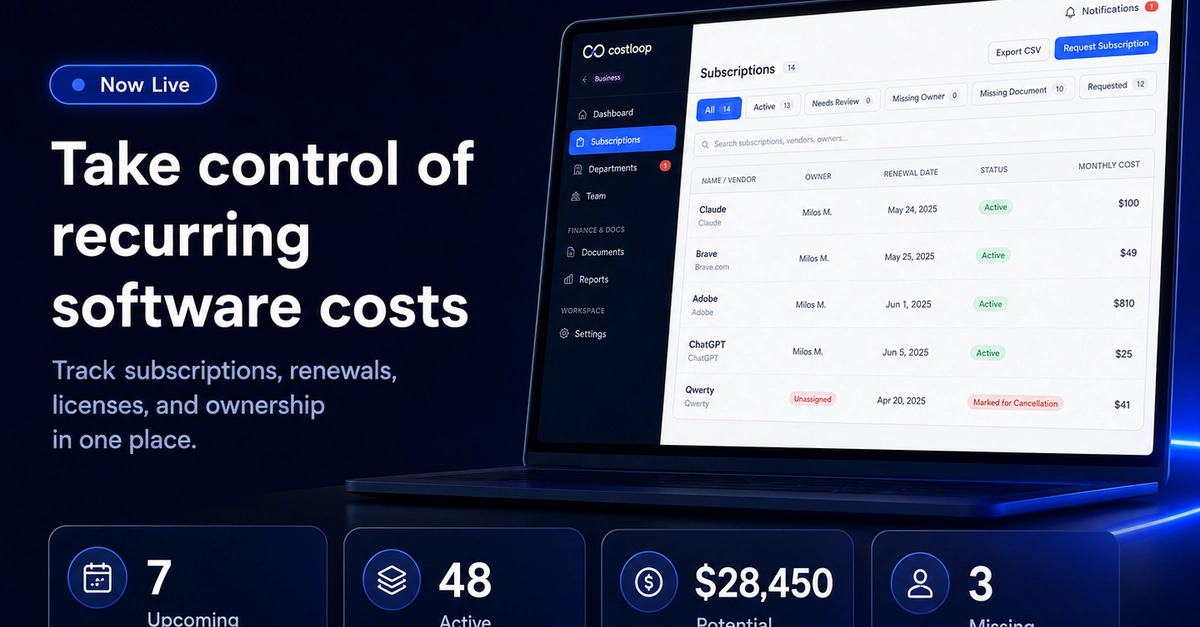
Nobody decided to buy 40 software subscriptions. It happened one free trial at a time. A team lead swiped a card for a scheduling tool, marketing added three analytics products, someone in ops still pays for a project tracker the company stopped using in 2024. Each purchase was small and sensible on its own. Added up, they are one of the largest line items in the budget, and most finance teams cannot say what half of them do.
The numbers are worse than they feel. The median company runs about 25 active SaaS subscriptions, and the more tech-forward ones carry 49 or more. Gartner puts average overspend at 25%, and license-management data suggests roughly half of paid seats sit unused. European companies land around 167,000 dollars a year on software, and per-employee spend keeps climbing as teams add a point solution for every niche. That is the quiet cost of sprawl: not one bad decision, but a hundred un-reviewed ones.
Why the bill keeps growing
Three forces push spend up and none of them correct on their own.
Per-seat pricing scales with headcount, not usage. A 40-dollar-per-user tool that 80 people can technically access is 38,400 dollars a year, whether or not 30 of them ever log in.