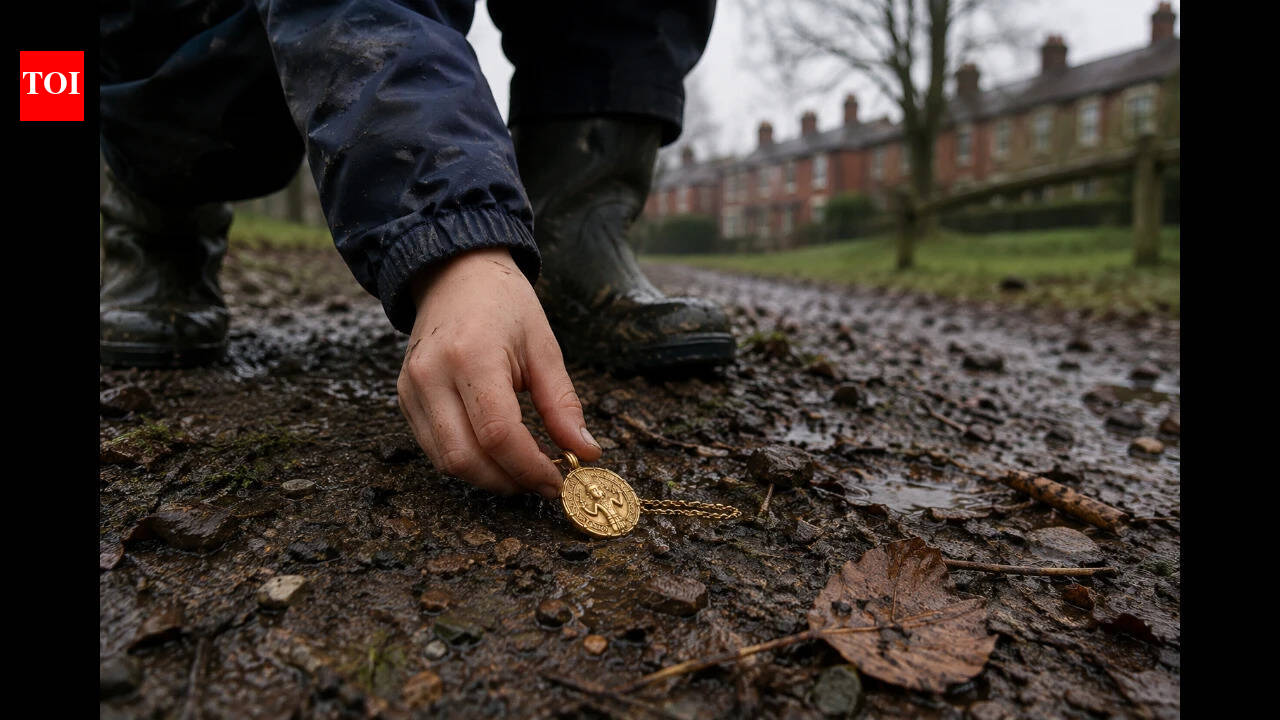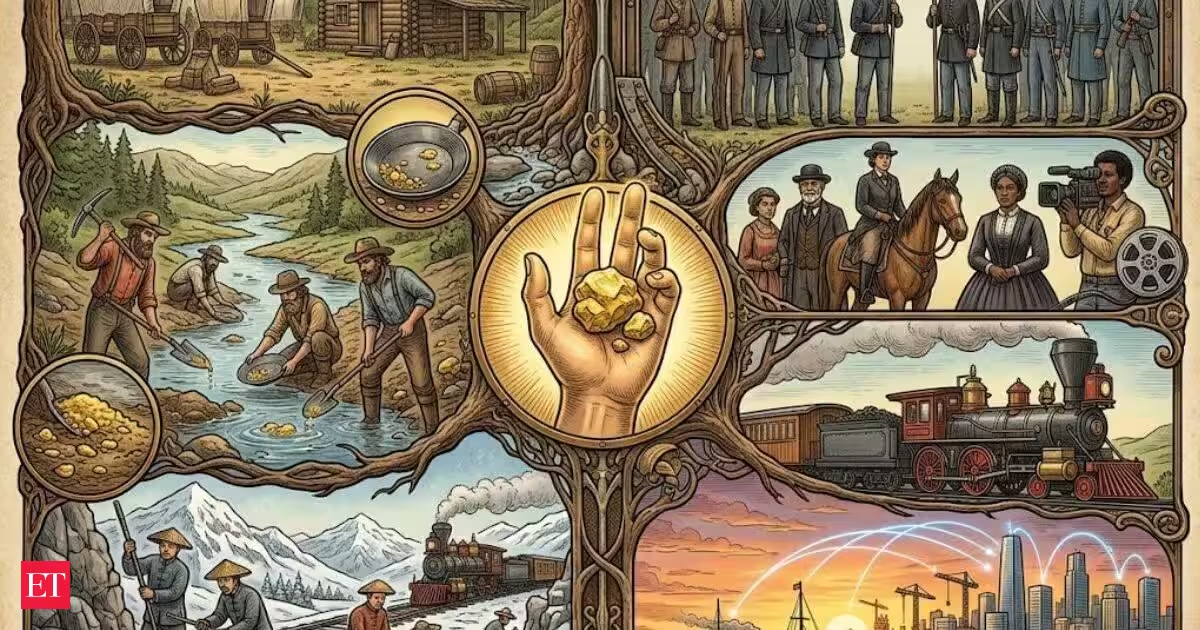
It was just before sunrise on January 24, 1848, when a carpenter working on a sawmill near Coloma, in the foothills of California's Sierra Nevada, noticed something glinting in the water below. He bent down, picked it up, and turned it over in his palm - Gold.The carpenter's name was James Marshall, and he couldn't have known it at the time, but that small, glittering find would set off one of the most consequential chain reactions in American history, one that historian Nathaniel Philbrick argues reshaped not just California, but the entire trajectory of the young United States.Also Read: Even Jeff Bezos & wife Lauren Sánchez couldn’t get in: This 'Billionaire Bunker' club has a waitlist packed with billionaires, including Ivanka Trump and Jared KushnerPhilbrick lays out that argument in his new book, The Rush: California Gold, the Civil War and the Making of the Modern World. It narrates an account that treats the Gold Rush less as a colorful footnote and more as a hinge point, the moment America was forced to confront its own size, its contradictions, and the question of who, exactly, got to belong.From a Riverbed to a ReckoningAt the time of Marshall's discovery, the United States was a fragile balancing act: fifteen states permitted slavery, fifteen did not. California's admission to the Union threatened to tip that balance one way or the other, and the sudden flood of gold seekers turned an abstract political dilemma into an urgent one. Philbrick, who has built a career writing accessible histories of pivotal American moments, calls this broader wave of upheaval simply "the Rush", a force he traces forward into the Civil War itself, and even, eventually, into the invention of motion pictures.Life in the goldfields, Philbrick makes clear, was rarely glamorous. It was often brutal, chaotic, and short on comfort. But for white American men in particular, it also offered something the rest of the country didn't: a shot at reinventing yourself with almost no rules attached.That freedom, of course, wasn't shared equally.The Names History Left OutMuch of what makes The Rush stand apart is who Philbrick chooses to put at the center of the story. Alongside the tycoons who would later engineer the Central Pacific Railroad, he spends real time on the Chinese laborers who built it, men who blasted tunnels through granite and endured winters in the high Sierra for wages and conditions that bordered on unbearable.Then there's Mary Ellen Pleasant, a name most readers will not recognize but should. A Black businesswoman in San Francisco, Pleasant built a laundry business into a financial empire and quietly funneled much of her wealth into the abolitionist movement. According to accounts Philbrick draws on, she once disguised herself as a jockey to travel through Virginia plantation country, spreading word ahead of John Brown's raid on Harpers Ferry, one of the more remarkable, and least told, stories of the era.Also Read:A museum rock was forgotten for 30 years in a drawer in Japan. Now, its hidden bones may uncover a new 66-million-year-old sea monsterThese are the figures, Philbrick suggests, who quietly steered events every bit as much as the politicians and industrialists usually credited with shaping the period.Why This Story Still MattersWhat gives The Rush its edge isn't just the history, it's how deliberately Philbrick draws lines to the present. Nineteenth-century Californians, he writes, were already grappling with a question the country hasn't settled: who counts as "us"?The book's closing chapter jumps forward more than a century, landing in Palo Alto and the birth of Silicon Valley. It's a pointed move. Philbrick frames the tech boom as a direct descendant of Gold Rush logic — fast money, boundless self-invention, and a willingness to steamroll whatever stands in the way of progress. As he puts it, the country never really got off that train; it just kept picking up speed.
In 1848, a carpenter spotted a shiny rock in California. What followed changed the course of American history forever
James Marshalls discovery of gold in California in 1848 triggered a massive Gold Rush that changed the state and influenced the course of US history, including the tensions that led to the Civil War. In his new book The Rush, historian Nathaniel Philbrick explores the era through the lives of figures including Chinese railroad workers and Black businesswoman Mary Ellen Pleasant, while drawing a connection between Gold Rush ambition and the rise of Silicon Valley.
641 words~3 min read