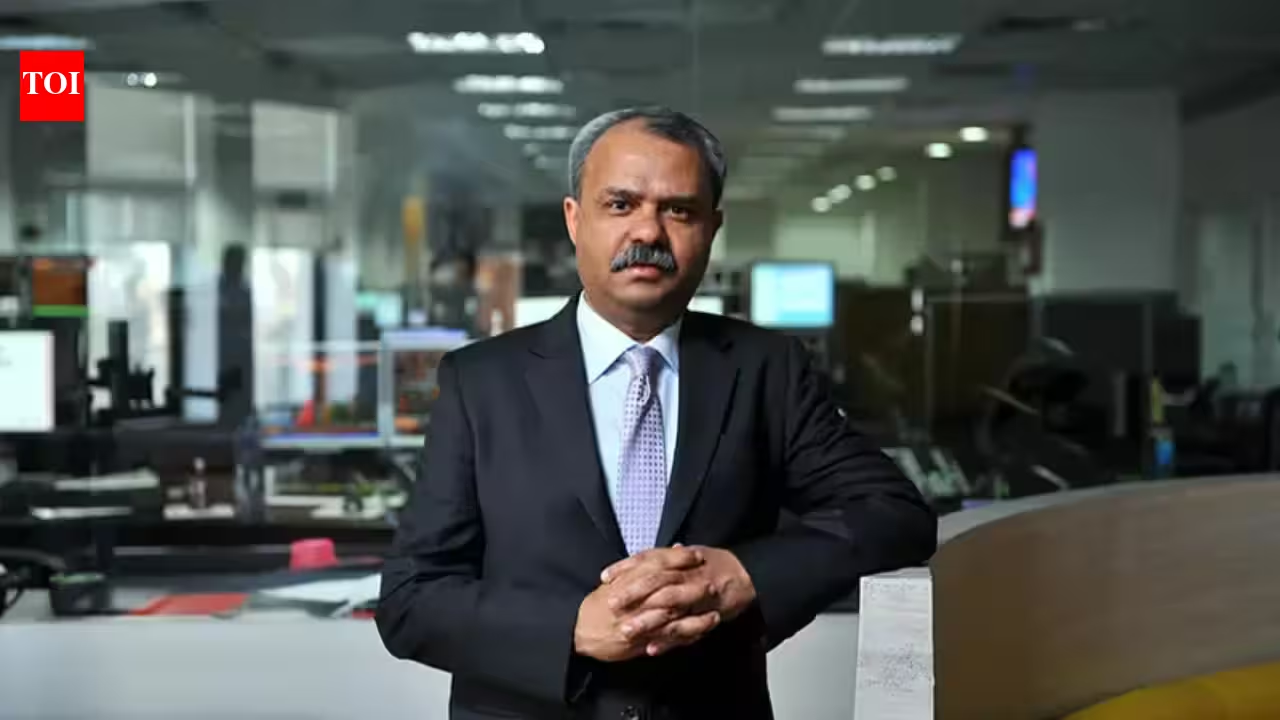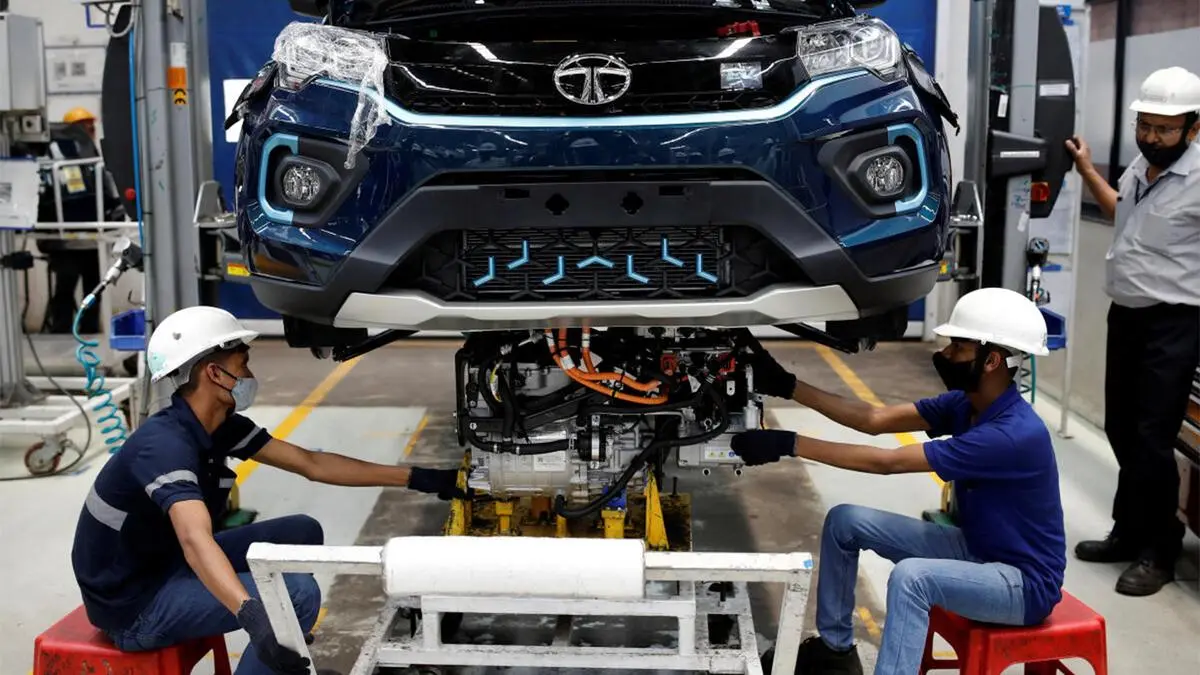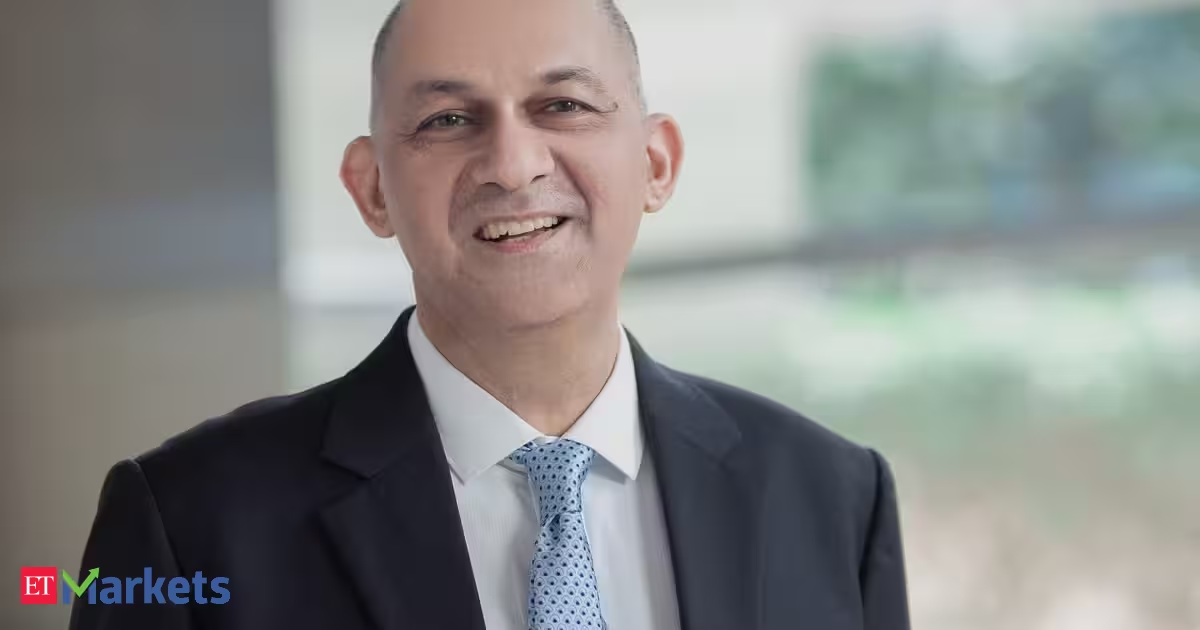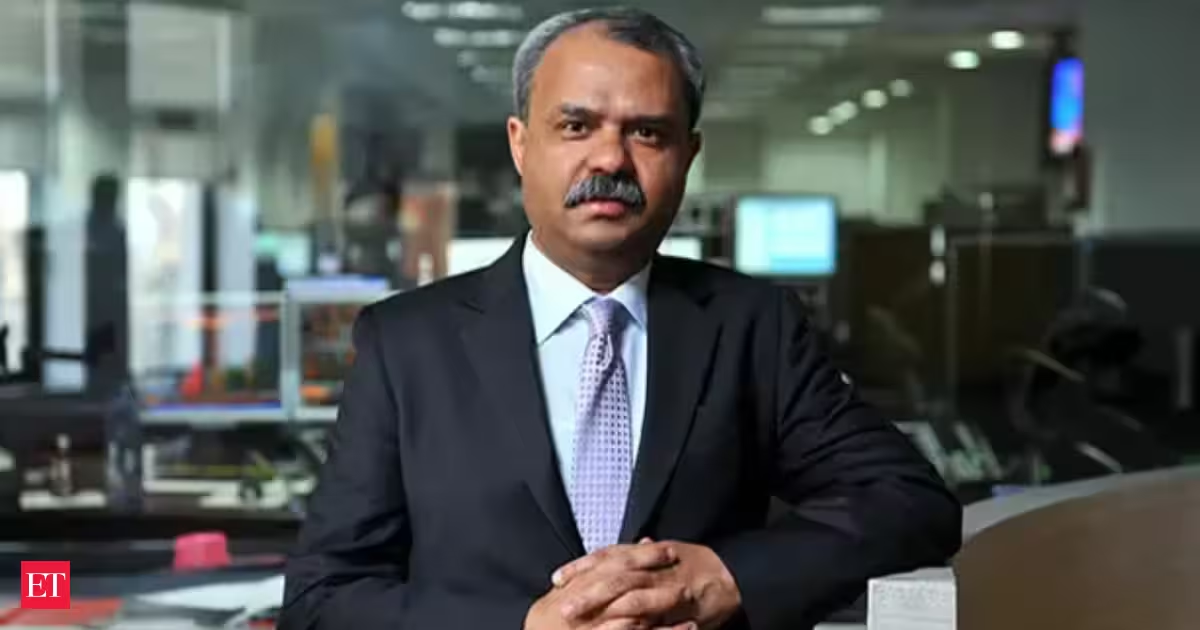
India’s current corporate investment cycle is different from the debt-heavy capex boom of 2012-14, with financially stronger companies now expanding capacity through consolidation and internal cash flows, HSBC India CEO Hitendra Dave said in an interview with Times of India's Mayur Shetty.Dave said the earlier investment cycle was marked by large projects in sectors such as power, steel and cement that relied heavily on bank financing and had little genuine promoter equity. The current cycle, he said, is being led by well-capitalised groups such as Tata, UltraTech and Adani.“Capex is often viewed through the 2012-14 cycle, when mega projects in power, steel and cement had virtually no genuine promoter equity and were largely bank-financed,” Dave said.Also Read: Indian business optimism weakens as margin pressures weigh, shows HSBC survey“With little equity, promoters had less incentive to fight for or stay with projects when conditions deteriorated. We do not want such projects because they involve taxpayer money,” he said.The HSBC India CEO said the nature of corporate expansion has since changed, with stronger companies using their own cash flows to add capacity.“Current growth is instead seeing capacity expansion through consolidation, with well-capitalised groups such as Tata, UltraTech and Adani expanding through internal cash flows,” Dave said.The comments come as India's corporate balance sheets have strengthened and companies have increasingly focused on consolidation and capacity expansion rather than taking on large amounts of debt for new projects.HSBC sees a different investment cycleThe 2012-14 period saw a build-up of large infrastructure and industrial projects, particularly in sectors such as power, steel and cement. Dave said the lack of promoter equity in many of those projects created problems when business conditions deteriorated.His assessment suggests that the present capex cycle has a different financing structure, with established companies better placed to fund expansion from their own resources.Also Read: HSBC India profit rises 4% to $965 million in H1 2026, corporate and institutional banking drives growthFor banks, this also changes the nature of lending opportunities. Instead of financing highly leveraged greenfield projects, lenders can support acquisitions, consolidation and expansion by companies with stronger balance sheets.HSBC is already active in acquisition financing, Dave said.“We are the number one bank in acquisition financing. We were the first, and at that time the only bank, to fund the two domestic M&A directly from our local-currency balance sheet,” he said.HSBC balance sheet set to cross Rs 5 lakh croreThe bank's own India balance sheet has also expanded as it increases its presence across affluent banking, mortgages and cross-border financial services.HSBC India's balance sheet stood at Rs 4.5 lakh crore at the end of March and “would have easily crossed Rs 5 lakh crore”, Dave said.The bank has also been mobilising FCNR(B) deposits and helping Indian banks raise dollar resources. Dave said HSBC has deployed about $1.5 billion to $2 billion through bilateral bonds and similar amounts through foreign-currency loans.“We are the most preferred global bank among India's affluent. Our deposit mobilisation reflects our strength and reach in the NRI community across markets,” he said.Also Read: SBI, HSBC and ICICI lead India's overseas deposit drive, data showsHSBC has also announced fixed-rate mortgages starting at 7.5% for the first three years, as it seeks to address concerns among homebuyers about rising interest rates.“Our asset-liability management tools tell us the bucket-wise gaps we can run. Even if we park the funds in G-secs, we have a spread of 75-100 bps,” Dave said.HSBC sees need for a fresh trigger for foreign flowsDave said India's challenge is not necessarily a loss of interest among global investors but competition from other markets for capital.“Financial markets are inherently short-term in their thinking. Capital chases whatever is currently selling elsewhere,” he said.He pointed to large debt issuance by US hyperscalers and the flow of capital into equities in Taiwan and South Korea as competing destinations for global investors.Dave also warned that weakness in the rupee could create a negative feedback loop if investors hold back and weaker inflows put further pressure on the currency.“Currency weakness can create a self-fulfilling negative loop, with investors holding back and weaker inflows keeping the rupee under pressure,” he said.While corporate earnings have improved after weakening a few years ago, valuations have not, Dave said. He identified several possible triggers that could improve investor sentiment.“A spark is needed to shift the narrative, such as lower oil prices, new land or labour reforms or major FDI announcements,” he said.(With inputs from TOI)
India’s new capex cycle is being driven by cash-rich giants, HSBC India CEO Hitendra Dave says
India's corporate investment cycle now features financially stronger companies expanding capacity. These well-capitalized groups are using internal cash flows for growth and consolidation. This differs from the earlier debt-heavy boom which relied on bank financing. HSBC India's balance sheet is expanding significantly, crossing five lakh crore rupees. Global capital flows require fresh triggers like reforms or FDI announcements.
737 words~3 min read