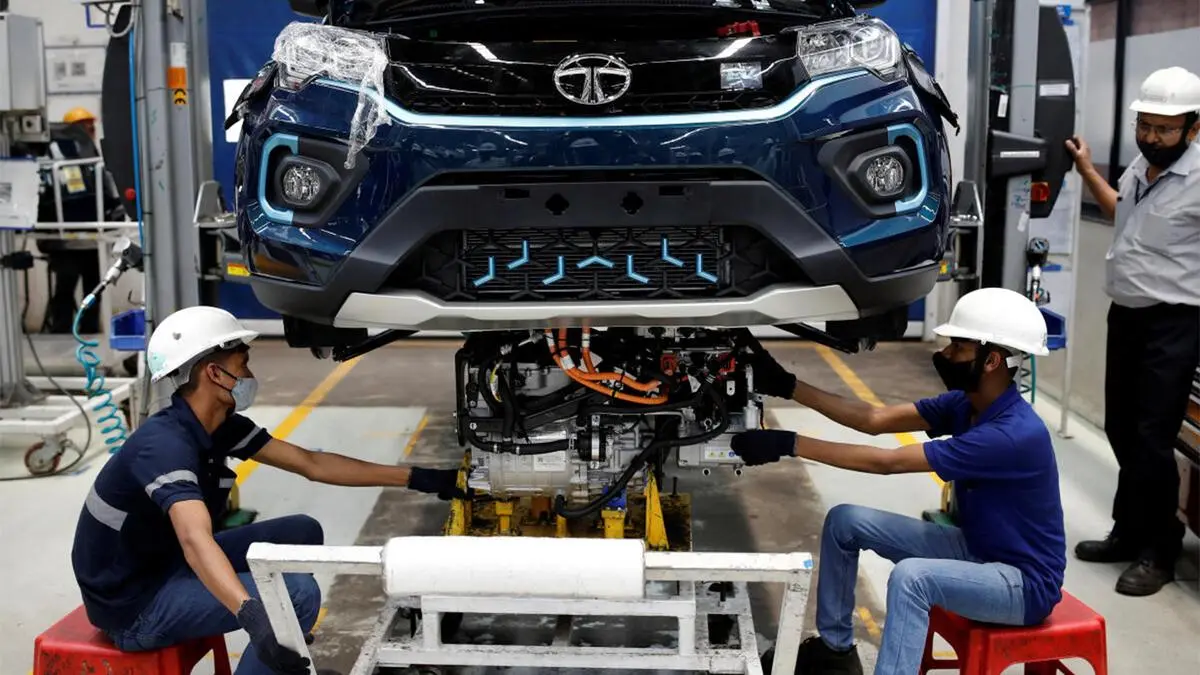
For India Inc., the business outlook for the near term remains mixed. The early months of the previous fiscal year (FY26) were clouded by tariff-related uncertainty, while the last quarter of FY26 was marked by the US-Iran conflict, which raised fears of a commodity price surge and softer demand. As FY27 begins, tariff concerns have eased somewhat, helped by a series of parallel trade agreements, while the long-awaited India-US deal remains perpetually at the finish line. Meanwhile, the ceasefire between the US and Iran, though still recent, has already led to a sharp decline in oil prices. While this is good news for now, geopolitical uncertainties remain elevated.Against this backdrop, we examine the capital investment appetite of India Inc. Needless to say, future growth depends on today’s investments. In recent years, there has been hope for revival in private capex many times, but so far this inflexion point has remained elusive. Can similar hope materialise this time around?Based on our analysis, most financial indicators point to both the need for and the capacity to support a renewed investment cycle. The point being, without more investments from here, higher growth rate in revenue and profit may not be forthcoming for India Inc as a whole. We also assess emerging investment trends across sectors and companies.For this analysis, we have considered 1,002 companies which have reported data for the last 10 years, from FY17 to FY26. We have excluded BFSI and IT sectors from the list.Growth after a lullThe fixed asset base for all the companies grew at 9 per cent CAGR in FY17-26. Fixed assets refer to all tangible assets including capital works in progress. But fixed asset growth comes in waves and as shown in the figure, ranges from 0 to 20 per cent year on year. The lowest growth was recorded in FY21, the year of the pandemic. This flat growth was preceded by a period of high capital addition at 11 per cent CAGR in FY17-20. The graph shows that a similar circumstance has developed currently as well. Although not comparable to the Covid impact on economy, trade tariffs and geopolitical uncertainty were at the highest in FY26, which recorded the second lowest growth at 4 per cent for fixed assets. Also, FY22-25 reported a 11 per cent CAGR growth in fixed assets. Similar to FY21, the last fiscal reported weak capital addition following a period of high growth indicating that a period of strong fixed asset addition is due.But it is also pertinent to note significant difference between the two periods. Post FY21, interest rates were lowered to spur growth alongside high government spending, which was a conducive environment for demand and capital addition. In FY27, interest rates may increase and may influence capex decisions.Push and pull for capacity expansionSales growth, on the other hand, has outperformed asset growth, which raises the question: Can further sales growth be supported without capacity addition. Net sales growth for the companies was at 10 per cent CAGR in FY17-26, and 14.6 per cent CAGR in the post-Covid period of FY21-26. Consequently, the asset turnover ratio (Net Sales/Fixed assets) is now approaching its peak for India Inc, as shown in the graph. This ratio basically captures how much revenue a company is generating by utilising its fixed assets. The ratio in the last decade has been range bound, as high sales growth leads to high-capacity utilisation and, in turn, drives a capacity expansion phase to support further growth, lowering the sales to asset ratio. As the graph indicates, at 1.65 times in FY26, the asset turnover ratio is approaching its peak (utilisation), if not the highest at 1.75 times in FY23.While sales growth is a push factor for capacity addition, margins and return ratios are a pull factor. In periods of high returns, companies and industries are incentivised to expand production to capture the upside. In the current environment, EBITDA margins, PAT margins and RoE are certainly above average and near decade-highs, as shown in the graph. Modest raw material inflation, demand growth, effect of operating leverage, lower financial cost, and positive policy framework — including high government spending, lowering of income-tax and GST, interest rate cuts — have supported the strong financial performance in the last year despite the overhang of tariffs and wars. While PAT and ROE benefited from corporate tax cuts in FY20, EBITDA margin captures the pure operational performance without such impacts.While margins will be under pressure from rising commodity costs in the short term, ambitious companies will likely focus on post-conflict recovery and scope for higher returns in the future, especially with more hope for a resolution in US-Iran war.Balance-sheet strengthIndia Inc’s balance-sheet strength is at the highest currently. As seen in the graph, interest coverage (EBIT/Interest - measures the profit before interest payments available for interest payments, with a higher number indicating a high ability to service debt) has been continually rising and net Debt to EBITDA (lower the better, indicating the years to clear debt with given EBITDA) has been continually declining, and are simultaneously at the most favourable position now compared to the last decade. While the cost of debt has declined in FY26, as lower interest rates have been passed on, interest rate hikes and their pass through are expected in FY27.Balance-sheet strength has been improving post Covid. Investors will increasingly expect companies to leverage their strong balance sheets to add productive assets and generate higher returns.While short-term volatility and raw material costs are high, companies must focus on innovation and long-term growth opportunities and add to capacities. Investors must look for opportunities in such companies – those that have strong balance sheets and showing willingness to invest, as these are best positioned to benefit when the tide turns positively. For example, companies that invested in advance and had higher capacities capitalised from the boom in steel business during FY21 and FY22.Company outlook on capexAmong companies and sectors, the outlook for capex addition is largely optimistic across many sectors, while there are pockets where some of the leading spenders, like automobiles and infrastructure segments, may see moderation. New-age capacity building is taking shape. This includes several fields of energy – renewables, energy storage, technology – AI/data centres, indigenous defence and transportation.We have outlined the capex outlook of a few leading companies below, including Reliance Industries, which accounts for a fifth of the asset base in the listed space in FY26.Reliance is likely to continue with its investment plan in FY27 after investing ₹1.4 lakh crore in FY26. The FY27 expansion will also include New Energy segment (solar modules, solar cell and batteries) and AI/Data Centre operations. The company expects to deliver the addition by keeping leverage within comfortable levels with targeted Net Debt to EBITDA at 1.7-1.8x in FY27 by funding it largely from internal accruals. The refining margins of refineries are expected to stay high despite approaching a ceasefire in West Asia. This will be a strong support to the capex plans of refineries, which do not have significant retail fuel marketing operations like Reliance. The other refineries, which are mostly PSU entities, are targeting to achieve net zero emissions by 2040-46. A tall order for many OMC refineries, given their excessive carbon footprint inherent to operations. Overall, their surpluses will be invested in renewables and EV infrastructure, as was mentioned by IOCL.Power generation and transmission are midway to near doubling of power capacity by 2030, with close to 500 GW from renewables. This implies a continued capex spending by the sector. NTPC outlined a capex plan of ₹6.2 lakh crore for the next five years, half of which is allocated towards renewables and a nuclear source. In transmission, Power Grid is also continuing with its capex plan, although a touch smaller than last year (₹37,000 crore in FY27 vs ₹40,000 crore last year). Pumped storage plants, which address the volatility of renewable power, are also being developed by Adani Green, Tata Power. Capital goods players like GE Vernova T&D, Hitachi Energy India will be beneficiaries of this.The automobile industry has been on a cyclical high with further impetus from GST revision, which should sustain sales momentum in the next one year. Also, with CAFÉ-3 norms coming in place from FY28, it is imperative to add EV/hybrid capacity to satisfy the guidelines. These reasons will sustain the capex phase. But considering the late stage of the upcycle, the industry capex plans are likely to be moderate. The auto ancillary segment is also expected to increase capex with an eye on expansion into EV/hybrid segments.Steel capex outlook is mixed. JSW Steel is still on a high capex phase — ₹1.3 lakh crore for the next five years (₹20,000-25,000 crore per year), and so is Tata Steel (₹20,000 crore in FY27). Jindal Steel will focus on efficiency after completing its expansion stage. Steel demand in India, tied to GDP growth, is expected to be high. Steel prices are under the protection of Safeguard duties for the next three years. But the advantage of benign raw material prices may be reversing, at a gradual pace for the industry. While the industry may not witness the overhang of Chinese steel dumping on the industry may not be for the next two-three years thanks to Safeguard duties, steel capex decisions will continue to be impacted beyond the current announced plans.Similarly, capacity addition in cement is also mixed. While UltraTech, the leader, has increased capacity to 200 mtpa now (from 65 mtpa in FY16) and expects to grow to 240 mtpa in the next two years, Ambuja and even Shree Cements, to an extent, are more focused on improving operational efficiency, cost optimisation and improving utilisation rates. While the latter two are also expanding, the enthusiastic growth outlook seems to be tapering off.In other segments, Hotels and Hospitals are notable. Hospital growth has primarily been relying on volume growth from expanded hospitals in tier-I to -III locations. This is likely to continue across the spectrum from large-cap to small- and mid-cap institutions. The listed hotel companies were already in expansion mode, and that stance is likely to continue. Among the prominent ones, IHCL and ITC Hotels remain more asset-light (management-contract oriented) and pipeline-led, while EIH remains more selective and luxury-focused. Financially, the hotel sector is in a much better position than in the pre-Covid/Covid years, with stronger cash flows and generally-manageable balance sheets. The focus is likely to shift to optimal asset utilisation and return metrics.The picture is clear: Traditional sectors remain willing participants in the capex cycle, though with a sharper eye on sweating existing assets and improving utilisation. The real momentum, however, is increasingly felt in new-age investment themes—across power, conglomerates and the automobile value chain.As mentioned above, for investors, the opportunities lie in companies that have strong balance sheets/leverage ratios and are showing willingness to invest. While they may be impacted by temporary downcycles, in the long term they are better positioned to capture the India growth story. Cement and steel companies that benefited from the upcycle in FY21 and FY22 are good examples. The counter examples are the IT services companies that hardly invested in new growth engines over the previous decade and are facing the brunt of a downcycle in their core business today.That, long-term growth of stocks depends on today’s investments that companies are making within acceptable leverage metrics, is an important factor that investors must consider.Published on June 27, 2026
India Inc and Its Capex Chronicles
Explore India Inc's capital investment landscape as traditional sectors adapt and new-age investments drive future growth amidst geopolitical uncertainties.
1,900 words~9 min read