Story audio is generated using AI
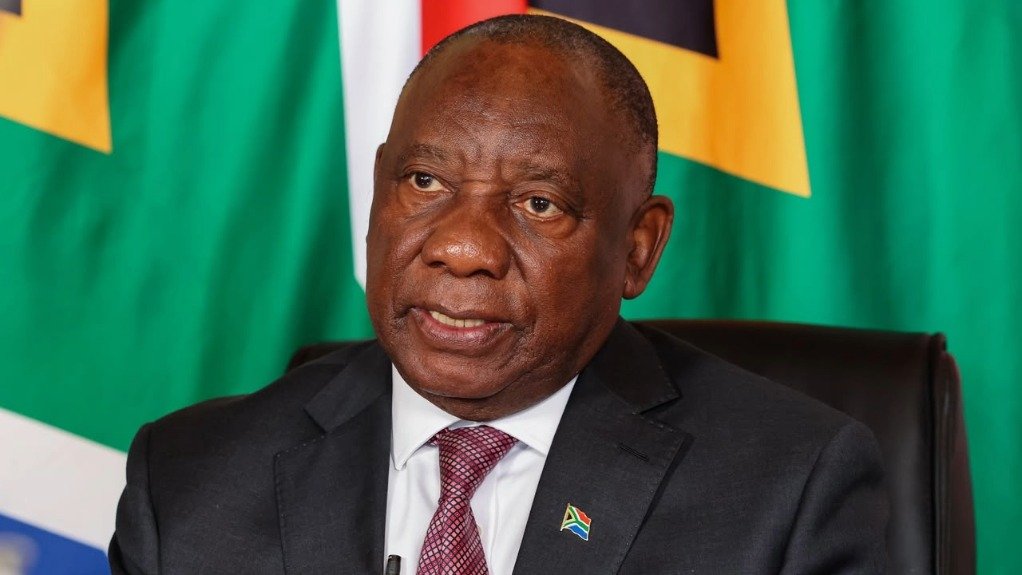
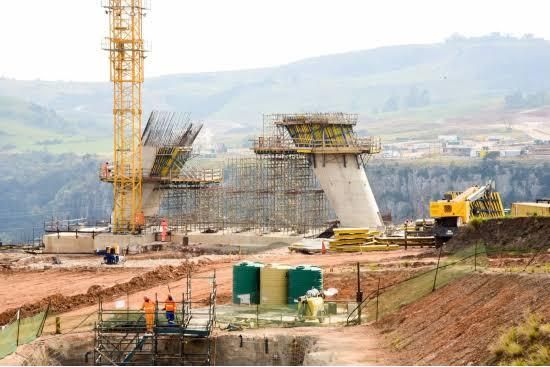
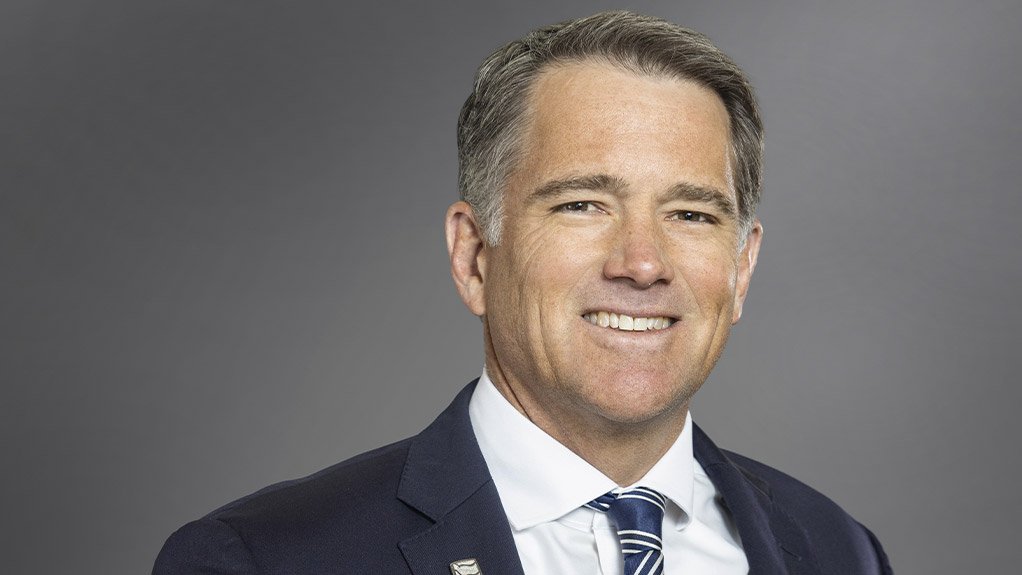
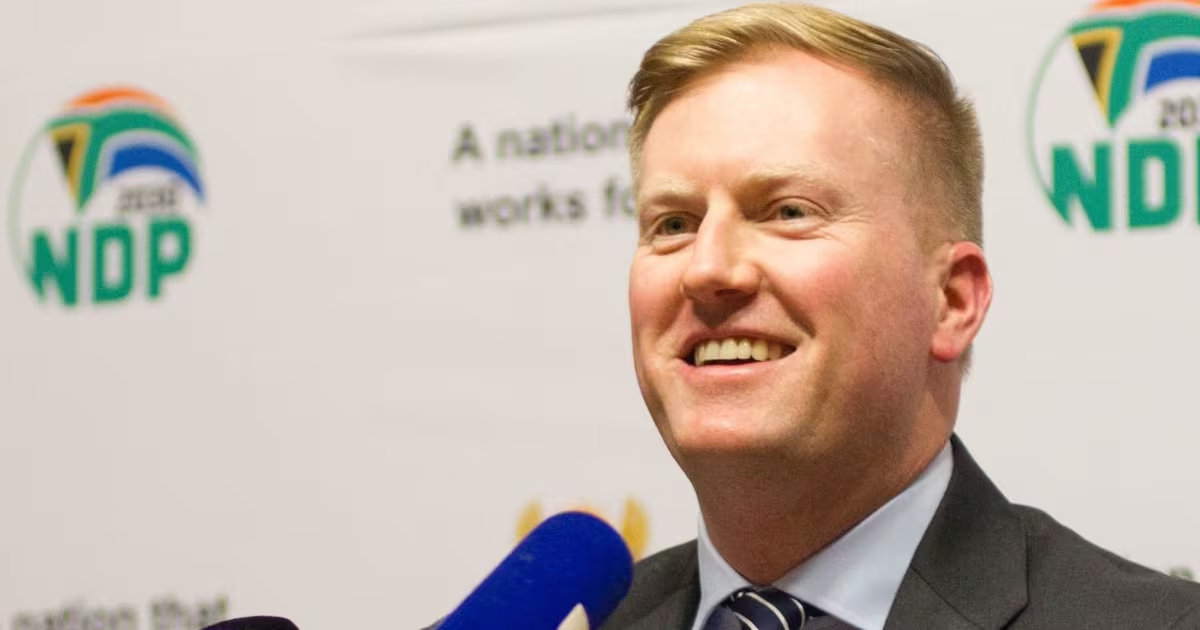
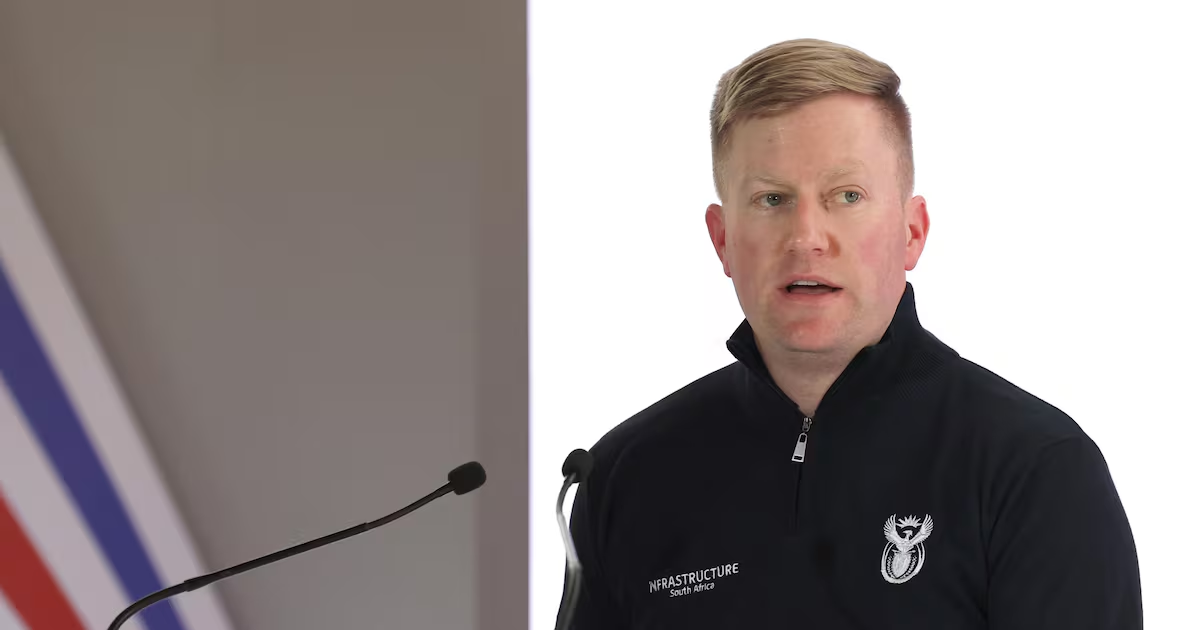
Public works & infrastructure minister Dean Macpherson has flagged R206bn worth of infrastructure projects still in the documentation and procurement phase as the government works to move a nearly R2-trillion pipeline into construction and completion.“South Africa has made progress in moving projects through the pipeline, with 37 projects worth about R69bn completed over the past 18 months and 82 projects valued at R502.7bn under construction,” Macpherson told the sixth Sustainable Infrastructure Development Symposium (SIDSSA) in Cape Town on Sunday.A further 54 projects worth about R206bn are still in documentation and procurement, he said.They are part of South Africa’s Strategic Integrated Projects programme, comprising 263 individual initiatives with an estimated combined value of R1.99-trillion.But Macpherson said the size of the pipeline did not necessarily translate into delivery, with inadequate project preparation remaining one of the biggest constraints.“Projects are still announced before feasibility studies, land requirements, regulatory approvals, procurement routes and funding arrangements have been resolved,” he said.The government was trying to address the bottleneck through a R600m project-delivery support commitment launched in 2024, he said.“Infrastructure South Africa [ISA] is helping public institutions develop high-value projects into bankable and investment-ready opportunities,” he said.ISA, established in May 2020 as the single point of entry for accelerated infrastructure investment, is supporting more than 26 projects with an estimated capital value of about R148bn, while 15 have completed their preparation.A second bid window is expected to identify projects with a potential combined investment value of R57.8bn.Macpherson said preparing projects was only part of the challenge, with the government also needing to connect viable projects to finance.“The fiscus cannot meet our infrastructure requirements alone. Public investment must work alongside development finance and responsible private capital, with clear public oversight,” he said.Earlier this month, four initiatives in housing, aviation, bulk water and energy requiring more than R53bn in debt finance were presented to development finance institutions and multilateral banks.The fiscus cannot meet our infrastructure requirements alone. Public investment must work alongside development finance and responsible private capital, with clear public oversight— Dean Macpherson, public works & infrastructure minister At municipal level, ISA has committed R131m over the past 18 months to infrastructure support.In the Matjhabeng local municipality in the Free State, about R1.8m spent on preparing a water programme covering about 1,700km of network helped unlock an R800m debt-financing facility from the Development Bank of Southern Africa.Through the Presidential Adopt-a-Municipality pilot, ISA is supporting the Metsimaholo, Govan Mbeki, uMngeni and Ramotshere Moiloa municipalities in preparing projects that could unlock about R7bn in water, sanitation, energy and waste-management investment.Macpherson said the support was intended to strengthen municipal capability rather than replace municipal responsibility.The minister also highlighted the department’s plans to improve management of the state’s existing property portfolio.The government spends about R6bn a year on private leases while state-owned buildings remain vacant, underused or in poor condition, he said.The planned South African National Property Company will seek to reduce unnecessary leases, refurbish government buildings and improve the management of state property.More than 1,200 delegates are expected at SIDSSA, including seven African ministers, nine African mayors and 13 South African mayors.President Cyril Ramaphosa is expected to formally open the symposium on Tuesday and announce the third edition of the Infrastructure South Africa Construction Book.Macpherson said the test of the summit would be what happens after the commitments are made.“SIDSSA brings the necessary partners together, but the work cannot end when the programme closes. The outcomes must be better-prepared projects, credible partnerships, identified blockages, clear responsibilities and implementation timelines that can be monitored,” he said.Business Day