Get the latest news and updates from Dawn
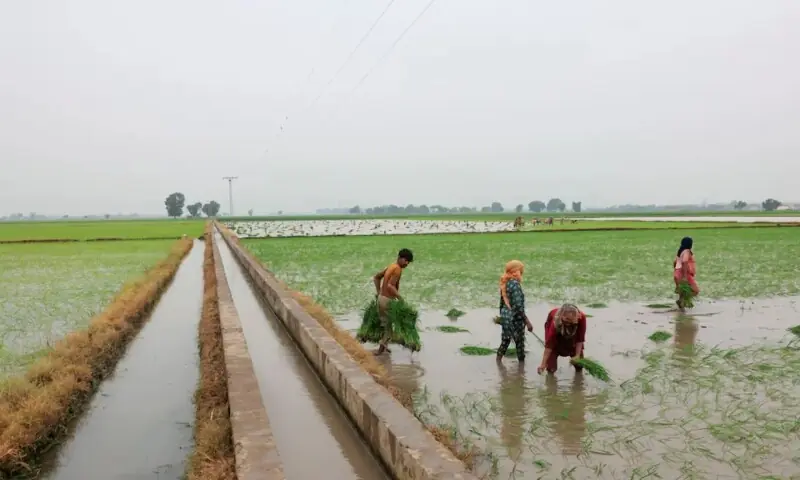
Punjab’s traditional irrigation system delivers water from canals and distributaries to farms through an extensive network of open watercourses. Of the province’s 58,000-plus primary watercourses, about 7,000 remain completely unlined, while the other 51,000 have been only partially lined. In most of these, lining covers just 30 per cent of their length, with the remaining sections still earthen (kachha khals).
The situation is even more concerning within farmers’ fields. There, the combined length of internal watercourses is more than three times that of the primary network, yet almost all of them are unlined. This widespread reliance on earthen watercourses (kachha khals) is compounded by Pakistan’s limited adoption of High-Efficiency Irrigation Systems (HEIS) — drip, sprinkler, centre-pivot, and rain-gun — on farms.
In Pakistan, HEIS covers less than 1pc of the total irrigated area, compared with 19.2pc in India, 17pc in China, 24pc in Iran and 38pc in Turkey, according to the International Commission on Irrigation and Drainage Report (2023–24). The country therefore remains heavily dependent on an open-channel conveyance system based largely on earthen watercourses. This presents two major structural challenges for Punjab’s agriculture: high conveyance losses and substantial wastage of cultivable land.