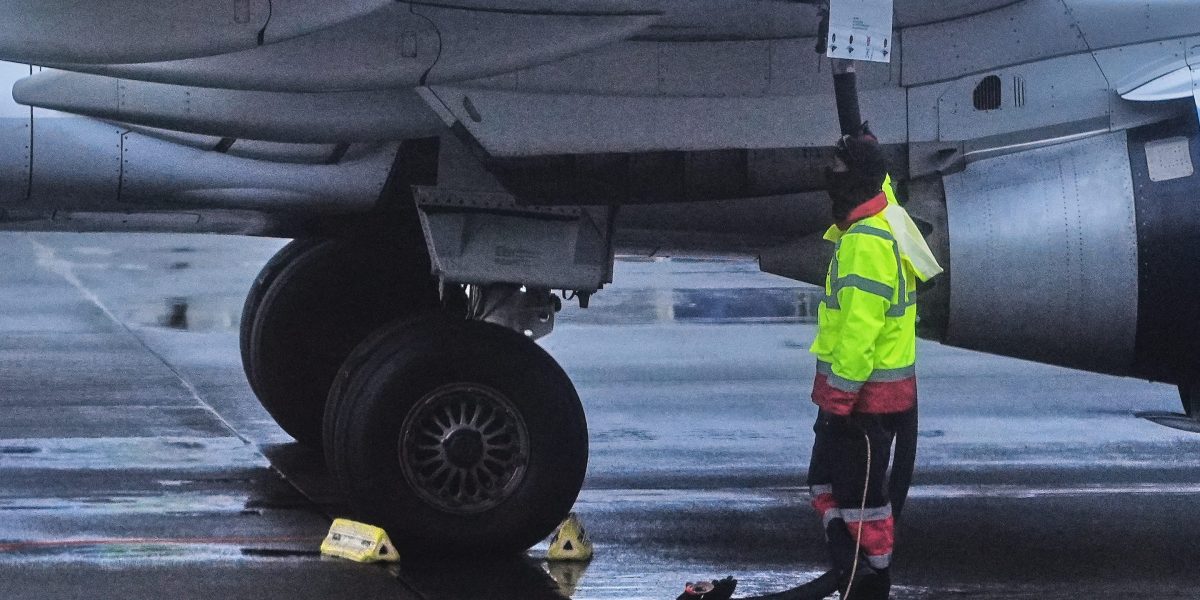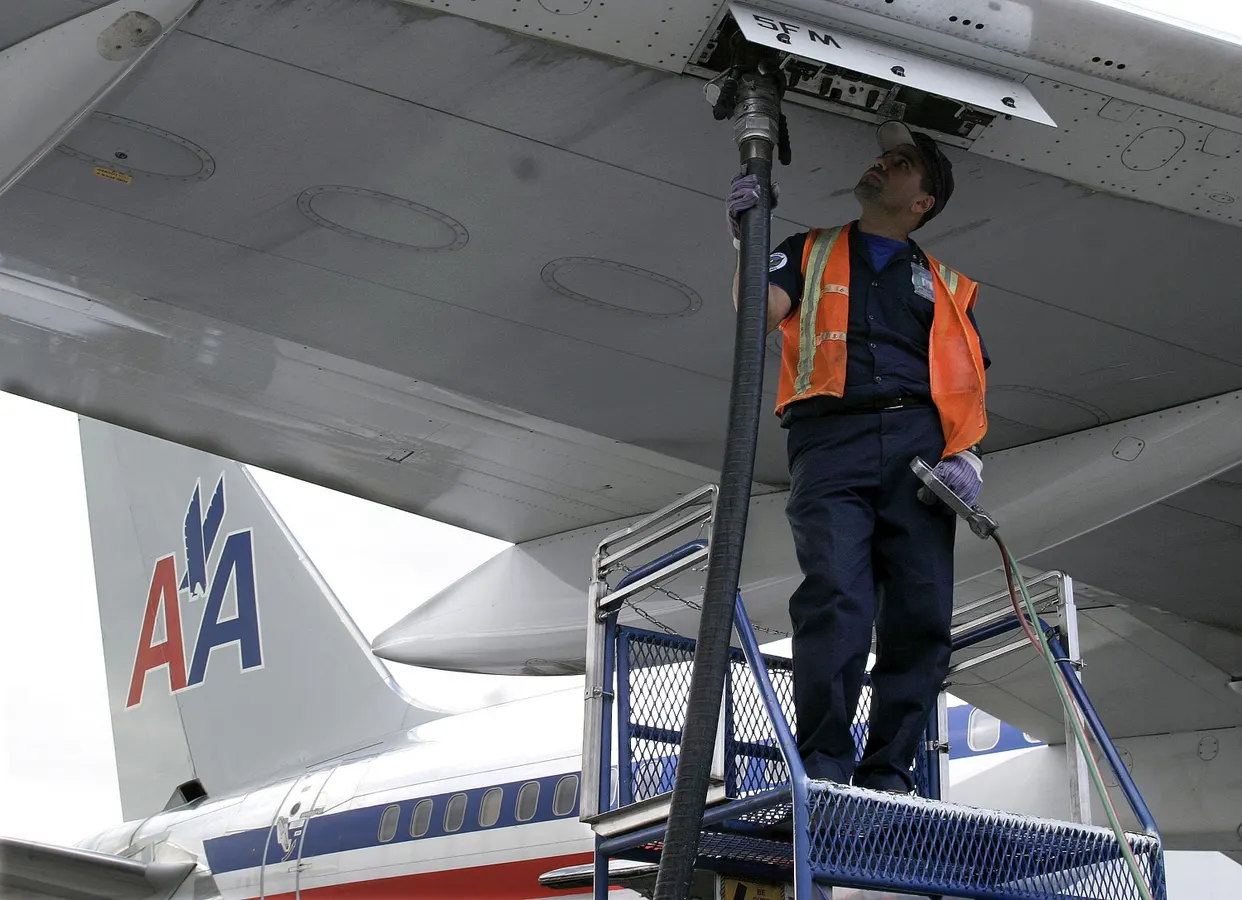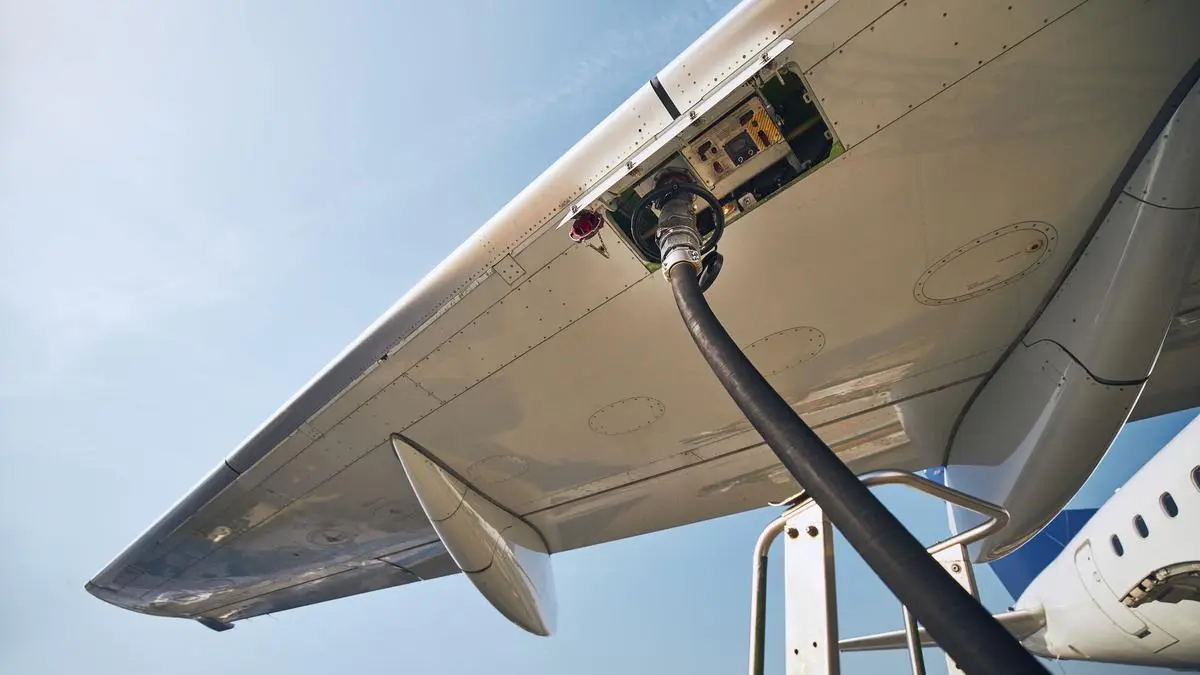
Ground service before flight. Refueling of airplane at airport.
| Photo Credit:
Chalabala
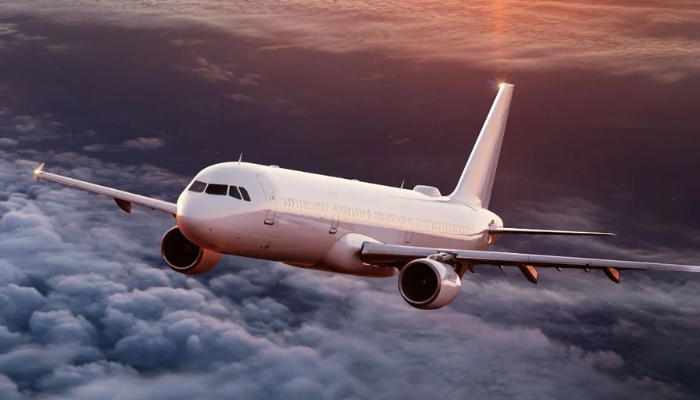
Fuel has always been one of the airline industry’s largest costs. However, with the war in West Asia raising both prices and volatility in energy markets, fuel now consumes almost a third of airlines’ operating costs — a whopping $350 billion in 2026, according to IATA. While airlines in the aggregate are expected to remain profitable in 2026, the pressure on margins is clear. From a paltry 4.2 per cent in 2025, it will shrink to 2 per cent. Airlines have no choice but to pass on the higher costs to customers. But while demand remains solid, tolerance for higher travel costs is also likely to have its limits. Therefore, it should come as no surprise that an IATA survey in March showed that for 90 per cent of airline respondents, improving fuel efficiency topped their priorities. And for financial and procurement teams, it was a priority for 96 per cent.Hapag-Lloyd, APM Terminals ink dealGermany’s Hapag-Lloyd has signed an agreement with APM Terminals to acquire a 25 per cent stake in APM Terminals Maasvlakte II BV. As partners, both companies will support the terminal’s continued development, capacity expansion and operational performance. The investment also underlines the importance of Maasvlakte II as a key European hub for the Gemini Cooperation between Hapag-Lloyd and AP Moller-Maersk. With the transaction, Hapag-Lloyd will secure long-term automated terminal handling capacity and strengthen its worldwide terminal presence under its terminals and infrastructure division, Hanseatic Global Terminals. APM Terminals will retain operational control of Maasvlakte II.Published on August 24, 2026