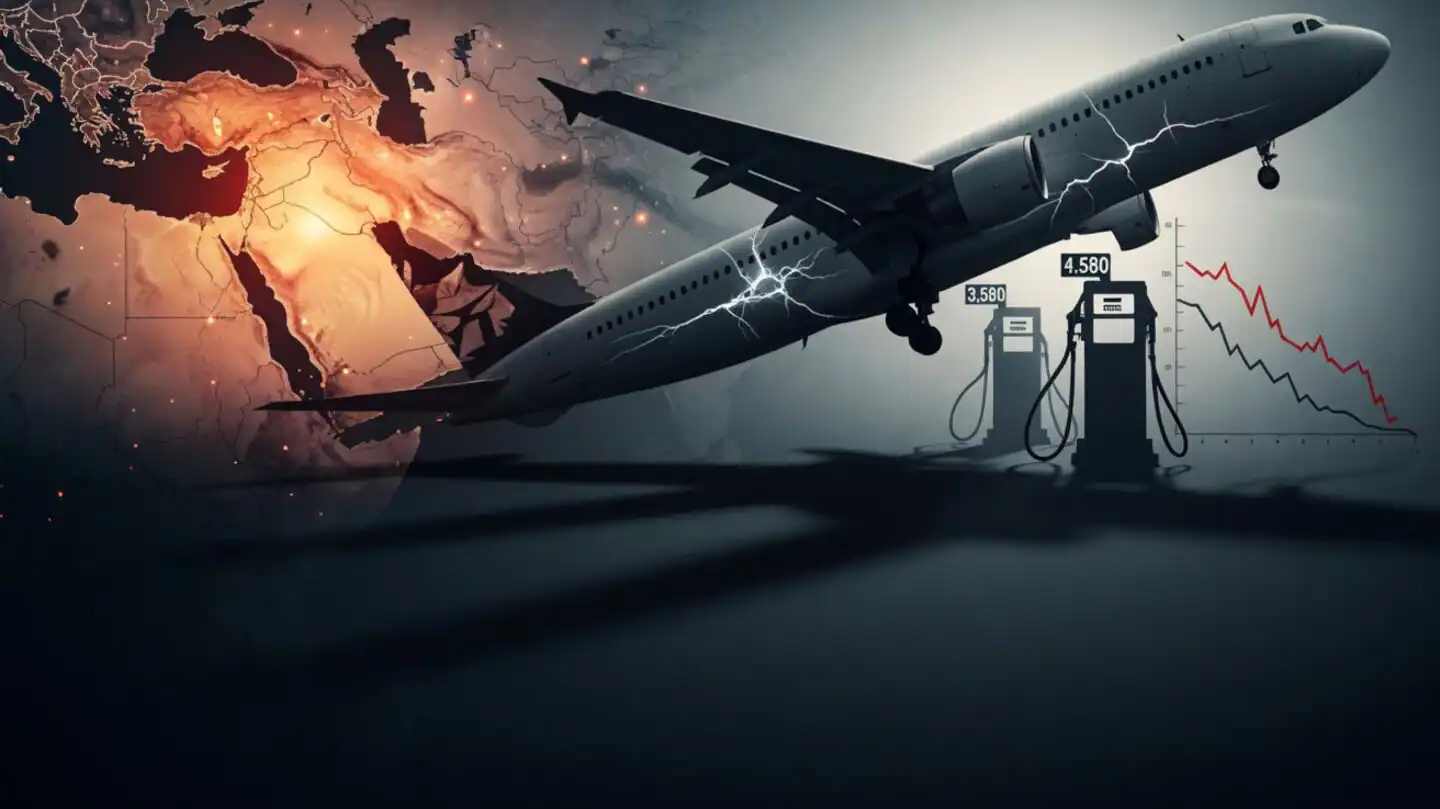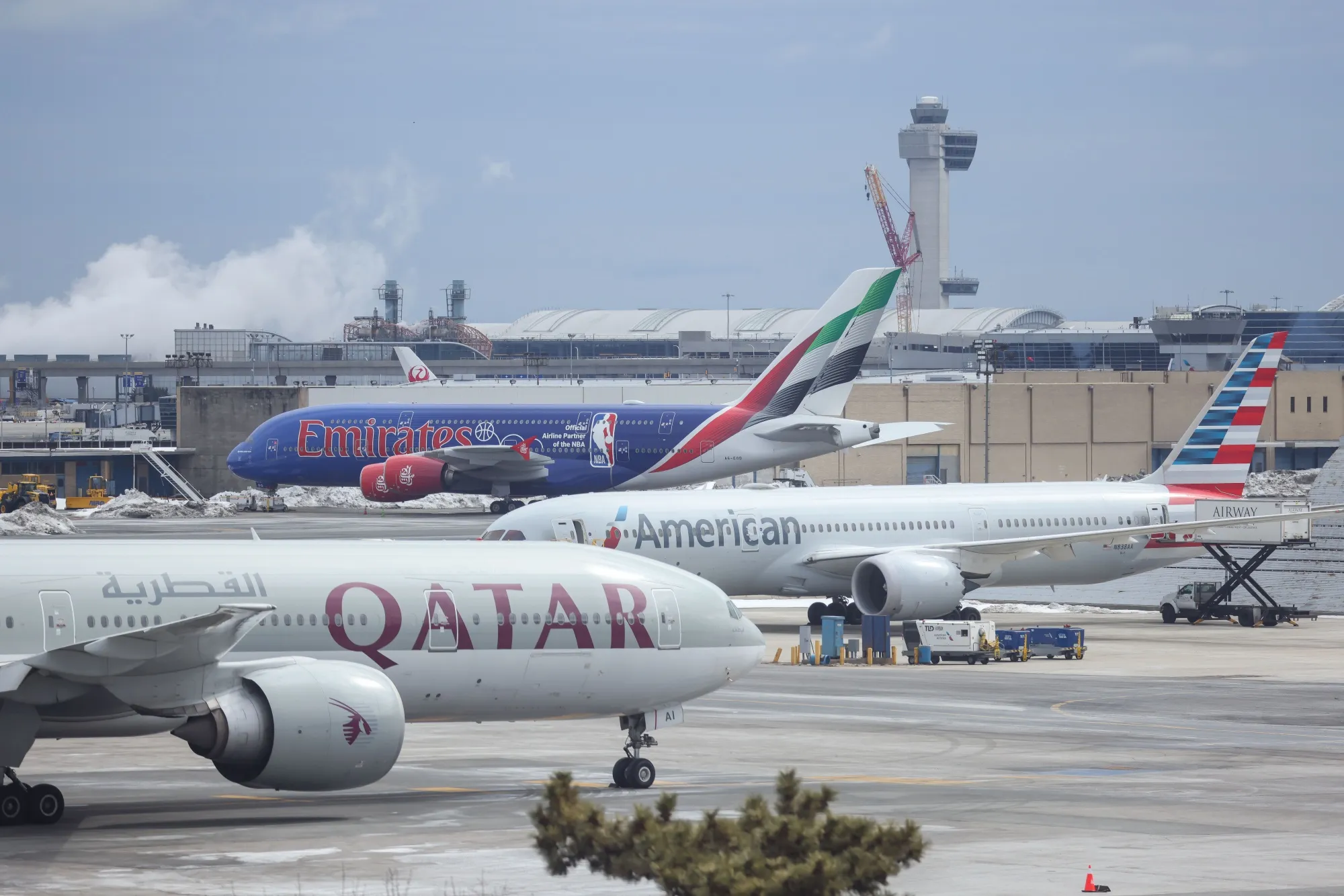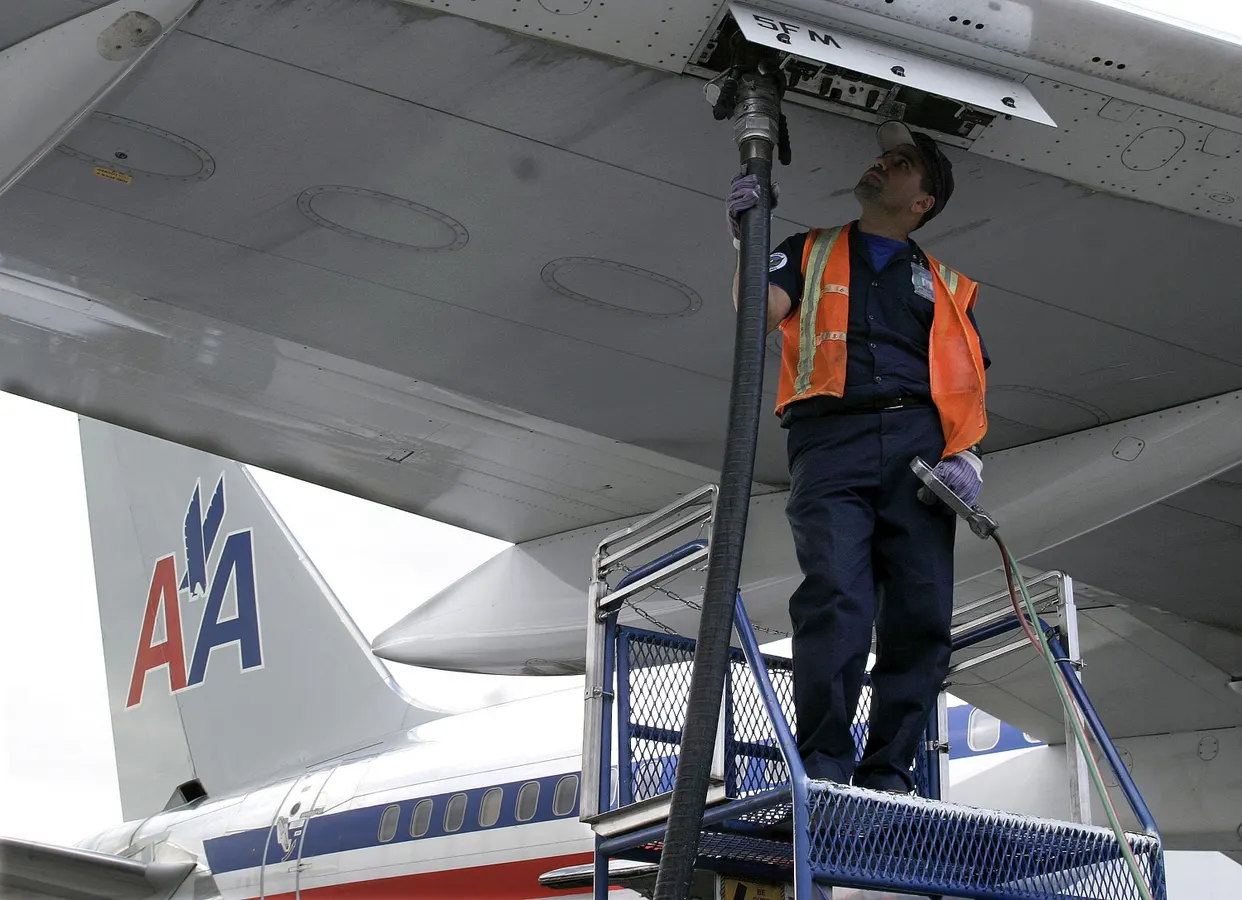
ToplineThe airline industry’s top executives are reckoning with the reality of sustained higher jet fuel costs and plummeting profits—with a souring shift in tone and clearer signs that travelers can expect higher airfares on the horizon.Jet fuel costs have decimated airlines' profits this year. (Photo by Jeff Topping)Getty ImagesKey FactsGlobal airlines will collectively pay $100 billion more for jet fuel in 2026 than last year, Willie Walsh, director general of the International Air Transport Association (IATA), told the industry's most important annual gathering of airline CEOs and senior executives on Sunday.As a result of jet fuel costing 70% more year-over-year, the global airline industry’s net profits will “halve from 2025,” falling from $45 billion to $23 billion in 2026, Walsh told attendees of the IATA Annual General Meeting (AGM) in Rio de Janeiro.Fuel price volatility and inflation pressure were the top risks identified by 21 global airline chiefs in a Deloitte survey released last week.How Are Jet Fuel Prices Impacting Airlines’ Future Outlooks?Industry analysts are painting an increasingly gloomy picture for 2026. “The airline industry entered 2026 with real momentum,” Deloitte researchers wrote. “By mid-year, that optimism feels like a distant memory.” Fitch Ratings last week revised its global airline outlook to “deteriorating,” specifically citing the fuel environment as a contributing factor in recent airline failures and liquidity problems. It’s notable many airlines are planning for elevated fuel prices to continue into 2027. United Airlines said it is assuming oil remains above $100 per barrel through the end of 2027. And on Saturday, Air New Zealand CEO Nikhil Ravishankar told Reuters the carrier has offset 25% to 40% of higher jet fuel prices through hedging and fare increases into next year. Will Airfares Rise This Summer?“High oil prices will inevitably mean higher ticket prices,” Walsh told conference-goers in Brazil, adding that carriers’ margins are “wafer-thin.” Global demand is holding up, he said, even as airlines raise fares to offset fuel costs, but that growth will inevitably slow for the passenger business. Long-haul and premium travelers would likely absorb the increases first, while short-haul leisure markets may remain more price-sensitive, Sean Doyle, chief executive of British Airways, told The Guardian. Meanwhile, in the U.S., “domestic airfare is up 17% for the Fourth of July, but roughly 18% for the rest of the summer compared to last year,” Katy Nastro, spokesperson for the airfare deal-finding app Going, told Forbes, adding that international average airfares are basically flat year over year. “That, to me, is a signal that there is some pullback in terms of international bookings.” Flat airfares may be good news for international travelers, she said, “but it’s not good for the airlines.”TangentDelivery delays from Boeing and Airbus have worsened the situation by forcing airlines to hang on to older, less fuel-efficient jets, which has exacerbated maintenance costs as oil prices have ratcheted up. Walsh told conference-goers on Sunday there was a backlog of over 18,000 aircraft from the two manufacturers.What We Don’t KnowWhen the Strait of Hormuz, where roughly 20% of the world’s petroleum liquids pass, will reopen. The world's most critical maritime oil chokepoint has been closed since Feb. 28, when the U.S. and Israel launched airstrikes against Iran. President Donald Trump on Monday said Iran and Israel are on the verge of agreeing to an immediate ceasefire after both sides exchanged strikes. “Trump made a lot of miscalculations, and until he comes to the realization that he needs to solve this, nothing’s going to happen,” Patrick De Haan, head of petroleum analysis at Gas Buddy, told Forbes, adding at this point, opening the Strait of Hormuz likely wouldn’t immediately bring fuel prices down to pre-war levels. “It could take six to eight months in the best-case scenario to reopen the Strait of Hormuz if an agreement was reached today,” Toril Bosoni, head of oil markets at the Paris-based International Energy Agency, said at an energy conference in London last week.Further ReadingTrump Says Iran And Israel Are Looking For ‘Immediate Ceasefire’ After Trading Strikes (Forbes)
Airlines Take $100 Billion Jet Fuel Hit—Plunging Profits By 50% In 2026
The global airline industry is coming to terms with higher jet fuel prices as the new normal this year and likely into 2027.
666 words~3 min read