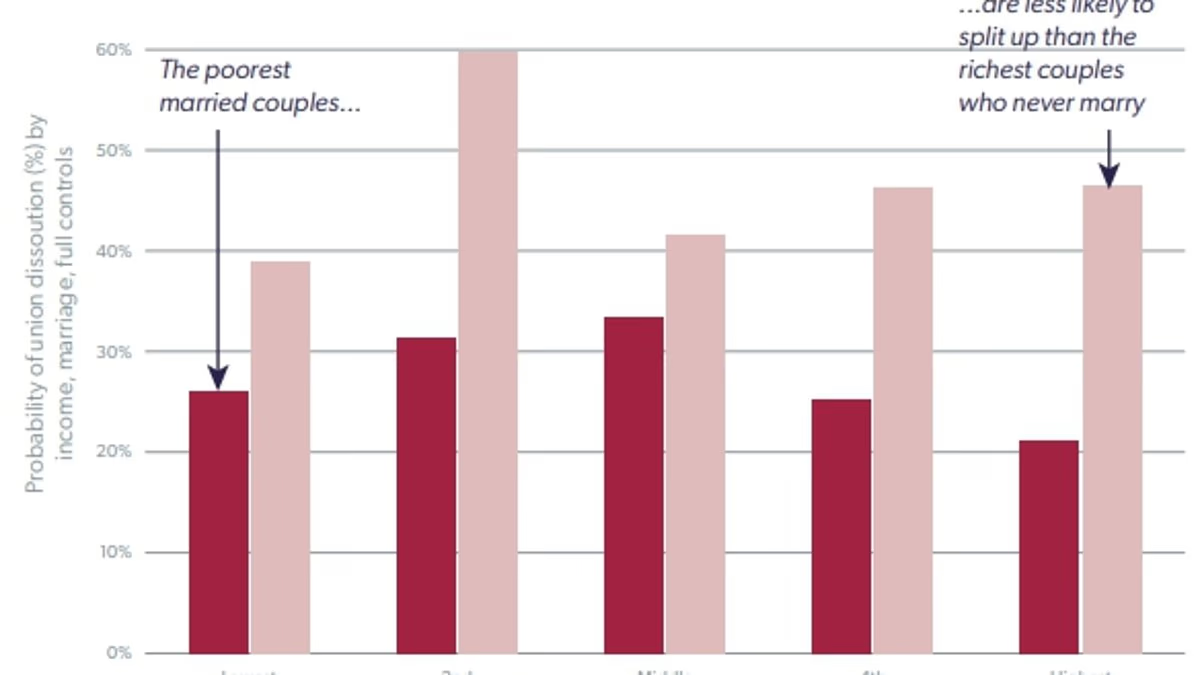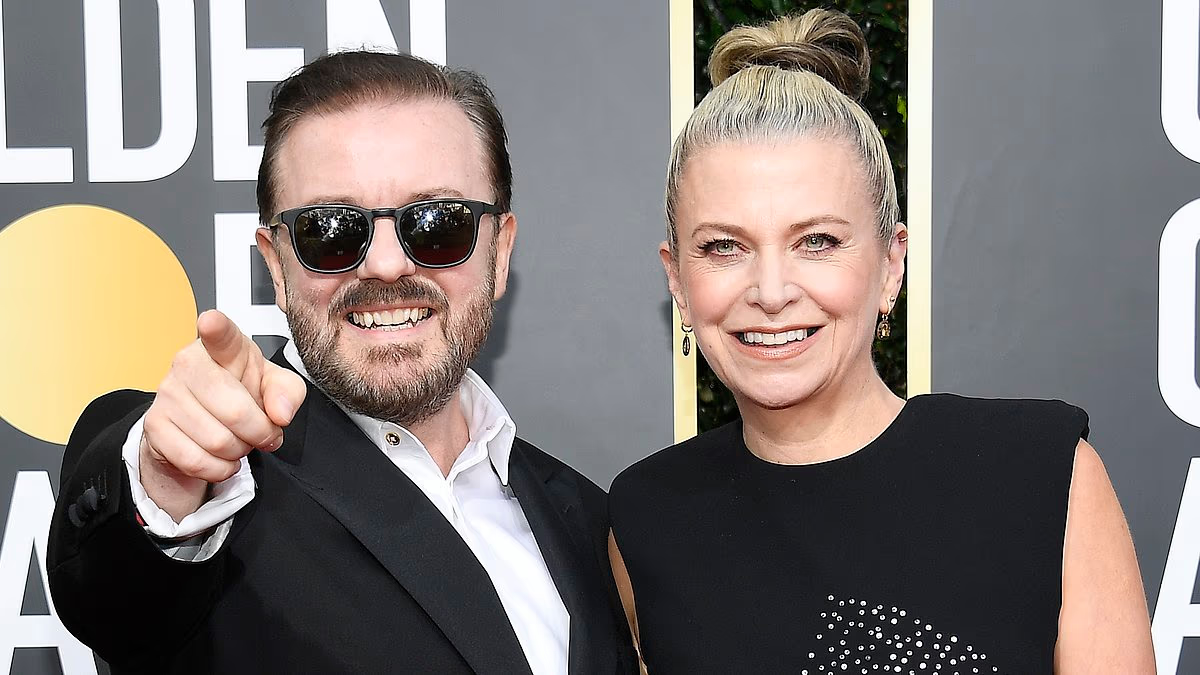
Couples are increasingly choosing to build lifelong partnerships, buy homes together – and even raise families – without ever tying the knot.Almost 6.5million people in the UK cohabit, and 51 per cent of children are born out of wedlock, official data shows.While there may not be any immediate tangible benefits to being wed, few realise just how many financial protections it offers, and just how precarious their position is if they don’t tie the knot.Many cohabiting couples wrongly believe they form a common-law marriage when they live together, but this isn’t the case.So it can come as a shock when, after decades of living together, they are left with little to no financial protection when the relationship ends. In the worst cases, it means you could be kicked out of your family home or find yourself with no savings for retirement.Choosing not to marry can also have drastic consequences when it comes to inheriting wealth from your partner.Last week, comedian Ricky Gervais revealed that he and his partner, Jane Fallon, would marry after 44 years together.The reason? To avoid a large inheritance tax (IHT) bill. Ricky Gervais revealed he will marry his partner, Jane Fallon, after 44 years together, to avoid a large inheritance tax billThe Government has promised to reform the law relating to cohabitation in England and Wales, and until nine days ago it was consulting the public and legal experts. But none of the proposed changes will be enough to stop your money falling into the wrong hands, or the taxman’s pocket, experts reveal.So what rights do you have? How can you protect yourself if you are cohabiting with your partner? And what can you do to avoid a bumper IHT bill? Wealth & Personal Finance asks the experts.Unmarried couples risk ruinCouples who cohabit are running risks that could ‘seriously damage their finances’, says Sarah Coles, head of personal finance at the investment platform AJ Bell.If you split up or one of you dies, unmarried partners have no automatic legal, financial or inheritance rights. And it doesn’t matter how long you’ve been together.In cases seen by The Mail on Sunday, mothers have been forced out of their homes, older surviving partners have been left penniless and family inheritances have been snatched away.You may have some rights where property is concerned, but it all depends on who owns it and how they own it. Many find themselves walking away with nothing at all.You won’t be able to claim against your ex-partner’s pension either if you split up, which could leave you with little savings for retirement.Conversely, spouses have three options when splitting pensions – share them on a clean-break basis, one partner can earmark some of the income to be paid out after retirement or they can offset their value against other assets. Sarah Coles, from investment platform AJ Bell, warns intestacy rules mean that after one unmarried partner dies the other can be left with nothingColes adds: ‘If unmarried partners die without a will, assets are split according to intestacy rules. These give nothing to unmarried partners at all.’If the home is in one person’s name because they either already owned it when the relationship started or have since bought it with their own money, this can cause the biggest heartbreak.This is because the new legal owner – a child of the deceased, for example – can kick out their parent’s partner from the family home.You do have the legal right to claim against your partner’s estate if you’ve been cohabiting for more than two years. However, this could be protracted, stressful and expensive, particularly if the deceased had blood relatives who could otherwise inherit.There are a host of other little-known issues for unwed couples, including no right to spousal maintenance and fewer claims to bereavement benefits.In Scotland, unmarried couples have rights to make a claim after a split to address financial imbalance.New protectionsIn June, the Government announced plans to update the law around cohabitation, explaining that it ‘hasn’t kept pace with the realities of modern families’.Ministers have promised a safety net for couples who split up or for those who survive their partner.Reforms will apply to couples who have lived together for at least three years, or those who live together and have children. Before Keir Starmer left office, the Government announced plans to reform legislation around cohabitation, saying the current law 'hasn’t kept pace with the realities of modern families'The proposed plans include giving cohabiting couples the same intestacy rights as spouses for when a partner dies without leaving a will.When it comes to a split, partners could have a claim on the other’s assets. A key change would be to give those who are separating access to a share in the sale of a home owned in the other’s name.Cohabiting couples will still have a different set of rights from married couples, however, ‘helping to preserve the sanctity of marriage’.One key difference is that unlike divorce, in which assets tend to be split equally, it will initially be assumed that each person keeps what they legally own.Courts will only intervene to meet an individual’s needs, such as a mother who gave up her career to look after children. She may own little in her own name, but a court would ensure her financial needs were met in a separation.Death-duty stingWhile unmarried couples will soon have greater rights, they still face one glaring danger – a hefty bill for IHT.Spouses benefit from generous IHT allowances. They can pass wealth to each other on death completely free of death duties. They can also pass on any unused allowances between them.Everyone gets a £325,000 tax-free allowance on their estate when they die, called the nil-rate band. And those passing a home to a direct descendant such as a child or grandchild get an additional £175,000. Anything over this is taxed at 40 per cent. So, in theory, a widow could pass on £1million of wealth tax free.That is not the case for unmarried couples, who don’t receive these tax benefits. They get no extra allowances and there are no plans to change this. For Gervais, it means that if he and Fallon didn’t marry and he left his £141million fortune to her, she would face an IHT bill of £56.3million.Once wed, however, she won’t pay a penny. Married couples benefit from generous inheritance tax allowances and can pass wealth to each other tax freeYou don’t need to be a multi-millionaire like Ricky Gervais to be caught in the tax net. Take a couple who have cohabited for 20 years.If one partner, let’s call him Andrew, died in June 2027 and left half of the house worth £350,000 to his partner, who we’ll call Sarah, as well as his £500,000 pension, then she would have to pay £140,000 in tax. Unused pension pots are exempt from IHT but will be dragged into the net from April. When Sarah dies five years later, let’s say the house has appreciated in value and is worth £375,000, there’s £250,000 left of Andrew’s pension and her own pension is worth £400,000.If she leaves all these assets to a niece, £280,000 in IHT is payable, according to calculations by the insurer Royal London.That means £420,000 would have been paid on the couple’s assets in total. But if Andrew and Sarah had been married, just £150,000 in IHT would have been paid.Money in the wrong handsUnwed partners will also need to beware of a host of new risks if the reforms become law. A few weeks ago, the Mail warned that the plans may mean hard-earned wealth will fall into the wrong hands – especially for young couples who may not be embarking on a lifelong partnership.For example, if parents give a grown-up child money towards their first home, then part of their gift could go to an ex-boyfriend or girlfriend if the couple split up, even if they’re not married.It also opens the floodgates for an inheritance disaster that leaves children with very little. Coles says: ‘A couple may have children from a former relationship and they want to protect their assets in the event the relationship came to an end. These proposed changes may mean they don’t have the protection they expect.’If a cohabitee dies without leaving a will, their partner will be automatically entitled to part or all of their estate.A partner will inherit the entirety of an estate if it is worth £322,000 or less under intestacy laws. If the estate is worth more than this, the children simply inherit a portion of it.After the potential reforms were announced in June, many unhappy individuals took to the social media platform Reddit to say that unmarried couples probably don’t want the legal arrangements that marriage affords them.Julian Hawkhead, senior partner at Stowe Family Law, says: ‘The danger in trying to fix the "common-law marriage" myth is we inadvertently create something that feels very much like marriage by default.’ What to do now to protect your wealth Write a willLeaving a will can protect your loved one from financial ruin.Clare Moffat, of Royal London, says: ‘Not having a will means other people have the right to inherit. That could mean money or a house going to a cousin of the person who died rather than the person they live with.’ Under the reforms, leaving a will ensures your estate is split how you want.Make an agreementIf you move in with someone, you can write a cohabitation agreement. These are legally binding documents that set out who owns what, who gets joint assets in the event of a split, and how property will be divided. Both parties should have legal advice, as the court will give it more weight.You can create such contracts with a solicitor or buy them at a stationery shop. But a court can disregard a cohabitation agreement if it isn’t fair or reasonable.It’s not known how agreements signed before the new reforms come into place will work.Couples should at least write out their intent on a piece of paper and sign this in front of a witness, says divorce lawyer Vanessa Lloyd Platt. This can be helpful during difficult separations.Nominate pension beneficiariesShould you want your partner to receive your unused pension savings when you die, nominate them as a beneficiary.The final decision of who gets the savings is made by the trustees of the scheme, but an ‘expression of wishes’ form can guide them.If you have a public-sector pension then your partner may be able to claim a survivor’s pension in some cases – but you must have lived together for two years and prove that you were both financially interdependent.Minimise your IHT billIf you and your partner don’t fancy marrying, you’ll need to consider how to minimise inheritance tax. On top of the £325,000 nil-rate band, you can give your partner money or assets before you die to cut their tax liability.Gifts you make more than seven years before you die fall outside your estate, but you can also give away £3,000 a year free of tax.One of the most generous IHT allowances is the so-called ‘gifts out of normal expenditure’. This allows you to give away as much money as you like providing the sums are regular and made out of surplus income.Get marriedTo dodge a big tax bill when you inherit a partner’s wealth, tying the knot may be the only option.But don’t rush into marriage for tax reasons alone. Joe Cobb, head of private wealth at the legal firm JMW, warns: ‘Being married comes with other responsibilities and consequences, like potentially getting divorced. A divorce tax at 50 per cent – the amount you’d give up in a split – is worse than inheritance tax at 40 per cent.’Opt out of the reformsIf you don’t want your partnership to be more like a marriage or you believe the new rules pose a risk to your finances, you can opt out if you and your partner agree.A young couple in their 20s who have lived together for a few years but are not yet sure about linking their finances may consider this, for example.It is not yet known how couples can do this, but in Scotland couples can currently create agreements that regulate potential claims after a split. But make sure you both know what this will mean for your money if you separate or when one of you dies.money@mailonsunday.co.uk
The devastating financial minefield facing unmarried couples
While there may not be any immediate tangible benefits to being wed, few realise just how many financial protections it offers, and just how precarious their position is if they don't tie the knot...
2,064 words~9 min read