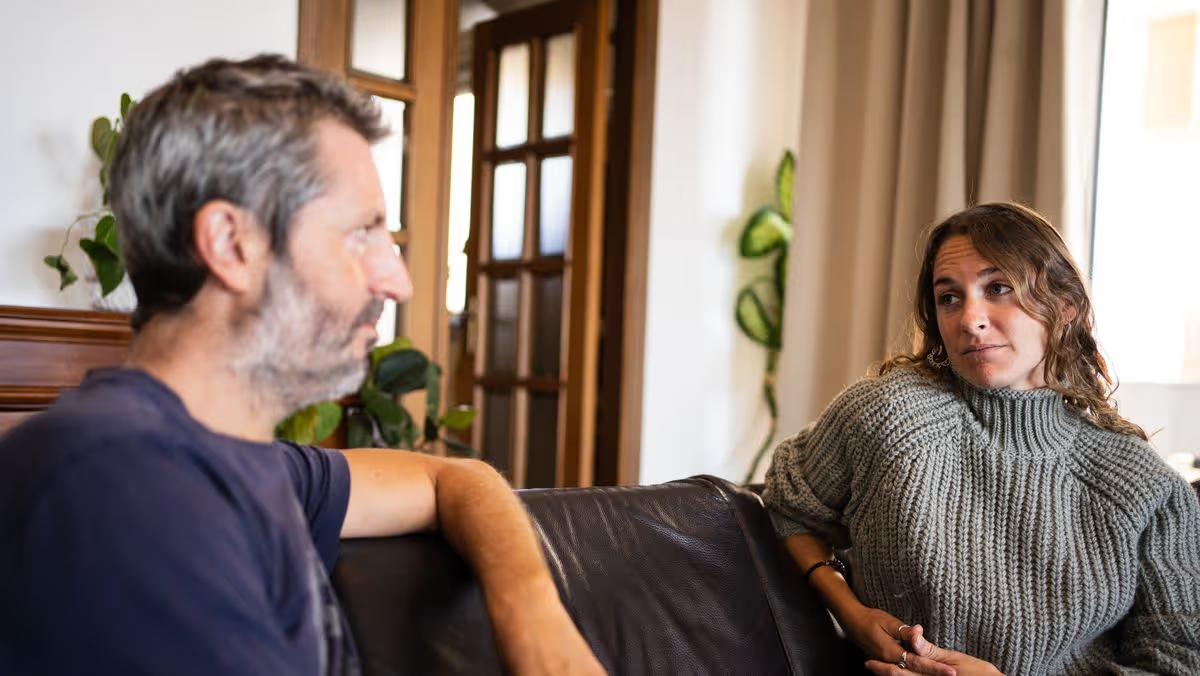
Waiting until you’re married to move in together may once have been the norm, but few couples do that today.About seven million unmarried people in the UK are cohabiting, the highest level since records began in 1994. And more children are now born to unmarried couples, with 51 per cent born out of wedlock, official figures show.But few realise how vulnerable their finances will be if they never marry, and the consequences can be ruinous.In cases seen by The Mail on Sunday, mothers have been booted out of their homes, older common-law widows have been left penniless and families have seen their inheritances snatched away.Last Friday, in a long-awaited reform to outdated rules, the Government announced plans to update the laws around cohabitation and create a safety net for couples who split up or where one person survives their partner.Under the proposals, unmarried partners could soon have an automatic right to inheritance if a partner dies without a will. This could be vital in stopping long-term partners being left with nothing.However, millions of families could soon face an inheritance minefield as a result, with life savings going to unintended recipients in some cases.What are my rights?At present, simply living together gives you no status or financial claim in the eyes of the law. You can share bills, have been together for decades and even have children together, but if the relationship breaks down or one partner dies, the other person can be left with nothing. Last Friday, in a long-awaited reform to outdated rules, the Government announced plans to update the laws around cohabitation and create a safety net for couples who split up or where one person survives their partner (picture posed by models) Waiting until you’re married to move in together may once have been the norm, but few couples do that todayYou may have some rights where property is concerned, but depending on who owns it and how they own it, many find themselves walking away with nothing at all.If the home is in one person’s name because they either already owned it when the relationship started or have since bought it with their own money, this can cause the biggest heartbreak, says Ciara Pugh, partner at law firm Stowe Family Law. This is because the new legal owner – for example, a child of the deceased – can kick out their parent’s partner from the family home. This is not the case with married couples.Cohabiting couples also do not enjoy the same tax breaks that married couples do, for example when it comes to inheriting assets.Cohabiting partners are not automatically entitled to any of their partner’s property, financial assets or belongings if they die intestate, unless they can be shown to be jointly owned.They do have the legal right to claim against their partner’s estate if they’ve been cohabiting for more than two years.However, this could be protracted, stressful and expensive, particularly if the deceased had blood relatives who would otherwise stand to inherit.Similarly, in cases where a couple splits up, those who simply live together have little protection. For example, they have ‘no claims whatsoever’ against their partner’s pension, says Ms Pugh.Couples in civil partnerships are afforded the same rights and protections as those who are married.What is changing?Those who live together will have greater rights if their relationship ends and the process of splitting up will be ‘less financially difficult’, the consultation into new rules promises.Speaking on the podcast of our website This Is Money, Deputy Prime Minister David Lammy said: ‘Young people are putting off marriage because on average it costs £20,000, which is a lot of money. It’s important we give cohabiting couples rights.’ Deputy Prime Minister David Lammy told our podcast This Is Money: 'It’s important we give cohabiting couples rights'Sital Fontenelle, of law firm Kingsley Napley, who has campaigned for law reform in this area, says: ‘It is no longer tenable to say parties wanting protection should get married, because with declining rates of marriage – especially among younger couples – many are losing out.’Stephanie Patrick, chief executive of the charity Way, Widowed and Young, says: ‘Recognising unmarried partners in inheritance law is a long-overdue acknowledgement of the reality of modern relationships. Too many people have faced the devastating double blow of losing the person they love, while also being left without basic legal and financial protection because they were not married.’One of the key changes to the law would be to give partners who are splitting up access to a share in the sale of a house, even where it is owned in one person’s name.The Government has suggested that this would only apply to couples that have been together for longer than three years or those who share children. All must show an ‘enduring family relationship’.Ms Pugh says: ‘It’s positive that there is change coming, but I have a lot of questions about how it will work in practice.‘An “enduring family relationship” isn’t a term used in the courts, so we would need guidance on exactly what this is. The risk is there will be confusion – and some unintended consequences.‘For example, you might get cases where people are still living together after their relationship has broken down because they are tied into a tenancy agreement or can’t sell their home. If one partner claimed they were still together, they could have a claim against the other’s assets.’Another major reform will be to give automatic rights to inherit if their partner dies without a will. This will be a comfort to many long-term partners. If there is a will in place, this will determine how assets are distributed and would override any new rights the rules create.But it is unclear how this will work in practice, especially where the deceased has children from a previous relationship. This could create an inheritance minefield, where, in some cases, children find their inheritance goes to a relatively new partner their parent had been with for just three years prior to their death.When quizzed on whether there are risks that recent partners could trump children when it comes to inheriting, Mr Lammy said: ‘The blended family does raise new complications for families up and down the country.‘We’re consulting on the basis of five years, then the partner should be able to inherit in the event of a partner passing away, and if you’ve been together two years and have children, then that partner should also benefit.’Ms Pugh says there will be unintended consequences that work against some. She says: ‘You might get cases where a victim of abuse can’t afford to move out but chose not to marry for a reason, and when they die all their money goes to their abuser just because they lived together.’The Government confirmed that cohabiting couples will still have a different set of rights from married couples, ‘helping to preserve the sanctity of marriage’.It has been confirmed that inheritance tax will still be levied on unmarried partners, for example.Ms Pugh warns that more people will have to take legal advice to understand the implications for their finances. She says: ‘It isn’t cheap to draw up agreements or to set out your finances and the new rules will force many to spend thousands to get legal advice.‘We’re dealing with the most important things in people’s lives – their homes, their children and their money – so people need to be given clarity on what is changing.’
What you need to know about Labour's new rules for unmarried couples
Waiting until you're married to move in together may once have been the norm, but few couples do that today. About seven million unmarried people in the UK are cohabiting.
1,239 words~6 min read