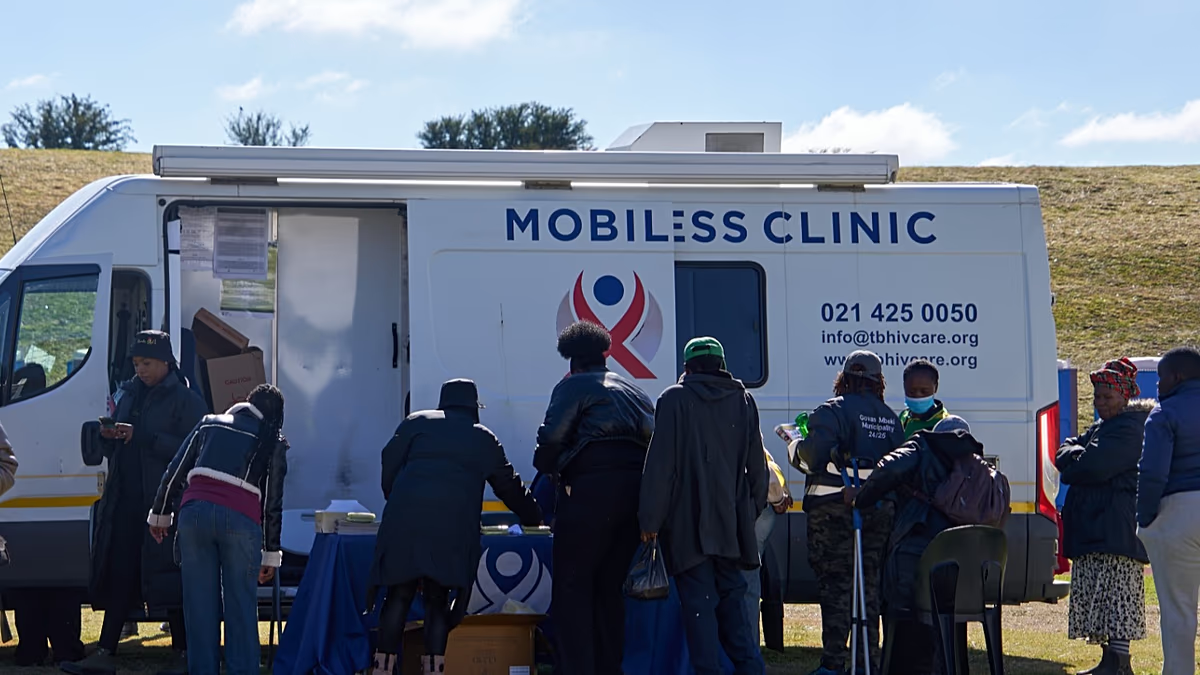
When community health workers stopped visiting markets and remote villages in Zambia earlier this year, the impact was not immediately visible. Clinics remained open. Antiretroviral medicines continued to be dispensed.
On paper, the country’s HIV response appeared largely intact.
The consequences are not confined to Zambia. In Europe, HIV prevention and surveillance are also under pressure. With an increase of 12 percent in 2024 of HIV diagnoses across Europe, prevention remains a critical priority, as well in Europe as on other continents.
“What we are seeing in the field is that a lot of community-based programmes have actually been stopped,” Mwelwa Phiri, an expert on HIV/AIDS at the Antwerp Institute of Tropical Medicine based in Zambart, Zambia, told EUobserver. “Outreach work in the community has also been stopped because there is just no funding for it.”
For years, outreach teams travelled to markets, densely populated neighbourhoods and rural communities where people often could not afford to lose a day’s wages travelling to a clinic.