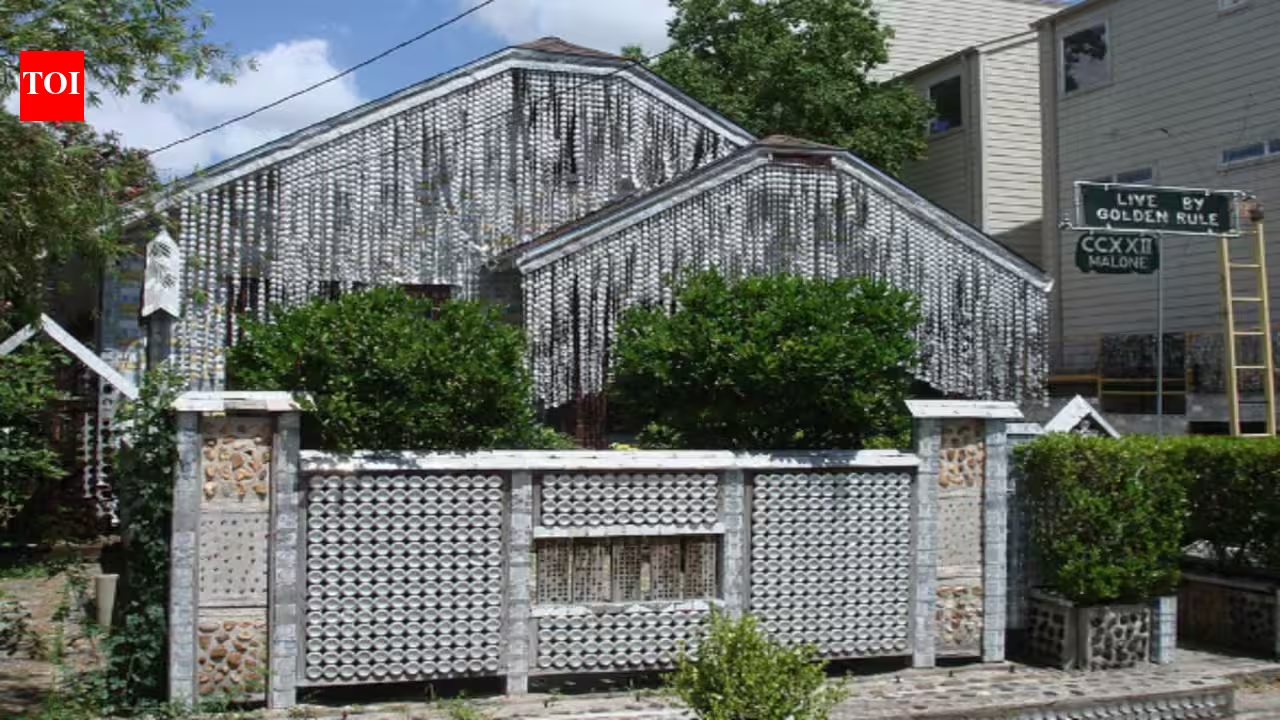
Beer Can House. Image credits: Wikimedia CommonsWhat began as an unremarkable project became the Can House, one of England’s most unusual folk art sites, in Hartlepool. Philip Muspratt was born in 1952 and passed away in 2015. Between his birth and death, he served in the armed forces as well as being employed as a bus driver until his early retirement due to a disability, as recorded in the SPACES Archives entry on the Can House and noted in local obituaries describing him as a retired bus driver who died aged 63. The project began as a simple gesture of kindness, not as a work of art. This began when Muspratt decided to decorate his back garden with found materials to cheer his elderly father, who was deaf and unable to speak.The Can House, an entry from the SPACES Archives, a nonprofit organization that documents self-taught art environments, describes how the project's true starting point came when Muspratt noticed piles of empty beer bottles left behind by his son and his son's friends. So he decided to construct a wall from them in his back garden, a construction that reached two layers of bottles in width, five feet in height, and approximately 23 feet in length, which took him five months to build, as described in the SPACES Archives entry on the Can House. The same entry reports that Muspratt’s son was struggling with alcoholism, giving him a steady supply of used bottles for the project.From bottles to cansThe project switched materials around 2005. After learning that his son had switched to drinking from cans, Muspratt began collecting cans instead. His hobby quickly became more serious: he aimed to keep decorating the property with empties and raise money to restore a local war memorial through scrap metal sales. People around Muspratt heard about the project and began sending him bags of empty cans.A landmark and a filmThe Can House became more than just a curiosity for one individual. It attracted visitors from outside Hartlepool, including some from America, and became a social hub after many nearby pubs had closed. RIP the Can House, a Cultural Landmark Made from Empty Beer Cans, a retrospective published by Vice, describes how filmmaker Maxy Bianco spent time documenting life inside the house for a 52‑minute film first screened in 2012 and later shared online, which drew more than 20,000 views and a screening at London’s Floating Cinema in Hackney Wick. The Vice article notes that Muspratt had started covering the semi‑detached house in 2005, eventually layering on more than 75,000 beer cans in intricate patterns, including a fully functioning can fountain in the back garden. Bianco’s 52‑minute documentary follows not just the house but Muspratt, his wife Sue, and their children and grandchildren, capturing both the communal drinking and the toll of daily alcohol abuse.The Vice story also sheds light on the complexities that were involved in building this colorful home. Bianco’s documentary showed both the sense of community the project created and the reality of the alcohol addiction behind its materials. According to Kevin McGrother, a local musician who recorded a video inside the house, Muspratt initially started to collect the cans to pay for the renovation of the memorial at the church, as quoted in Vice’s retrospective “RIP the Can House, a Cultural Landmark Made from Empty Beer Cans.End of the Can HouseMuspratt died in 2015, leaving the house deserted for several years after nearly two decades of decoration. The property was demolished as part of a larger redevelopment plan for Hartlepool’s Dyke House area. The housing association Thirteen acquired the house as part of the Willow Fields redevelopment, which aimed to replace several prewar houses with 64 two- and three-bedroom homes. The demolition process started in 2018, and the entire house was torn down later that year, as reported in local news coverage of the Can House’s removal. Although the structure no longer stands, the Can House remains a notable example of vernacular art in Hartlepool. It joins other self-made art environments created by people without formal art training and reflects the roles of grief, addiction, and community in the project.
In 1995, a retired British bus driver began covering his modest home with empty beer containers; around 75,000 cans later, it was known as the Can House
What began as an unremarkable project became the Can House, one of England’s most unusual folk art sites, in Hartlepool. Philip Muspratt was born in 1952 and passed away in 2015.
690 words~3 min read