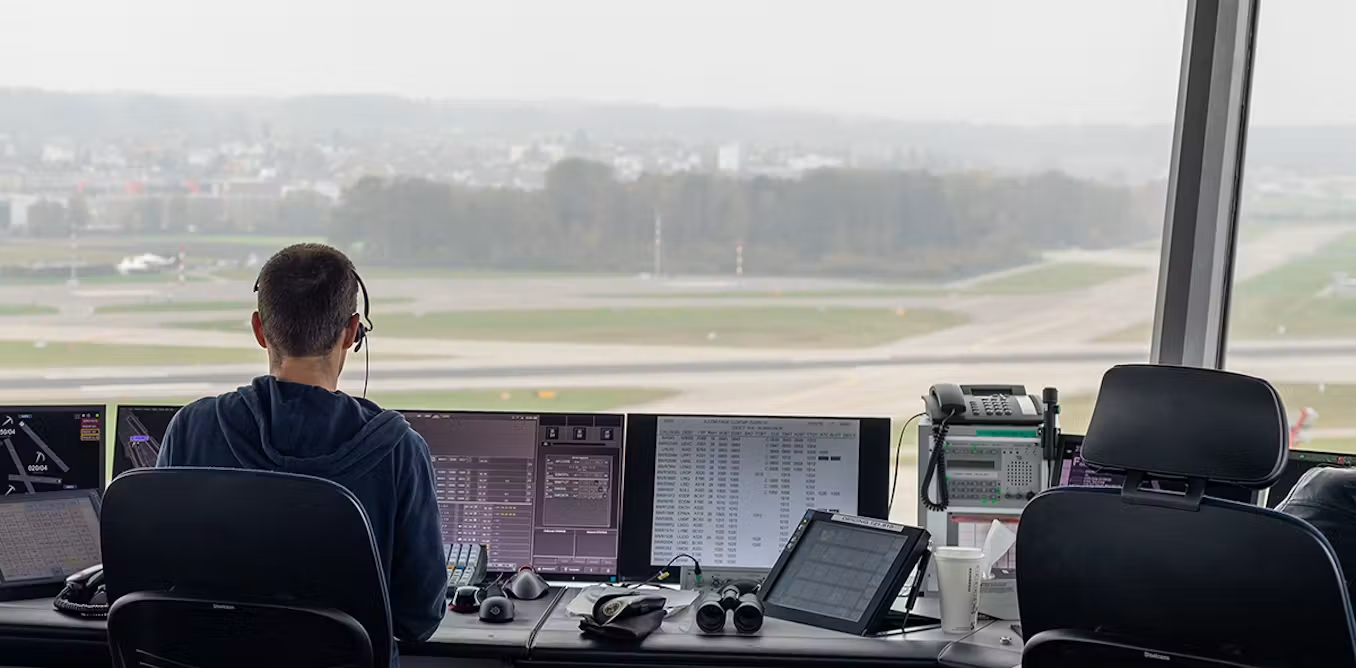
The International Civil Aviation Organisation, a specialised UN agency responsible for developing standards, oversight and monitoring, is leading the advancement of the global air traffic management system through the Global Air Navigation Plan. The introduction of automated air traffic control systems aims to improve the operational safety and efficiency of air traffic controllers. But these automated systems could introduce new risks.
Around the world, air navigation service providers offer a range of services, including air traffic control. The majority of these service providers are modernising their communication, navigation, surveillance and air traffic management systems in line with the global plan. This is to accommodate the growing number of flights while improving efficiency, reducing costs and lowering aviation’s environmental impact.
South Africa has been part of this global trend. The South African Air Traffic and Navigation Service has employed numerous automated systems to enhance operational efficiencies in line with global standards.
During my career as an air traffic services officer in Johannesburg, I provided flight information services to aircraft, coordinated international flights with neighbouring countries, conducted high frequency radio communications with aircraft over South African oceanic airspace, assisted with search and rescue missions and participated in the replacement of various outdated air traffic control systems. Much of the work involved implementing automated technologies designed to improve air traffic controllers’ performance and ultimately increase airspace capacity and efficiency.