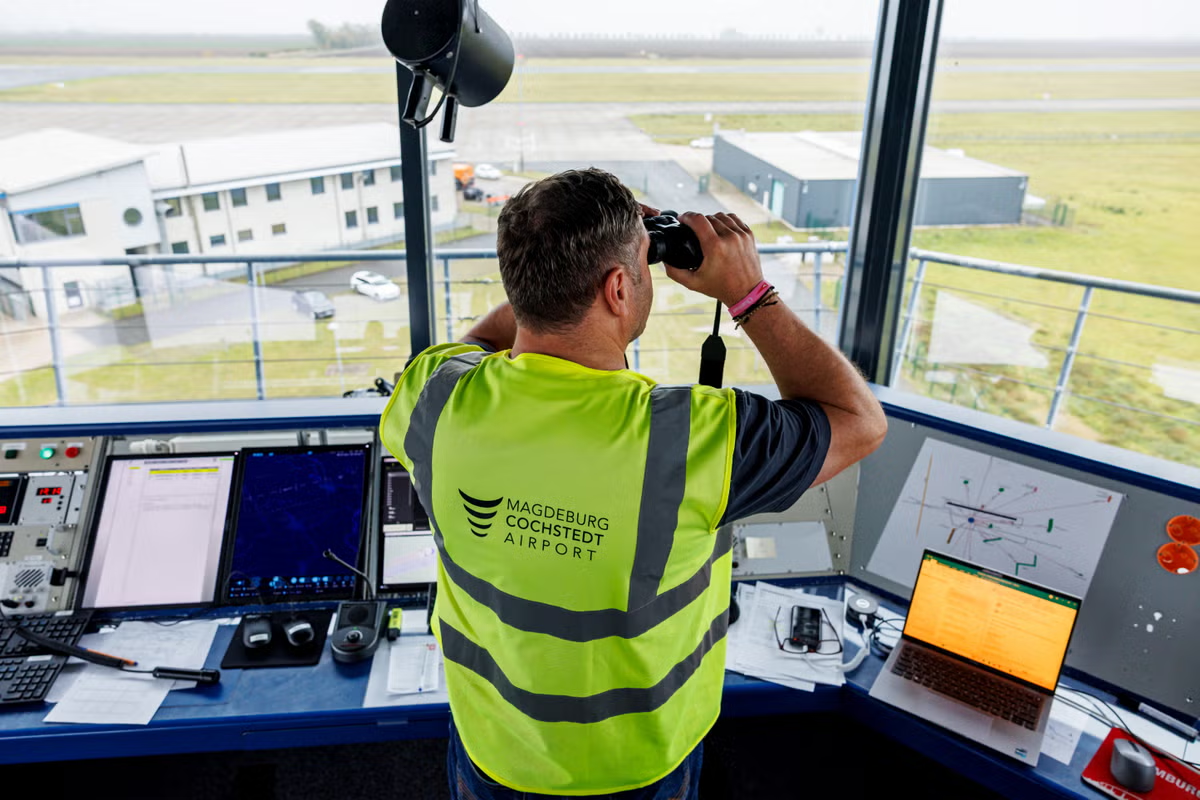
Federal Aviation Administration Administrator Bryan Bedford has linked implementation of the additional pay to a broader push to change how controllers are scheduled and utilized, telling the Washington Examiner that working with the controllers’ union to get “as much utilization out of our workforce as we can” would help “unlock the 2.8%.”The dispute is adding to frustration inside a workforce that remains roughly 3,000 controllers short, with current and former controllers warning that prolonged staffing problems are hurting morale, complicating recruitment, and leaving the nation’s air traffic system with less room to absorb weather and other disruptions.
“The morale is at an all-time low, as well as staffing,” Dave Riley, a retired FAA air traffic controller and former union representative with more than three decades of experience, told the Washington Examiner. Riley worked at facilities including Denver Tower, Denver Approach, and Phoenix Approach before retiring in 2020, following an air traffic control career that began in the Marine Corps.Riley said controllers have already been working “excessive amounts of overtime for an extremely long period of time,” while interruptions to training have made it difficult for the FAA to rebuild the workforce.The strain can also become visible to the flying public. When a facility is already operating with thin staffing, weather, sick calls, or other disruptions can leave controllers with little ability to absorb additional traffic. The FAA can respond by slowing the flow of aircraft into affected airspace, meaning a staffing problem hundreds of miles away can ultimately translate into delays or longer waits on the ground for passengers.One current controller, who requested anonymity because of concerns about professional retaliation, said some facilities are operating with so little margin that losing just one or two employees can be enough to restrict the number of aircraft moving through the airspace.What is holding up the 2.8% raise?