Originally published on tamiz.pro.
Introduction
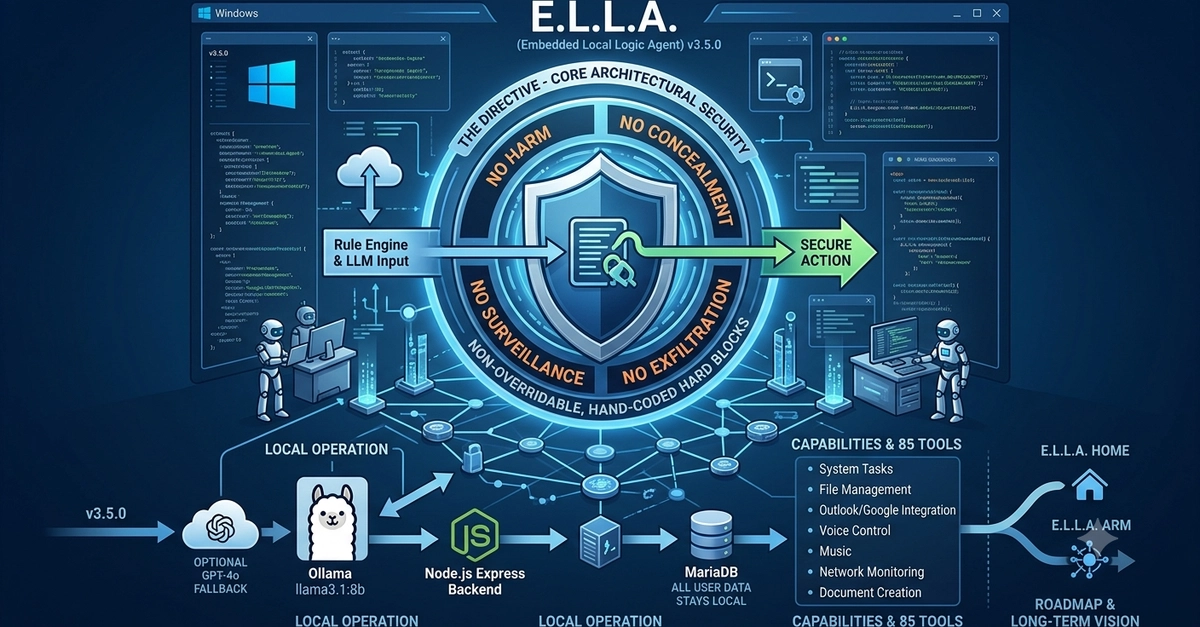
We are witnessing a fundamental shift in software architecture: the transition from passive APIs to active agents. While the industry has been obsessed with the race for Artificial General Intelligence (AGI) through massive cloud models, a parallel, often under-discussed revolution is happening locally. This is the emergence of the Agentic Operating System—a local-first stack where autonomous agents don't just chat; they operate files, manage repositories, and execute workflows using private, locally-hosted LLMs.
This is not merely about privacy, although privacy is a critical driver. It is about latency, determinism, and the "Planning Problem"—the architectural gap between reasoning (what to do) and execution (doing it).
Frameworks like Eliza have demonstrated that lightweight characters can maintain persistent state and tool usage. Meanwhile, projects like Hister are pushing the boundaries of agentic file-system manipulation. In this deep dive, we will dissect the architecture of a private agentic OS, analyze the mechanics of local orchestration, and address the hard engineering challenges of tool use and planning.