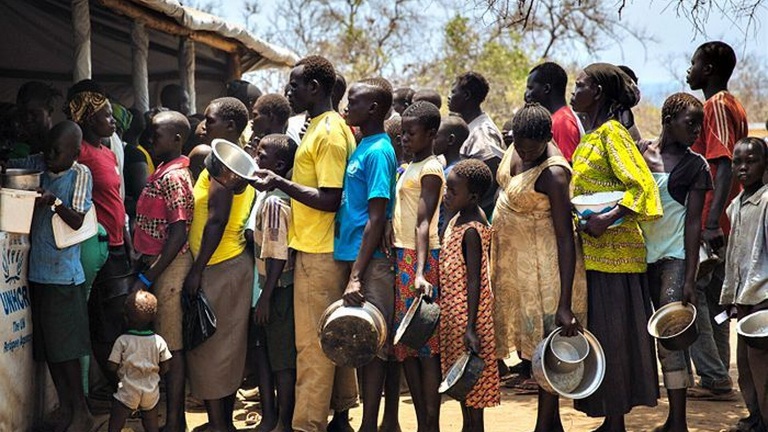
Nigeria’s efforts to tackle rising hunger and malnutrition through community food banks risk becoming a permanent relief mechanism unless the government simultaneously addresses insecurity that is keeping farmers away from their fields, farmers, humanitarian officials and agricultural experts have warned.
The concern is becoming more pronounced as attacks on farming communities, farmer-herder conflicts, displacement and destruction of agricultural assets continue to disrupt food production across several states, particularly in the North and parts of the North-Central.
The warnings come as Oluremi Tinubu, First Lady, expands the National Community Food Bank Programme across the country, with the initiative targeting children under six, pregnant women and lactating mothers with free nutritional support.
While stakeholders acknowledge that emergency food assistance is necessary amid worsening hunger, they argue that distributing food without restoring the productive capacity of rural communities could leave Nigeria trapped in a cycle in which government continuously feeds people who are unable to return to their farms.
The United Nations has also urged the Federal and state governments to prioritise the security of farmers and ensure that they have safe access to their farmlands, particularly in Borno, Adamawa and Yobe (BAY), where the humanitarian situation remains severe.