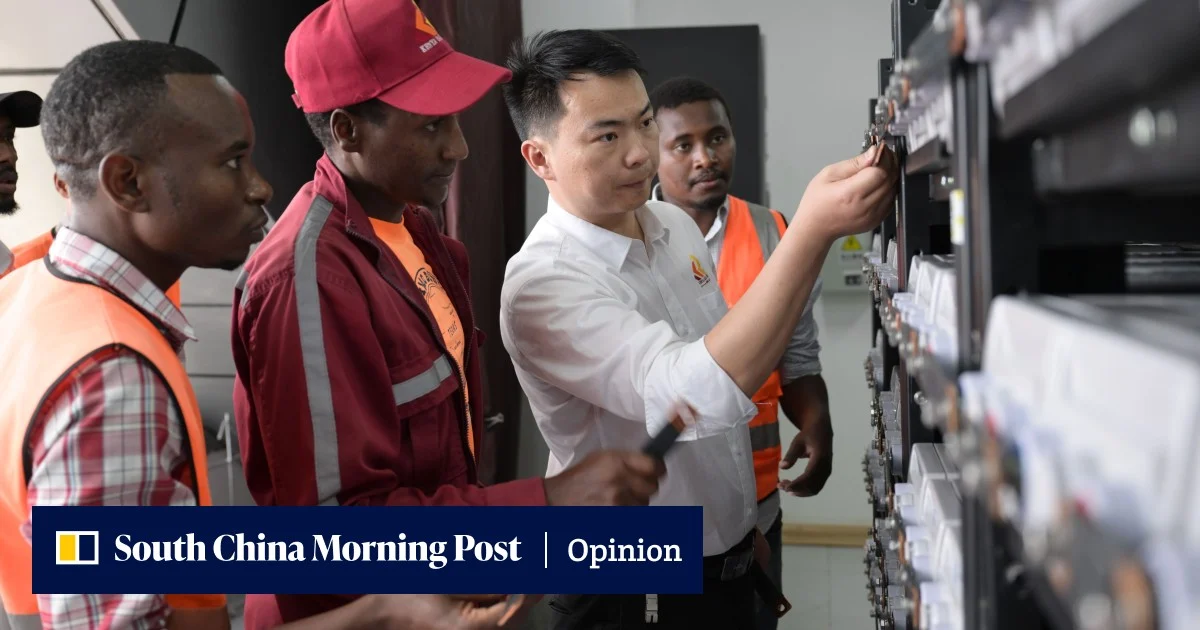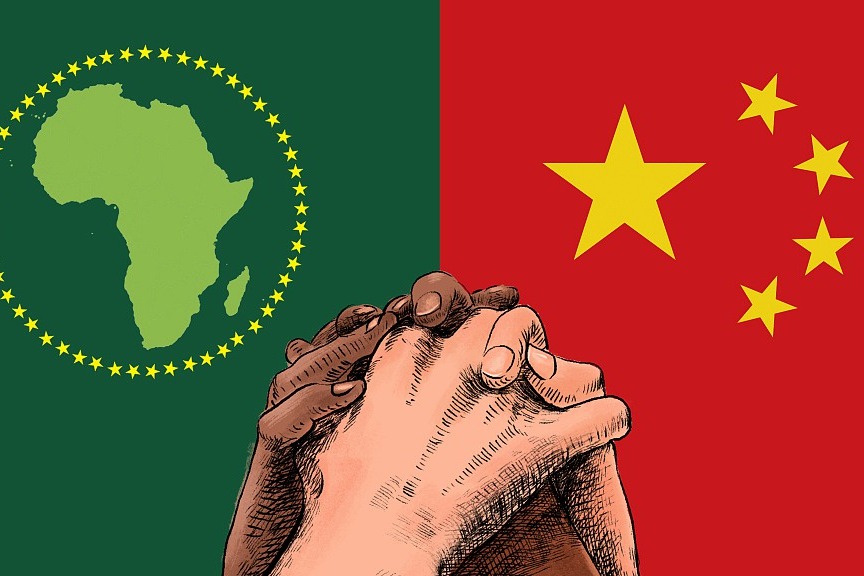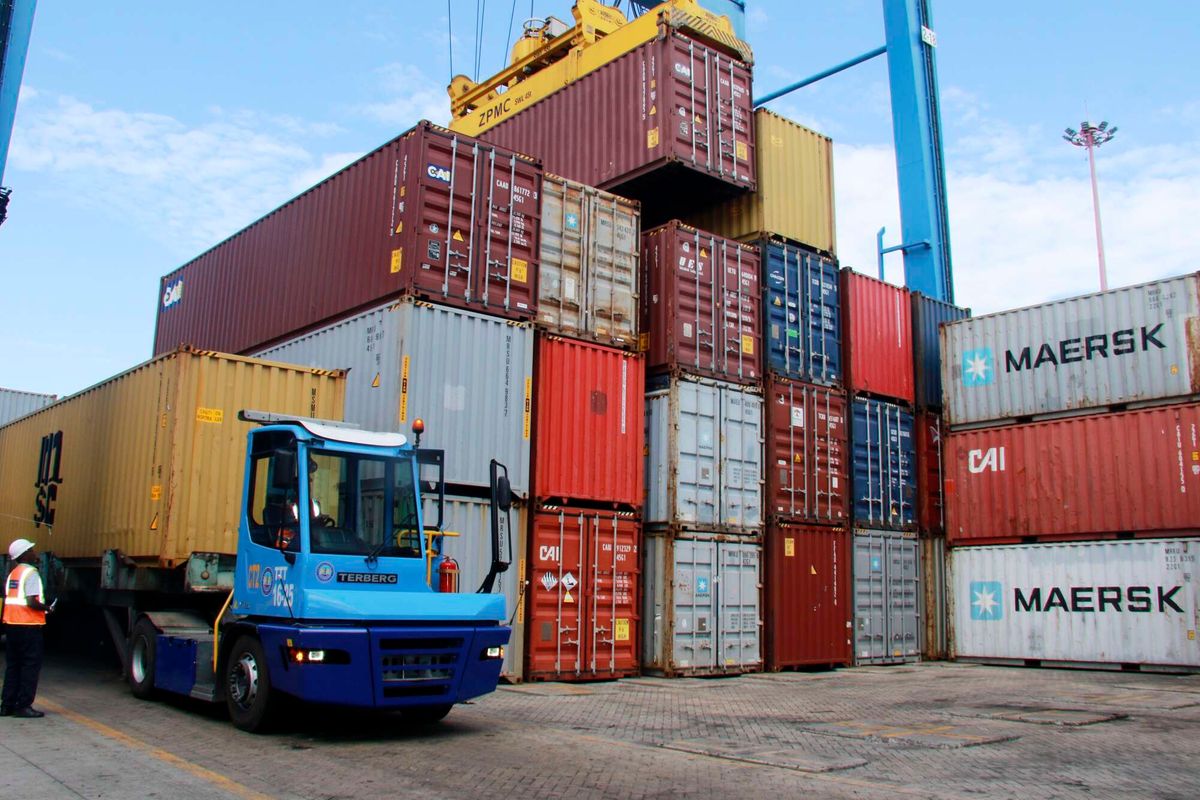
For decades, Africa’s relationship with the world’s great powers resembled an uncomfortable interview. External powers asked the questions. African governments supplied the answers.Should Africa liberalise? Should it privatise? Should it borrow? Should it align?Today something fundamental has changed. The question is no longer whether Africa should choose between Washington and Beijing. The more interesting question is whether Africa finally possesses enough strategic importance to persuade both to compete on African terms. That is a remarkable reversal.For much of the post-Cold War era, Africa occupied the margins of the global economy. It mattered morally, occasionally strategically, but rarely economically. Development assistance, debt relief and humanitarian interventions framed much of the continent’s engagement with advanced economies. Not anymore.Today Africa sits at the intersection of almost every major structural transformation reshaping the global economy:The energy transition requires African cobalt, copper, manganese, platinum and rare earths;Food security increasingly depends upon Africa’s vast uncultivated agricultural land;Companies seeking resilient supply chains are looking beyond traditional Asian manufacturing hubs;Digital expansion requires youthful consumers and new data infrastructure; andClimate adaptation, biodiversity and carbon markets all place Africa closer to the centre of global economic debates than ever before.For perhaps the first time in modern history, many of the world’s largest economies need Africa to solve their own strategic challenges. This is why the US-China rivalry matters, but perhaps not for the reason most observers assume.Across much of the continent, governments are pursuing what might be described as strategic diversification. They are neither pro-American nor pro-Chinese. They are increasingly determined to be pro-AfricanThe popular narrative suggests Africa must eventually choose sides. The evidence suggests precisely the opposite. Across much of the continent, governments are pursuing what might be described as strategic diversification. They are neither pro-American nor pro-Chinese. They are increasingly determined to be pro-African.Kenya maintains deep infrastructure partnerships with China while strengthening security ties with the US. Nigeria welcomes investment from both. South Africa remains deeply integrated into Western financial markets while simultaneously expanding its Brics relationships. These are not contradictions. They are deliberate attempts to maximise strategic flexibility.In business, suppliers rarely complain when several buyers compete for the same product. Countries should think similarly. Competition between great powers creates negotiating space. The difficulty is that negotiating space is not the same as negotiating power.This is where many discussions about Africa’s geopolitical moment become overly optimistic. Africa undoubtedly possesses greater leverage than it did 20 years ago. Yet leverage alone does not generate development.Countries become prosperous not because others need them, but because they possess the institutions required to convert external demand into domestic capability.History offers many examples of countries blessed with strategic importance but cursed by weak institutions. Natural resources alone rarely produce prosperity. Nor does geopolitical relevance. The real determinant is state capacity.Can governments raise taxes efficiently? Can they negotiate complex mining agreements? Can they insist upon technology transfer rather than merely exporting raw minerals? Can they finance infrastructure domestically rather than relying perpetually on external creditors? Can they integrate regionally so that Africa negotiates collectively rather than as 54 individual markets?These questions matter far more than whether Chinese finance arrives faster than US finance, or whether Washington attaches more conditions than Beijing. Without institutional capacity, every partnership eventually becomes dependence. With sufficient capacity, every partnership becomes optional. This distinction increasingly applies beyond traditional infrastructure.Perhaps the greatest misconception surrounding Africa is that the continent remains primarily an object of geopolitics. Increasingly it is becoming a participant. That distinction will define the coming decadeThe next generation of competition will concern digital infrastructure, artificial intelligence, payment systems, cloud computing and industrial ecosystems. Who writes the technical standards today often determines who captures the economic rents tomorrow.Africa therefore requires not merely roads and ports but also regulators, engineers, financial depth and technological capability. Strategic autonomy begins at home. Encouragingly, Africa increasingly recognises this.The African Continental Free Trade Area is perhaps the continent’s most ambitious attempt to build collective economic scale. Domestic resource mobilisation is improving across several economies. Manufacturing strategies are becoming more selective. Governments increasingly speak about beneficiation rather than extraction. Progress remains uneven. But direction matters.Perhaps the greatest misconception surrounding Africa is that the continent remains primarily an object of geopolitics. Increasingly it is becoming a participant. That distinction will define the coming decade.The next generation of mines, data centres, ports, logistics corridors and industrial parks will shape Africa’s place in the global economy for decades to come. Some will inevitably be financed by China. Others by America. Still others by Gulf investors, Europe, India or Africa’s own financial institutions.The source of capital matters. But the terms under which it is deployed matter considerably more. Africa’s objective should therefore not be neutrality. Neutrality implies standing still while others move around you. Strategic diversification is different. It means maintaining sufficient economic strength and institutional confidence that no external relationship becomes indispensable.The old question, whether Africa should choose America or China, is therefore the wrong one. The better question is whether Africa can build enough sovereign capability that, one day, it no longer has to choose at all. History occasionally presents nations with moments when global events align in their favour. Africa appears to be entering one of those moments. Strategic relevance has arrived. Prosperity, however, remains optional.It will depend less on what Washington and Beijing decide than on what Africa decides for itself.• Ballim is chief economist at Standard Bank Group.
GOOLAM BALLIM | Africa should stop asking whether to choose the US or China
The more pertinent question is whether the continent now possesses enough strategic importance to persuade both to compete on African terms, writes Goolam Ballim
893 words~4 min read