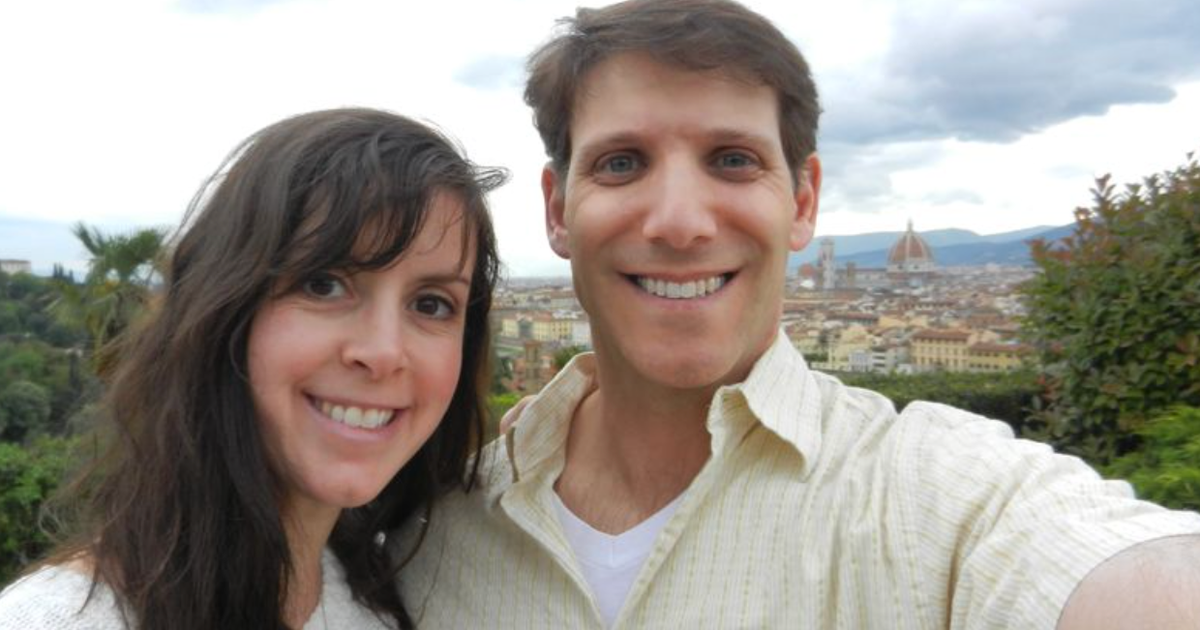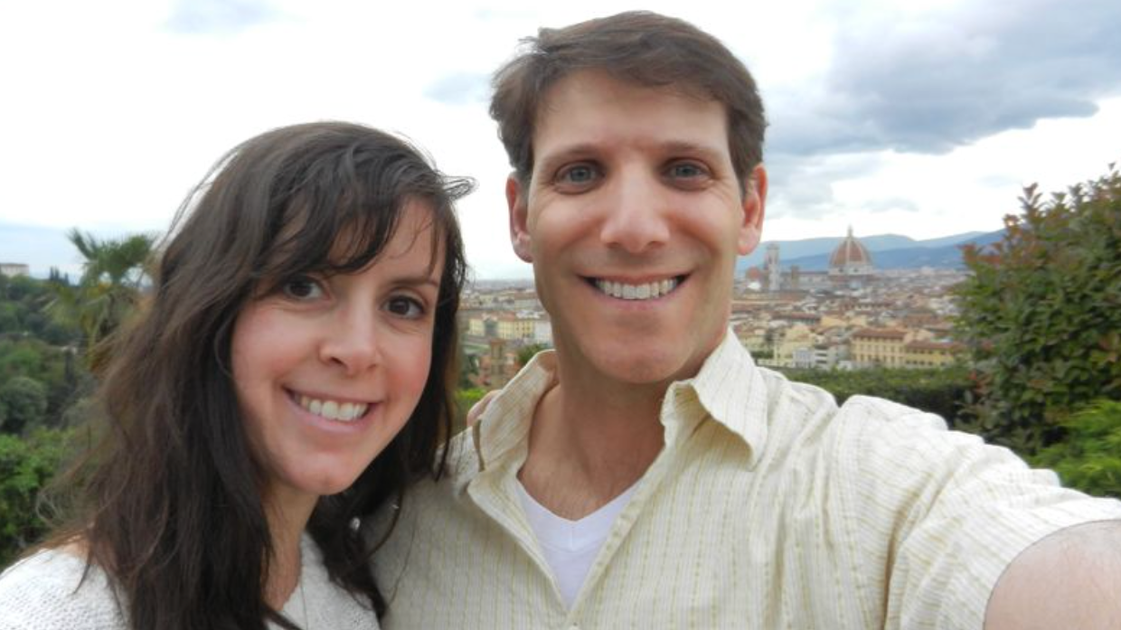
She is listed as “NW Bike Trip Montana” in my phone. This is the coded way I’ve come to input new people in my life as a widower now dating for the first time in 30 years.I met her on a gravel bike, 10 miles into the first day of a five-day trip that covered 250 miles and 25,000 feet of elevation. She rolled up next to where I had stopped on a ridge, unable in that defeated moment to will myself forward.I was not remotely prepared for that kind of ordeal. I’d never ridden a gravel bike before. Being athletic and in shape is not riding-up-and-down-mountains in shape. I already felt physically and emotionally exhausted from climbing 8% gradient hills and avoiding sharp rocks and loose gravel patches on treacherous descents.I was also angry about everything, including all the reasons I’d agreed to join my brother on that trip. He’d told me I’d make lifelong friends and have an unforgettable experience in an unforgettable place. But I felt utterly alone among these hardcore riders, and beaten up by the beautiful terrain as much as by life.She wore a blue cycling jersey, yellow helmet, and pink-hued bike glasses. She was as lithe and comfortable on her bike as I was locked up and clumsy on mine.“What brings you here?” she asked with a smile that made her seem as easy about life as I was lost.That was a question I’d found impossible to answer thus far. Every other person in the group had a backstory that seemed relatively simple. This was the kind of trip they took every year. The mountains, glacial lakes, campsites and climbs were a shot of life-affirming adrenaline for them.The author hitting the bike trail.Courtesy of Jon KortmanskyMy backstory was… different… and the usual questions didn’t apply. Where do you ride? I don’t.Have you done this before? No. Why are you on this trip? I don’t know.But something about my encounter with this woman prompted me to tell her the real story — or at least the quick version.“My wife died,” I said. “And she told me to say ‘yes’ to everything, so here I am.”She nodded as though she understood.“This is my Divorce Camp,” she told me.We stood in a quiet that felt as big and empty as the endless blue sky before us.When she rode off a minute later, I marveled at the way she steered down the trail so easily and lightly. When I followed, my brakes grinded. My shoulders ached. My hands went numb. My heart pounded.When I caught up to my brother waiting for me, he offered with tender encouragement to teach me how to relax my pedal strokes, sit back in the saddle, stay loose in my arms, and not fight the terrain. I listened as best I could.“I’ll do better tomorrow,” I promised him.“You’re already doing better,” he said. “You’ve got this.”I decided to take his word for it. It was the kind of reassurance I’d heard myself say to someone else before, even when I didn’t believe it.The author and Lori on the top of the Piazzale Michelangelo in Florence, Italy, in May 2013.Courtesy of Jon KortmanskyMy wife Lori died during the COVID pandemic after 23 years of living with a brain tumor that was supposed to kill her months after her initial diagnosis at 28. We’d traversed those two decades like gravel riding pros with a loose grip and an uncanny ability to navigate all the treacherous turns of a mysterious disease. Whenever we wiped out, we just picked ourselves up again and kept going.With no future before us, we did as much living as humanly possible in three-month cycles — traveling, skiing, hiking, dining — punctuated by quarterly MRIs. Some of those examinations were briefly encouraging, others devastating, but the results didn’t change the way we lived.Lori inhaled life like air with an eagerness, determination and joy I’d never seen anyone match. I’d been just as determined to enjoy life as long as she was in it and to help her through whatever challenge or blow came our way.Her passing left an indescribable emptiness in my life. I continued on, but it was all pretend. Absent Lori, I no longer knew how to live.One of the only (but still excruciating) comforts left to me that first year after Lori’s death was the writing she left behind. She’d filled diary after diary and had scribbled thousands of notes to herself. I’d thought the notes were mostly reminders because her short-term memory had become compromised, but they’d turned out to be so much more — messages to me and to friends, poems she’d written, quotes she’d found, secrets and worries, hopes and promises.In the months following her death, I spent most mornings and evenings on the couch, organizing and reading those messages and memories. Never in a million years would I have read her diaries or private notes when she was alive. Now, I saw them as another phase of a conversation that had started the day we met on the college quad, and I understood she had so much more to say.The author (right) and his brother Jeremy arrive at Seeley Lake, Montana, to begin their journey.Courtesy of Jon KortmanskyI read about early boyfriends and my arrival into her life. I read an entry in which she decided, with her characteristic certainty, that I was the right guy to marry — that she wanted to spend life with me, have children with me, grow old with me. I saw the dread turn into diagnosis.Early on she wrote, “It’s funny, you don’t realize how strong you are until something tries to take that away.” I knew that was true.She wasn’t always so stoic and calm. She wrote heartbreakingly about the hope for happy times to come, and her fear of “ending.”She knew how to tell a story. Reading her account of us visiting a sex shop for the first time made me laugh so hard it brought tears to my eyes. But it was a message she’d scribbled on a napkin that stopped me cold. She might have written it to herself, but it felt like it was spoken directly to me.Say Yes to Everything!I don’t think I understood until that moment how much I relied on Lori’s eagerness for life to carry us both through those hard but wonderful years. Even as Lori’s brain and body lost one ability after another, she found humor and joy and fun and adventure in just being alive.So I promised her I would try.Following through was harder than I’d imagined. I said yes to every invitation I didn’t want to accept, every destination I didn’t want to go, every opportunity I didn’t want to take, and every person I didn’t want to meet.And that’s how, on the third evening of our bike trip, I told “NW Bike Trip Montana” that I ended up saying yes to an adventure that terrified me.She took that in, and when she finally spoke, she asked me to tell her about Lori. Where did we meet? What did we like to do together? What made her special? Most people wanted to know more about Lori’s illness, how she died, or how I’d managed. She wanted to know about the things that mattered so much more.As the stories came out of me, I realized I was open to connecting with a kind of intimacy I didn’t know was still possible.The author and "NW Bike Trip Montana" taking a quick break on the gravel roads of Big Sky Country.Courtesy of Jon KortmanskyOver that week, the rides got longer and harder. We did long climbs that only got steeper. We descended single-track trails rutted with trees, branches and rocks and with no obvious place to slow down. I found a rhythm and started to relax. I took on trickier paths and began to push myself on the climbs. Other bikers would roll up, tell me I was doing great, and talk with me until the terrain separated us. The alone time stopped feeling so alone. When I took moments to look around, I saw mountains and sky that made me cry for different reasons than before. Once I passed a smiley face drawn in the dirt and smiled back.After each day’s ride, we all put on bathing suits, grabbed beers, and floated on the glacial lake in inner tubes. It was a time to hang out, laugh and let our guards down. The exhaustion and the shared experience helped us feel close. No longer was discussion about longest rides and steepest climbs. Instead, it was about life journeys, hopes, dreams, disappointments and the ups and downs that had brought us together in this magical place. I mostly listened, but I shared more, too. My brother smiled, and we clinked bottles. He knew what it had taken me to feel good enough to float.On the next-to-last night, I asked “NW Bike Trip Montana” about her own story — not the whys, whens and hows of her divorce, but about who she was and her life. Her answers hit me — not just the difficult parts, but the way she tried to find the good in every experience or turn of events, no matter how hard or unfair. It felt like another echo of lessons from my old life that I’d forgotten after Lori died.It’s been almost a year since that trip, and the code “NW Bike Trip Montana” still flashes up on my phone once in a while with a text or a FaceTime call. We are currently more than friends but less than something serious. Dating at this stage of life is complicated by the entanglements and events that got us here. I am a widower living in New York City, and she is a divorcee living in Vermont. Still, somehow, we connect.Love the life you have, Lori would have said, not the one you want. I no longer need to pretend that’s what I’m doing when I say yes to new things. I’m genuinely curious about what will come next. I’m not saying the bike trip in Montana healed me, but it helped. I know how to loosen my grip when I notice how tightly I’m hanging on, and there are finally moments when I can look around and realize I’m better than OK. I’m actually at peace and eager for the ride.The author and his fellow bikers staring out at the Continental Great Divide. “This was day two — 20 miles into our ride,” he writes.Courtesy of Jon KortmanskyJon Kortmansky, a New York City lawyer, is writing a memoir celebrating his life with his beloved late wife Lori — and how the enduring strength of her love guided him to discover new hope, love and joy in his next chapter. For more on his story, follow him on Instagram @jonkortmansky.Do you have a compelling personal story you’d like to see published on HuffPost? Find out what we’re looking for here and send us a pitch at pitch@huffpost.com.
I Found A 4-Word Note After My Wife Died. Accepting It Was Harder Than I Thought Possible.
"Never in a million years would I have read her diaries or private notes when she was alive."
1,840 words~8 min read