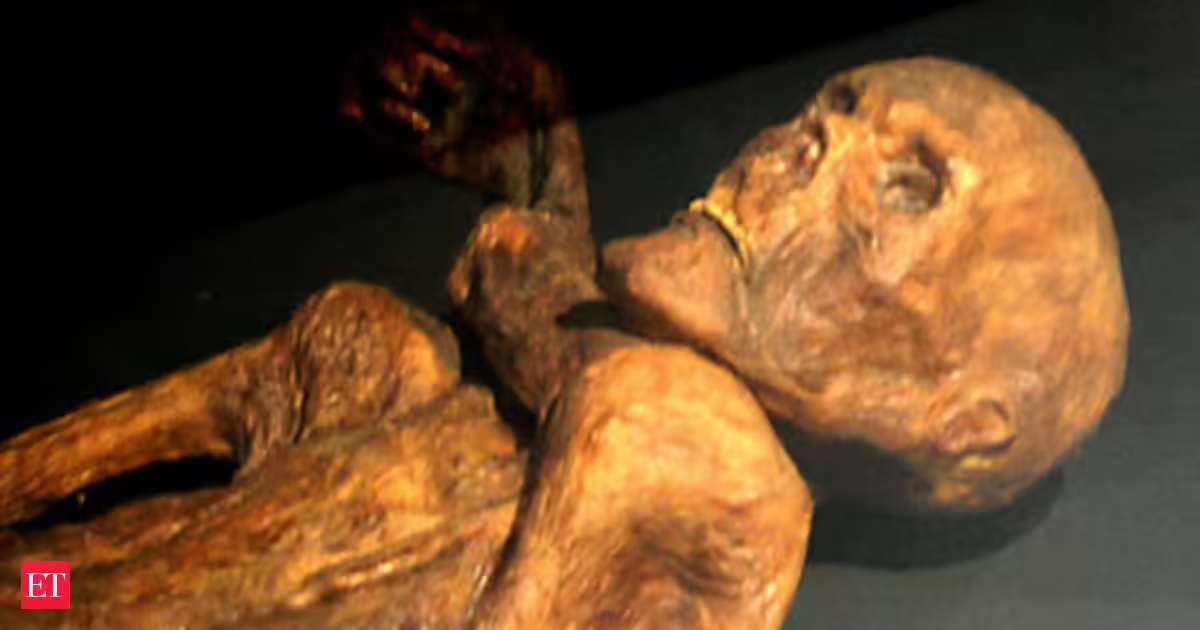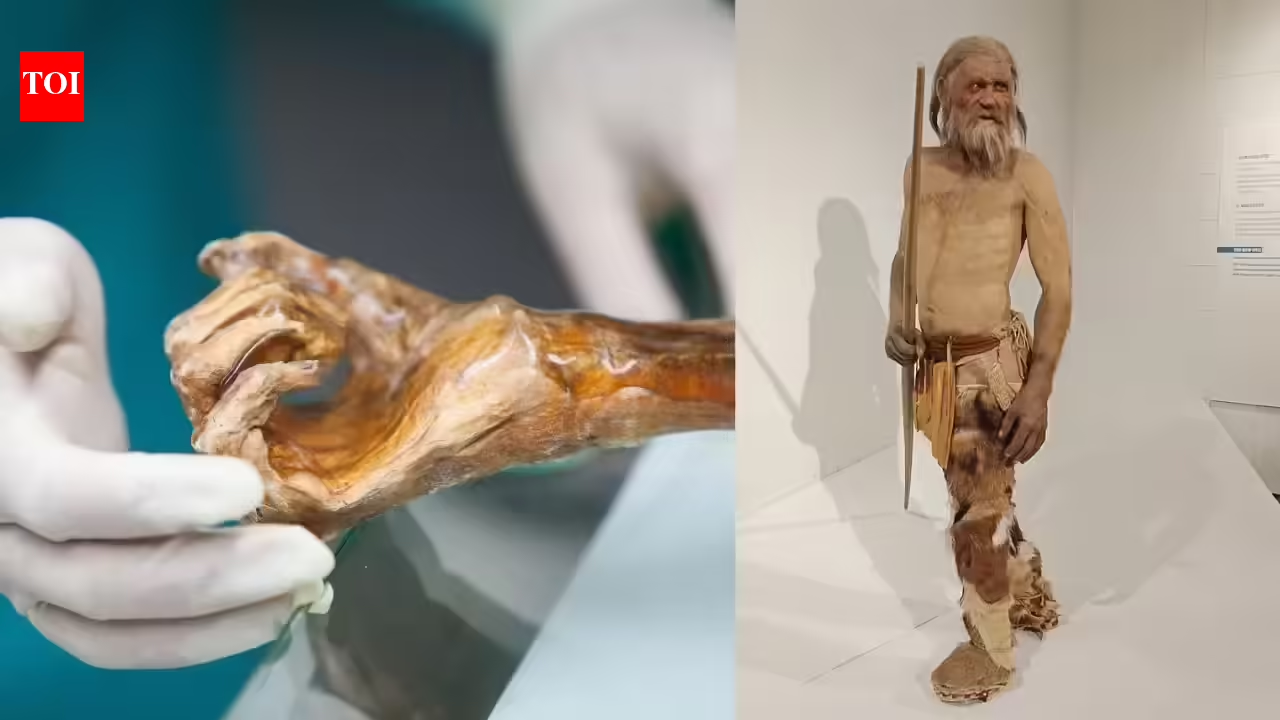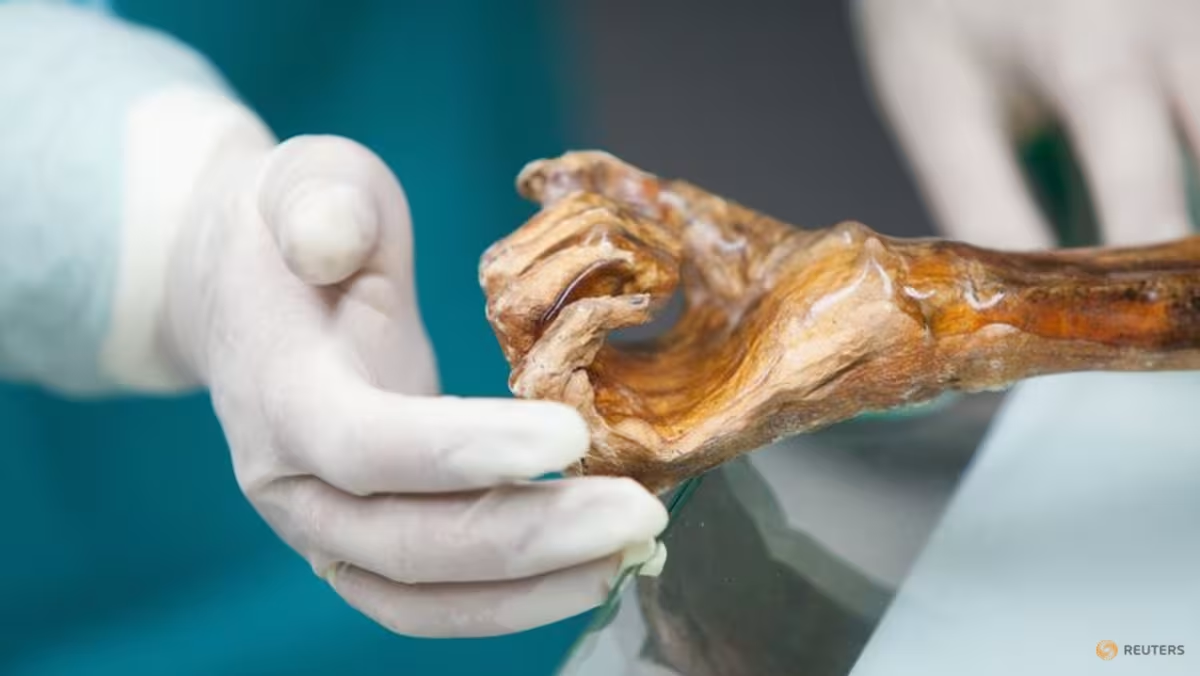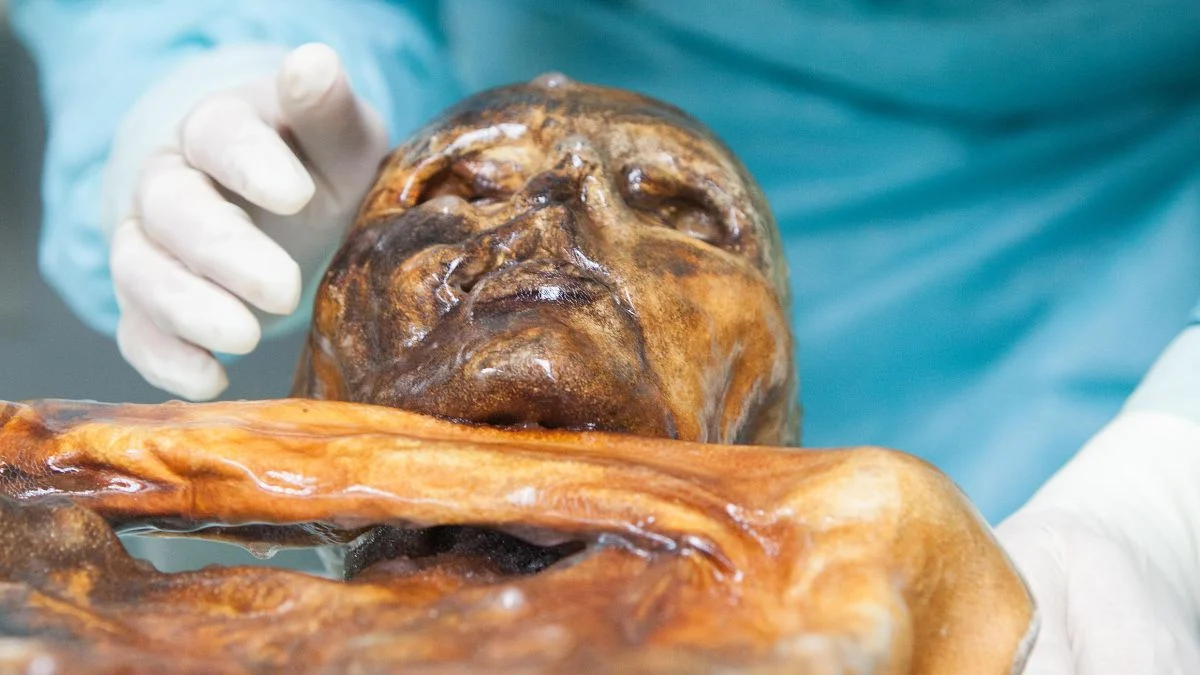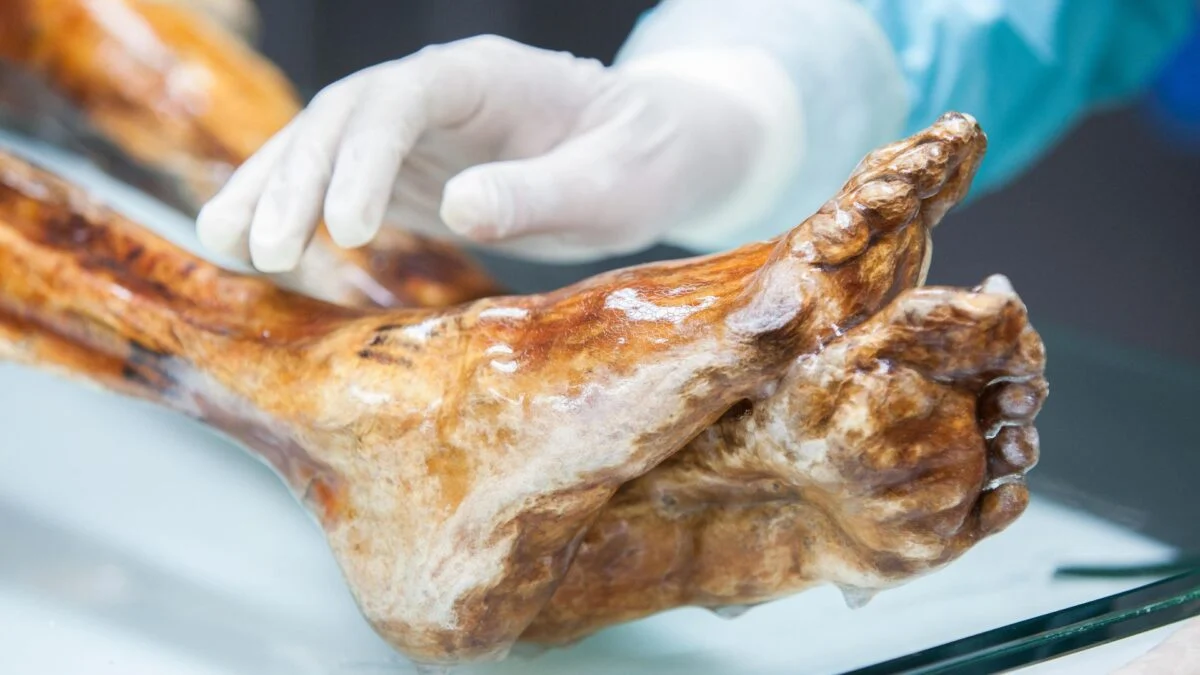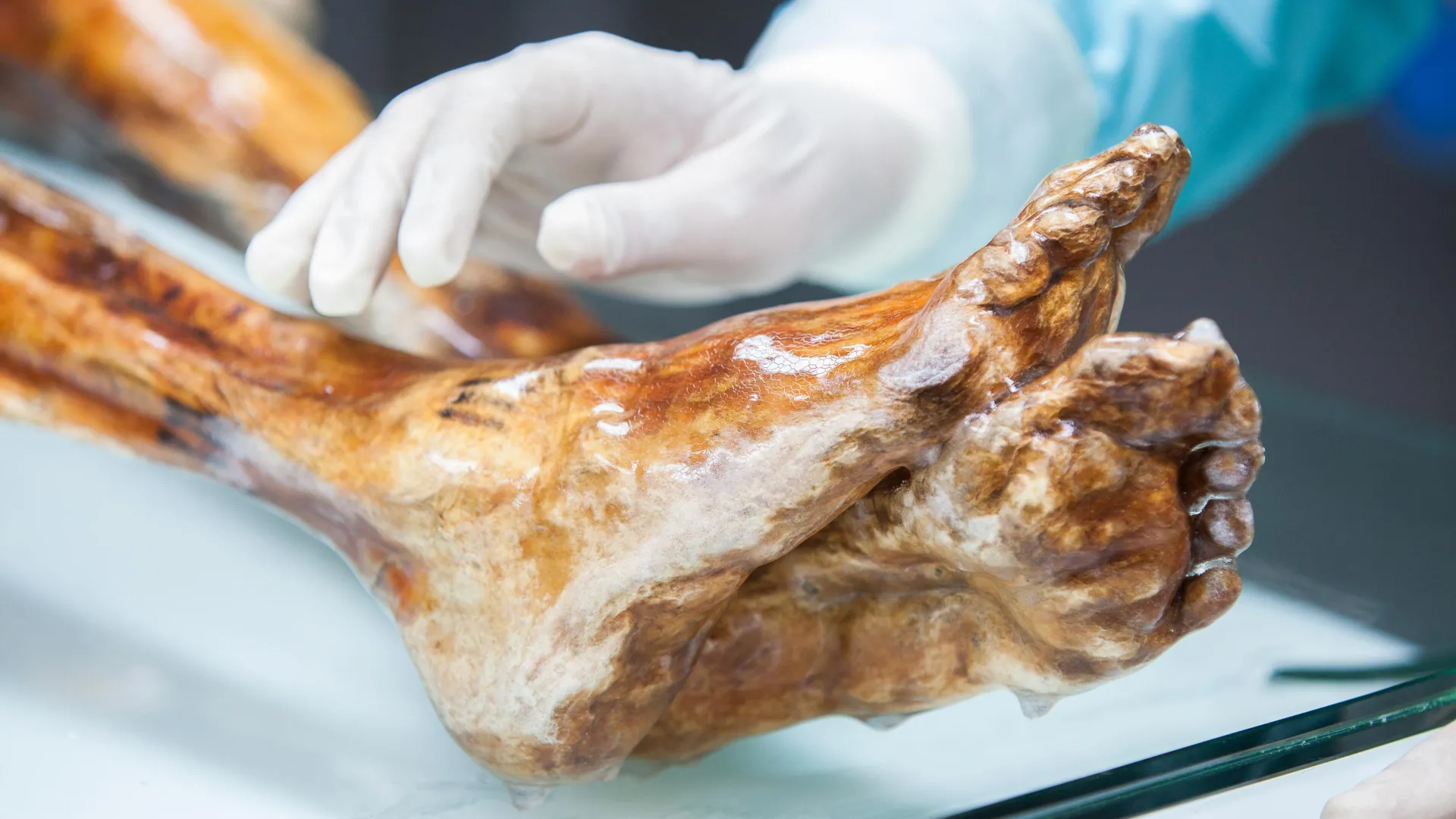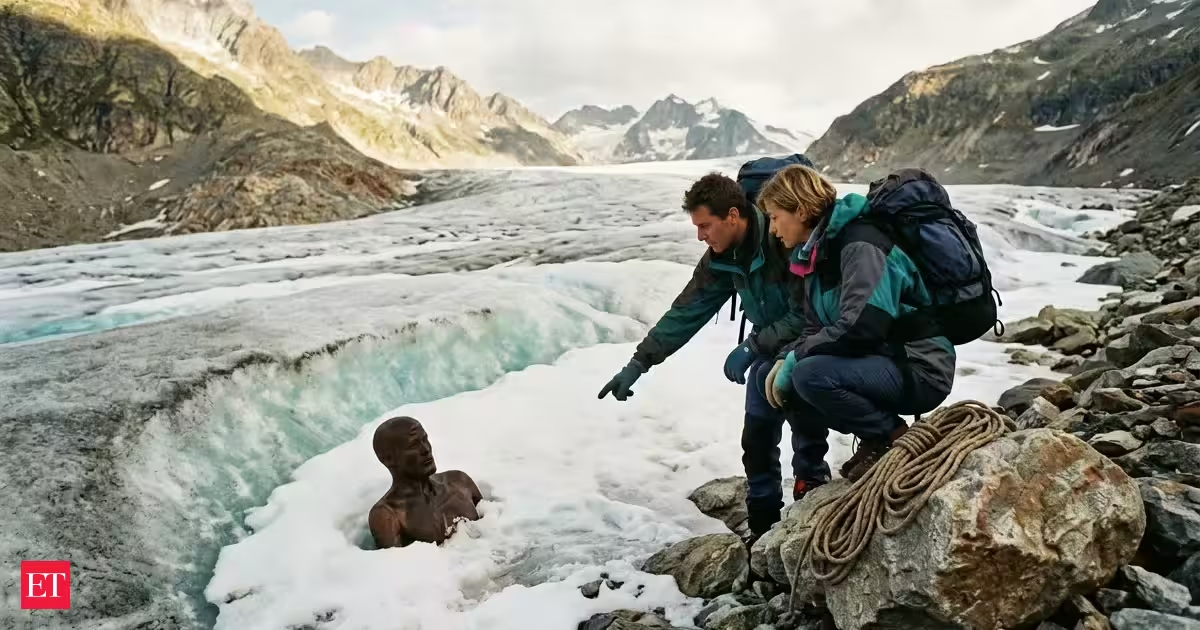
In 1991, Alpine hikers found a body melting from a glacier and called police. 5,300 years later, it proved to be Ötzi the Iceman. The hikers believed they had found the remains of a missing climber in the Alps. The body was taken to Innsbruck, where experts began examining it. They soon found that the remains were not from a modern mountaineer. The man had died about 5,300 years ago during the Copper Age. His body had survived because it froze in the ice. Later examinations found an arrowhead in his shoulder, a wound on his hand and a head injury. His death remains unresolved.How the discovery happened in the Alps?On September 19, 1991, a German couple was hiking in the Ötztal Alps on the ridge between Austria and Italy. They left the marked path and took a shortcut. The hikers noticed something brown coming out of melting ice. They found what appeared to be a human body lying face down in glacial meltwater. Parts of the body were buried in ice.The hikers reported the discovery to authorities. Police initially treated it as a case involving a person who had died in the mountains. The assumption was that the remains belonged to a climber who had disappeared years earlier. Recovery teams arrived at the location. They used a jackhammer and ice axes to remove the ice around the body. During the recovery, the body’s hip was damaged.The remains were then transported to a morgue in Innsbruck. At first, the body was treated like the remains of other people who had died in mountain accidents. It took several days before researchers understood the age of the discovery. The body was not from a missing mountaineer. It belonged to a man who had lived about 5,300 years ago.You Might Also Like:Ötzi the Iceman and his lifeThe man became known as Ötzi, a name taken from the Ötztal Alps where he was found. He is now kept at the South Tyrol Museum of Archaeology in Bolzano, Italy. His body is stored in a refrigeration chamber. The chamber is maintained at minus six degrees Celsius with 99 percent humidity.The conditions are designed to protect the remains. Ötzi survived in the ice because his body became freeze-dried instead of decomposing. This allowed researchers to examine parts of his body and belongings that would normally have disappeared after thousands of years.Researchers estimate that Ötzi was about 45 years old when he died. He was around 1.6 metres tall. His body showed signs of physical work and age. His joints had suffered wear. His arteries showed signs of hardening. His stomach also preserved evidence of his last meal.Researchers found remains of Alpine ibex meat, red deer and einkorn wheat. The meal was heavy and contained fat. He had eaten it not long before his death. His lungs were dark with soot. This indicated long-term exposure to smoke from campfires. His gut also contained a bacterium that still infects people today.What DNA revealed about Ötzi?Modern genetic research has changed the understanding of Ötzi's ancestry. A genome sequencing study published in 2023 found that his ancestry was linked mainly to the first farmers who moved into Europe from Anatolia.The research also indicated that Ötzi had darker skin than the reconstructions that had previously been displayed in museums. The study found evidence of male-pattern baldness.Another study published in Nature Communications in 2025 examined 47 prehistoric individuals from the same valleys. The study found that the same farmer ancestry was present in the wider regional population.However, Ötzi's maternal line has not been matched with another population found so far, either from ancient remains or from modern populations. This means his genetic history continues to provide information about population movement and settlement in prehistoric Europe.The 61 tattoos found on his bodyOne of the most discussed features of Ötzi is his skin. He has 61 tattoos. They are considered the oldest tattoos found on a human body. The tattoos consist mainly of groups of parallel lines and crosses. They were made by cutting the skin and placing charcoal into the cuts.The marks appear on areas including his lower back, knees, ankles and wrist. Researchers have examined the position of the tattoos in relation to Ötzi's health. Many of the marks are located near joints that showed wear and signs of arthritis.This has led some researchers to suggest that the tattoos may have been used as a form of treatment. The practice has been compared with an early form of treatment that involved marking areas where a person experienced pain. The purpose of the tattoos cannot be confirmed.However, the marks indicate that the practice was repeated during Ötzi's life. This also suggests that the people around him had a tradition involving the treatment or marking of the body.The arrowhead changed the caseFor years, researchers believed Ötzi might have died after becoming trapped in the mountains during cold weather. That view changed in 2001. A radiologist examining new X-rays noticed a small white object below Ötzi's left shoulder blade. It was a flint arrowhead. The discovery showed that Ötzi had been shot.The arrow had entered from behind and damaged an artery near the shoulder. Clinical reviews of the injury have indicated that the blood loss would likely have caused death within a short period, even with modern medical treatment. Other injuries added to the evidence of violence.Ötzi had a deep cut across his right hand. Researchers believe it may have been a defensive wound caused during a fight several days before his death. He also had a head injury from around the time he died. Together, the injuries suggest that Ötzi had been involved in violence before his death.His weapons provide more cluesÖtzi was carrying several items when he died. His copper axe was found near the body. Copper was not common at the time, and the axe suggests that Ötzi had a position within his community that gave him access to such an object. The axe was not taken by whoever attacked him.Researchers also found a bow that was not finished. Many of his arrows were also unfinished. This has led to a possible reconstruction of the events. One theory is that Ötzi had been involved in a dispute in a valley. After being wounded, he may have moved toward the mountains while carrying his equipment.He may have been preparing a new bow and arrows because he had lost or damaged his weapons. Another possibility is that an enemy followed him. The attacker may have shot Ötzi from behind and then removed the arrow shaft. The person left the copper axe behind. One explanation is that taking the axe could have helped identify the killer because of its value or connection to Ötzi. However, none of these details can be proven.Why Ötzi's death remains an open case?The evidence gives researchers a victim, a weapon and signs of violence. But there is no identified killer. There is also no written record from the Copper Age explaining what happened. The possible sequence of events remains a reconstruction based on physical evidence.For this reason, Ötzi's death has been described as the world's oldest open murder investigation. The case is more than 5,000 years old, but researchers continue to study it because new technology can reveal information that was not available when the body was discovered.New research continues to reveal informationÖtzi continues to be examined more than three decades after his discovery. Researchers at Eurac in Bolzano recently conducted a survey of the microbes found on and inside the mummy. The research found that some microorganisms remain alive in a dormant state.These include fungi and bacteria that colonised the body while it was preserved in ice. They have survived for thousands of years under cold storage. This means Ötzi is not only a preserved archaeological body. Researchers can also study the microorganisms associated with him. Modern technology has added new information over time.CT scans have helped researchers examine his injuries and internal organs. Genome sequencing has provided information about his ancestry. Protein analysis and other laboratory methods have helped scientists examine his health, diet and biological history. Each method has added another part to the story.What Ötzi's discovery tells us?The discovery began when hikers saw a body coming out of melting ice. They believed they had found a person who had disappeared in the mountains. Instead, they had found a man who had been missing for about 5,300 years. The remains have provided information about Copper Age life, food, health, migration, tattoos, tools, weapons and violence.The arrowhead changed the understanding of his death. His injuries suggest that violence played a role. His equipment provides clues about what he may have been doing before he died. Yet the identity of his killer and the exact circumstances remain unknown.
In 1991, Alpine hikers found a body melting from a glacier and called police. 5,300 years later, it proved to be Ötzi the Iceman
In 1991, Alpine hikers found a body melting from a glacier and called police. 5,300 years later, it proved to be Ötzi the Iceman. The discovery revealed a Copper Age man preserved in ice, with tattoos, weapons, injuries and food in his stomach. Scientists later found evidence that he was shot with an arrow, turning the discovery into an unsolved murder case.
1,459 words~7 min read