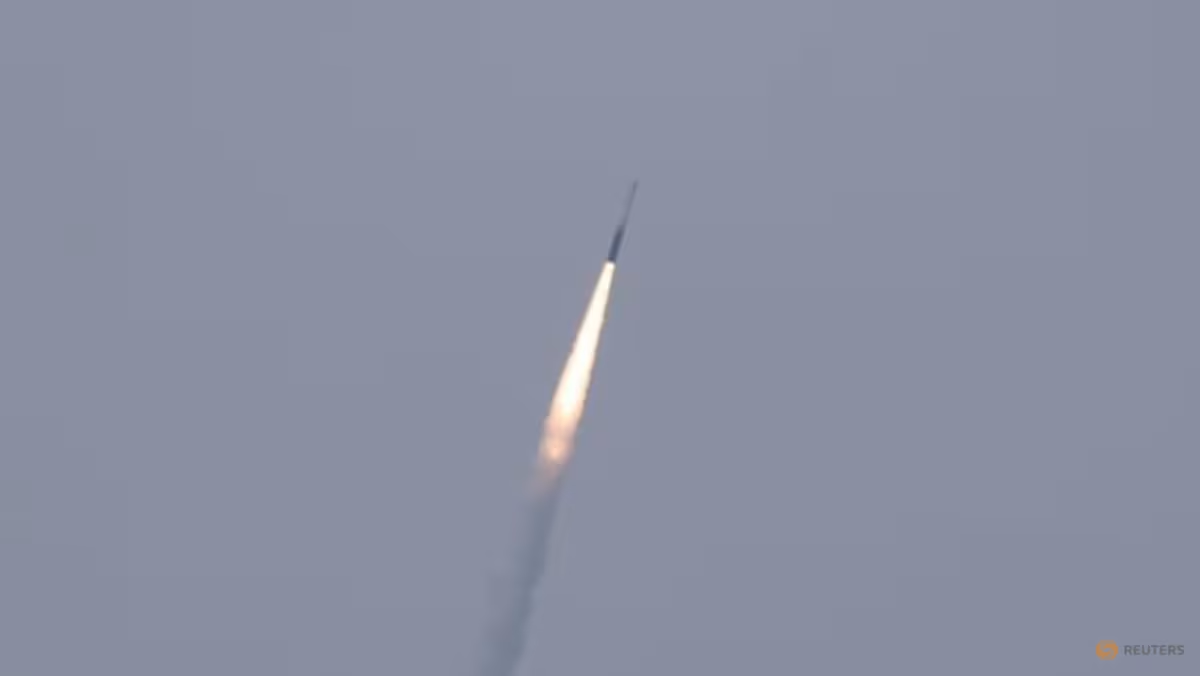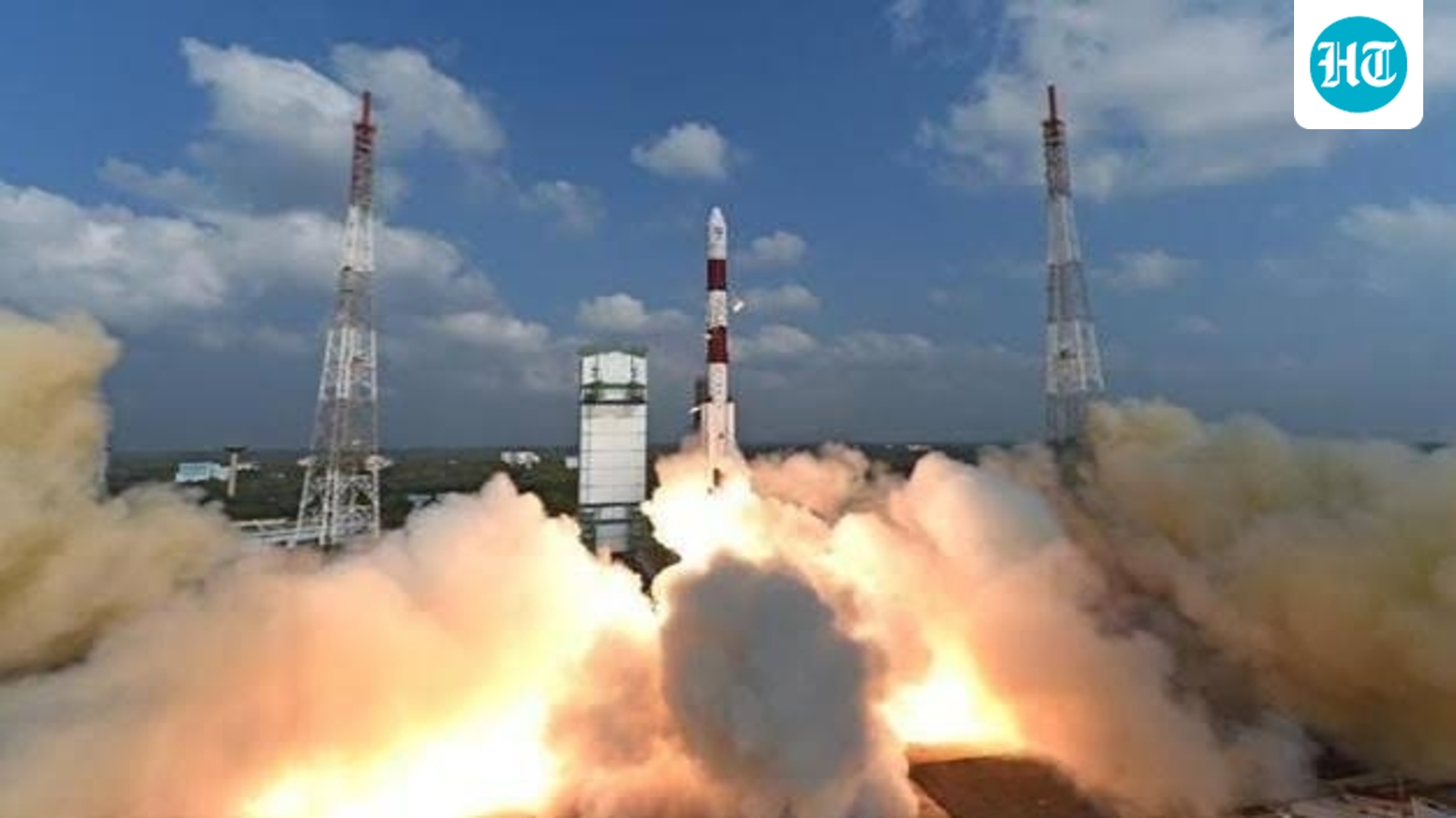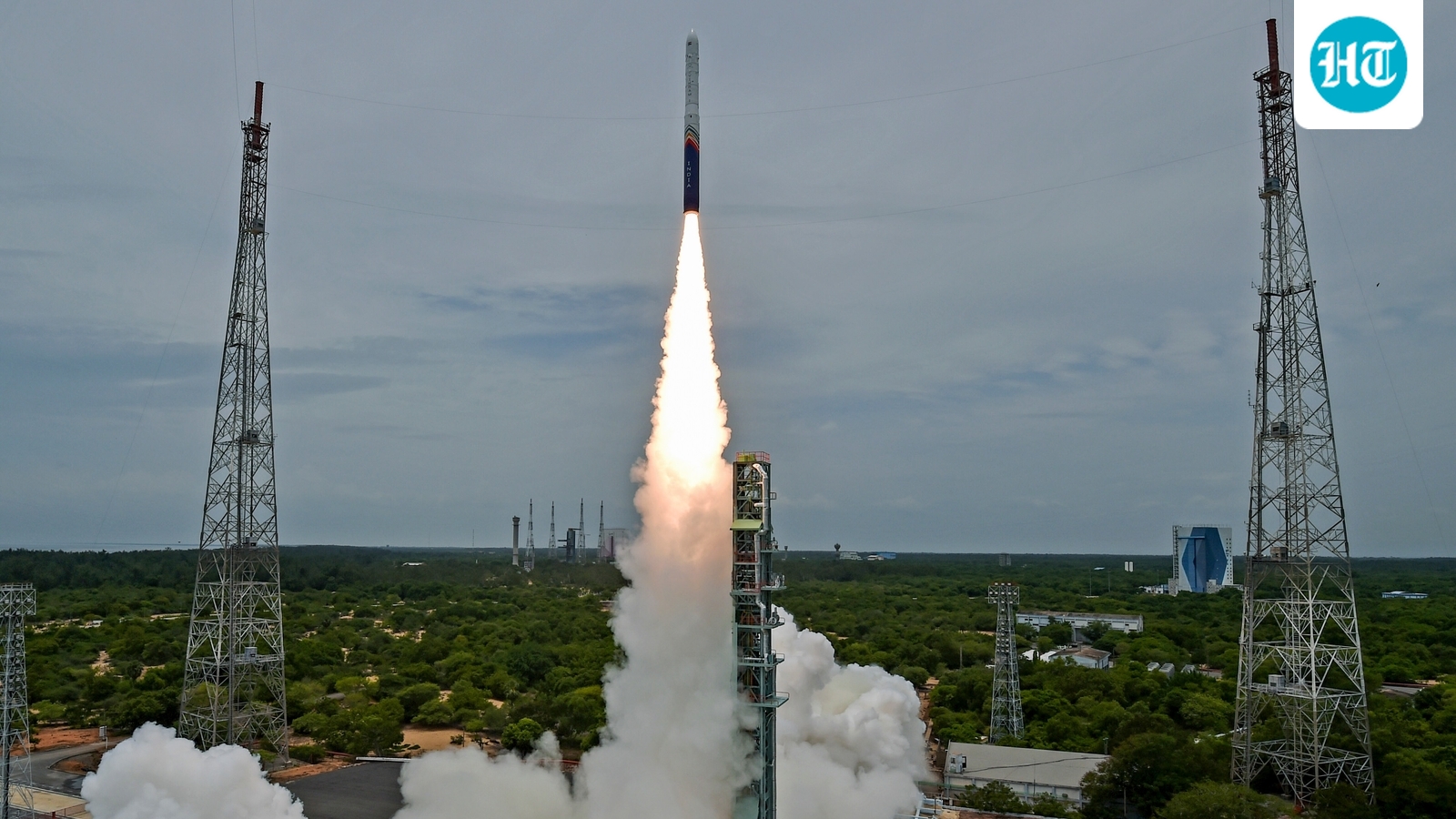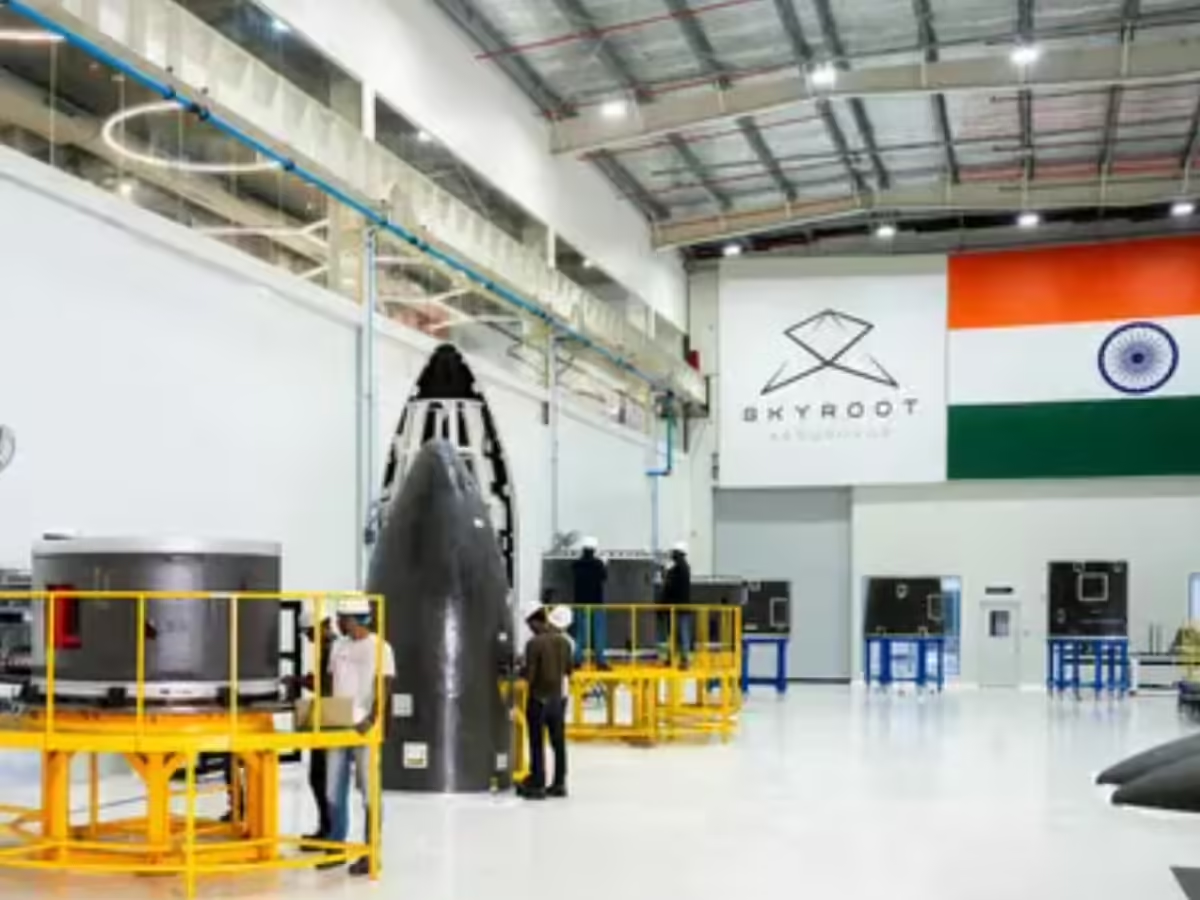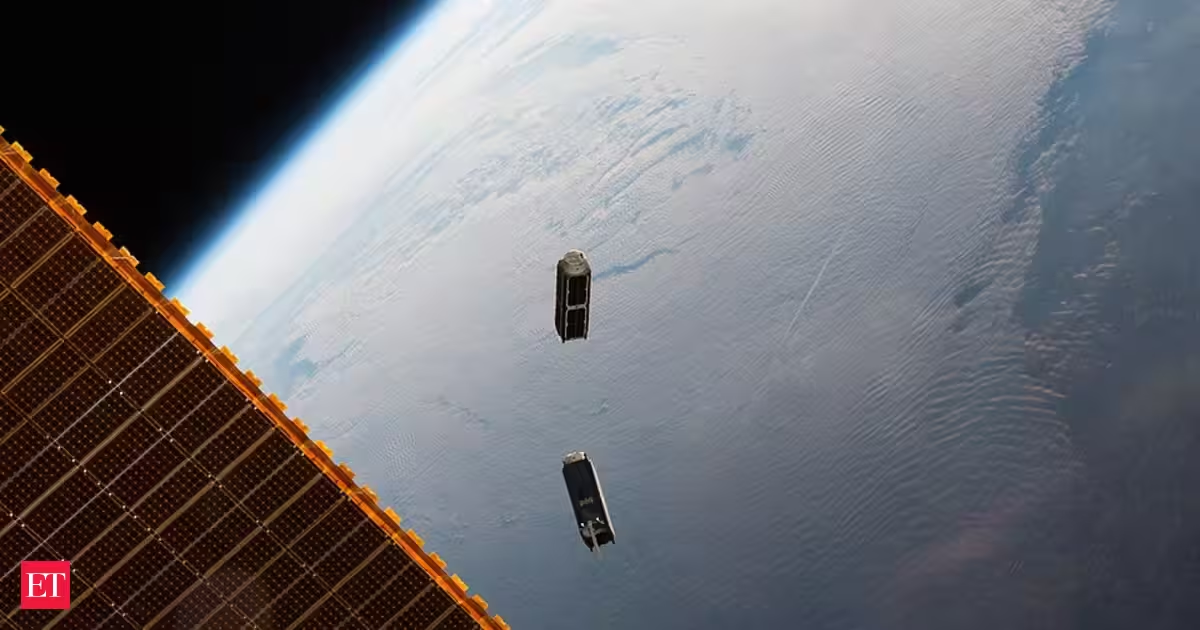
From Aryabhata and the PSLV to Chandrayaan and Mangalyaan, India’s space story was for decades almost synonymous with Indian Space Research Organisation (ISRO). That is beginning to change. In July, Skyroot Aerospace’s Vikram-1 became the first privately-developed Indian rocket to reach orbit, while a new crop of companies is building satellites, propulsion systems, imaging technologies and space-data businesses.On its part, the Government of India has undertaken major reforms to transform the space sector into a private-sector-driven and globally-competitive ecosystem. The Indian Space Policy 2023 opened the sector to private participation, while IN-SPACe (Indian National Space Promotion and Authorisation Centre) facilitates and regulates non-government space activities. FDI rules were liberalised to permit up to 100 per cent foreign investment, with automatic-route limits varying across different space activities. A ₹1,000-crore venture capital fund and ₹500-crore technology adoption fund support start-ups and innovation are examples of government-backed funding initiatives. The government is also providing subsidised access to ISRO facilities, technology, satellite data and launch services, while promoting public-private partnerships (PPPs) and commercialisation.Still for the average Indian, space exploration evokes images of rockets, moon/inter-planetary missions and astronauts. But for investors, rockets are only one part of a much larger business. Getting something into space is essential, but much of the economic activity happens before and after the launch too.The global ecosystem includes companies that make rockets and satellites, manufacturers of propulsion systems (generates thrust to push a spacecraft forward), electronics and optics (enables satellite imaging, sensing and observation). Then, there are ground stations that communicate with satellites, satellite broadband providers and businesses that turn images and other data from space into usable information.Elon Musk’s SpaceX, familiar to investors following its recent mammoth $86-billion IPO, illustrates how these businesses can connect. It makes rockets and satellites, launches its own Starlink constellation, manufactures user terminals and earns recurring connectivity revenue. It also provides launch and other services to external and government customers.Many of India’s emerging pure-play space-tech companies are still unlisted today, but understanding their business models now can help investors assess them better if and when they enter public markets.India’s ecosystem, admittedly, is more fragmented. Different companies occupy different portions of this chain. Understanding these differences is essential before treating them all as part of one “space-tech” investment theme. Read on.Many businesses, one industrySpace is the region beyond Earth’s atmosphere where satellites and spacecraft operate. The conventional boundary is around 100 km (62 miles) above Earth’s mean sea-level, the Kármán line.Think of ‘launch’ as effectively the transportation business of space. Large rockets can carry several customers together through “rideshare”. SpaceX, for instance, charges small satellite operators for space on scheduled launches. This can sharply reduce the cost per kg because many customers share the rocket. For context, a Deutsche Bank Research notes that SpaceX’s rideshare programme starts at about $350,000 for 50 kg, with additional mass priced at around $7,000 per kg. A rideshare drop-off may also not be the satellite’s final destination; onboard propulsion or an orbital-transfer vehicle may be required to move it to the desired altitude and orbital plane.Smaller launch vehicles such as those being developed by Skyroot Aerospace and Agnikul Cosmos have a somewhat different proposition. A customer requiring a particular orbit or launch schedule can potentially pay more for a dedicated or more customised launch. The difference is somewhat like taking a bus against hiring a taxi. The bus is cheaper per passenger, but the taxi gives greater control over destination and timing. Dedicated launches typically cost more per kg but offer greater orbital and scheduling flexibility. For an expensive satellite, losing the payload can matter far more than saving on launch cost, making proven performance in previous space missions an important competitive hurdle for new entrants. Defence missions may also place a premium on sovereign access and security. This means a small launcher does not necessarily have to beat a much larger rocket on cost per kg. However, launch remains capital-intensive, and technological success alone does not establish that the business will generate attractive returns. For instance, SpaceX’s Space segment achieved sustained positive adjusted EBITDA only from 2018, around 16 years after the company was founded.Satellite manufacturing is another business altogether. Companies can sell the satellite platform, or “bus”, which provides the structure, power, communications, thermal control and other basic systems on which a customer’s camera, communication equipment or other payload is mounted. Others can go further and supply complete satellites or manufacture standardised platforms for multiple customers. Component manufacturers sit a level deeper, supplying propulsion systems, electronics, antennas, optics, solar/power systems and precision-engineered parts. This gives component suppliers a different risk profile: they need not finance an entire constellation or bear the commercial risk of the end service, and can sell the same qualified subsystem across multiple programmes. Once a component has accumulated flight heritage and is designed into a platform, reliability and qualification requirements can also make switching suppliers less straightforward. This is potentially important for India, where much of the existing listed exposure to space already lies in such “picks-and-shovels”. The opportunity will depend not merely on more satellites being launched, but on whether Indian suppliers can increase indigenous content, move from build-to-print manufacturing towards proprietary subsystems, scale production and win export customers.Then come communications and data. Satellite communications can combine an upfront hardware sale, such as a terminal or antenna, with recurring connectivity revenue. The customer base can extend well beyond households using satellite internet. Aircraft, ships, mines, pipelines, farms and other remote assets can use satellite links where terrestrial networks are unavailable or uneconomic to build. JPMorgan notes that in sectors such as maritime, logistics, mining and precision agriculture, geographical coverage rather than sheer network capacity can be the binding constraint. This gives satcom a different economic profile from manufacturing.Once the constellation and ground infrastructure are in place, operators can potentially earn repeatedly from the same network through consumer, enterprise, government and machine-to-machine connections. But the model is also capital-intensive upfront, with satellites, launch, terminals, spectrum and ground infrastructure required before utilisation scales. Those revenues are recurring, but so is part of the capital requirement, since satellites eventually need replacement and networks require continuing capacity additions.Earth observation, meanwhile, uses satellites to monitor the planet. The raw product may be an image, but the more valuable business can lie in what is extracted from it. A bank does not necessarily want pictures of farmland; it may want to know crop condition before making an agricultural loan. An insurer may want a flood-damage assessment. A mining company may want information on terrain or mineral characteristics, while a defence customer may want to know what has changed at a particular location.The value chain can therefore move from image → processed data → analytics → intelligence → decision. A satellite operator can potentially sell information generated by the same orbital asset to multiple customers and industries. Companies that become embedded in customer workflows may also have greater recurring-revenue potential than those selling raw imagery alone. That, however, depends on whether the data is differentiated and useful enough to avoid becoming a commodity.Other businesses sit around this core chain. Ground-station operators provide the infrastructure that communicates with satellites and can charge operators for access or usage. Space-awareness companies track satellites and space debris, selling monitoring and intelligence to operators and governments. Further out, orbital-servicing companies aim to earn mission fees from refuelling, repairing or extending the life of satellites, though this market is still at an early stage. See table 1 on how space tech businesses make money.India’s NewSpace ecosystemIndia’s private space ecosystem has expanded rapidly since sector reforms began in 2020. The Indian Space Policy 2023 opened end-to-end activities to private participation, IN-SPACe acts as the authorisation and promotion interface, and NSIL commercialises technologies and platforms developed through public expenditure. The government says the ecosystem now has more than 400 start-ups and targets a $44-billion space economy by 2033, including $11 billion of exports.The private-sector ecosystem already spans much of the value chain (see table 2). Skyroot crossed an important technological milestone in July when Vikram-1 became India’s first privately-developed rocket to reach orbit. It carried multiple customer payloads into a 450-km orbit. Vikram-1 is designed to carry up to 350 kg to low-Earth orbit, placing it in the small-launch-vehicle category. The achievement demonstrated launch capability, though building a reliable, frequent and commercially-viable operation remains the next challenge.Dhruva Space also illustrates how the business can extend beyond the satellite itself, offering Ground Station as a Service, so operators can use communications infrastructure without building their own.How does India compareThe US remains well ahead in commercial scale, private capital and government procurement. US space start-ups raised $7.3 billion in 2025, about two-thirds of the $10.9 billion invested globally, according to BryceTech. On the government side, the US spent about $77 billion on civil and national-security space programmes in 2024, according to the Space Foundation. Defence and space agencies also provide a substantial customer base for private companies.China follows a different model. State priorities, State-owned enterprises, local government support and commercial companies combine to create manufacturing and deployment scale. Large satellite constellations and several commercial launch companies are being developed alongside the established State space programme.Europe has deep expertise in satellites, Earth observation and aerospace engineering, but the ecosystem is spread across the European Union, European Space Agency, national governments and private companies.India starts from a much smaller commercial base. But it has decades of ISRO-developed technical capabilities, an existing aerospace and electronics supply chain, relatively-low engineering costs and a growing private ecosystem.None of this guarantees global commercial success. A low-cost government space programme does not automatically translate into globally-competitive private businesses. Indian companies still need capital, customers, repeat orders, manufacturing scale and export competitiveness.India also need not reproduce SpaceX. Its opportunity can lie in supplying specialised products and services across the global value chain.Where the opportunity could emergeDefence and sovereign requirements could be one important source of demand. Communications, surveillance, navigation and space-domain awareness are increasingly strategic capabilities. Governments may also value domestic availability and security even where a foreign commercial service is cheaper.Manufacturing is another opportunity. More satellites mean demand for propulsion, electronics, optics, antennas, structures and other space-qualified components. India’s opportunity here resembles its role in other global manufacturing chains. A specialist supplier can sell to several programmes without assuming the financial risk of owning a constellation.Earth observation intelligence is potentially attractive for a different reason. Once satellites and data infrastructure are in place, information can be sold repeatedly to governments and businesses. The global number of remote-sensing satellites has risen sharply, while remote-sensing revenues grew 4 per cent in 2025, according to SIA.Ground infrastructure is less glamorous but potentially substantial. Ground stations, terminals and navigation equipment are required to communicate with or use satellite systems. Globally, the ground segment is already much larger by revenue than either launch or satellite manufacturing.Launch remains strategically important. But it may not necessarily be where the best economics emerge. Rockets require substantial development and manufacturing expenditure, while reuse adds another consideration. Recovering a rocket is not enough. The cost and time required to refurbish it for another flight determine whether reuse genuinely improves economics.What can stock-market investors buyHere lies an important limitation for Indian investors. Most of the country’s prominent pure-play space businesses remain unlisted. There is no direct listed equivalent today of Skyroot, Pixxel or Digantara.Listed exposure is concentrated mainly in companies supplying different parts of the space ecosystem (see table 3). These include Astra Microwave, Data Patterns, Paras Defence, MTAR Technologies, Avantel, BEL, HAL, L&T, Mishra Dhatu Nigam and BHEL.Globally, investors have access to a wider set of listed space businesses spanning launch, satellite data, connectivity and other emerging segments (see table 4). They include the likes of SpaceX, Rocket Lab, AST SpaceMobile, Intuitive Machines, Virgin Galactic, Planet Labs, BlackSky Technology, Spire Global, Lockheed Martin, Northrop Grumman and L3Harris Technologies. The last three are diversified defence/aerospace groups.Large conglomerates also have indirect exposure. Tata group entities have participated in satellite manufacturing, Reliance has a satellite-connectivity joint venture with SES, while Adani’s defence businesses have space-related capabilities. However, these activities sit within much larger groups and currently offer far less direct exposure to the theme.For bigger firms, space-sector growth, therefore, need not translate into a material impact on consolidated earnings immediately. This distinction is important. A company can possess genuine space capability without necessarily being a meaningful “space stock”.Also, investors should understand what can go wrong in ‘space-tech stocks’ in the Indian market context.* Technology risk: One failed mission can set a young launcher back materially.* Qualification risk: Flight heritage matters; customers may resist unproven systems.* Capital intensity: Rockets and constellations require funding before meaningful scale.* Customer concentration: Government/ISRO may dominate early demand.* Regulation: Launch approvals, spectrum, remote-sensing rules, export controls.* Demand risk: Capacity does not create customers automatically.* Obsolescence: Fast-moving satellite/component technology can shorten economic lives.* Valuation risk: Thematic expectations may run ahead of actual space revenues.Look beyond the themeFor investors, the first question is not whether a company participates in space, but whether space is material to its business. How much of its revenue, order-book or future growth actually comes from the sector?The next question is what it owns. A company manufacturing a customer’s design occupies a different position from one owning proprietary technology, a qualified subsystem or an integrated platform. The latter can potentially capture more value if its technology becomes embedded across multiple programmes.Revenue quality also differs. A component manufacturer earns when another unit is ordered, while communications, data or intelligence businesses may be able to earn repeatedly from the same infrastructure or customer relationship.Finally, investors should resist applying the size of the entire space economy to every company associated with it. A maker of satellite optics does not address the whole value created by satellite broadband, Earth observation or navigation. The danger of headline total addressable market (TAM) was visible in SpaceX’s IPO prospectus, which cited a total addressable market of about $28.5 trillion across space, connectivity and AI-related opportunities. Thus, investors need to distinguish between an industry’s theoretical opportunity and the revenue that an individual company can realistically capture.India’s emerging space economy, as you would have understood by now, offers something broader than a rocket story. Today, listed investors largely have access to its “picks and shovels”: electronics, optics, precision engineering, communications equipment and other infrastructure.Many of the newer business models, including private launch, proprietary satellite data, space intelligence, propulsion and orbital services, remain outside the listed market.As the ecosystem matures, that could change. The more immediate task for investors is less exciting but more useful. It is to understand where each company sits in the chain, what exactly it sells, who pays for it and whether growth in India’s space economy can actually flow through to its revenues and profits.In conclusion, one thing is clear: The industry has achieved escape velocity and is well on its voyage to become a meaningful part of the investing ecosystem. Investors would do well to take cognisance of that shift.Published on August 22, 2026
India Space Tech Stocks: Decoding the Investment Opportunity
India’s space-tech ecosystem is expanding across rockets, satellites, components, communications and data. Here’s how the businesses work and what stock-market investors can buy.
2,497 words~11 min read