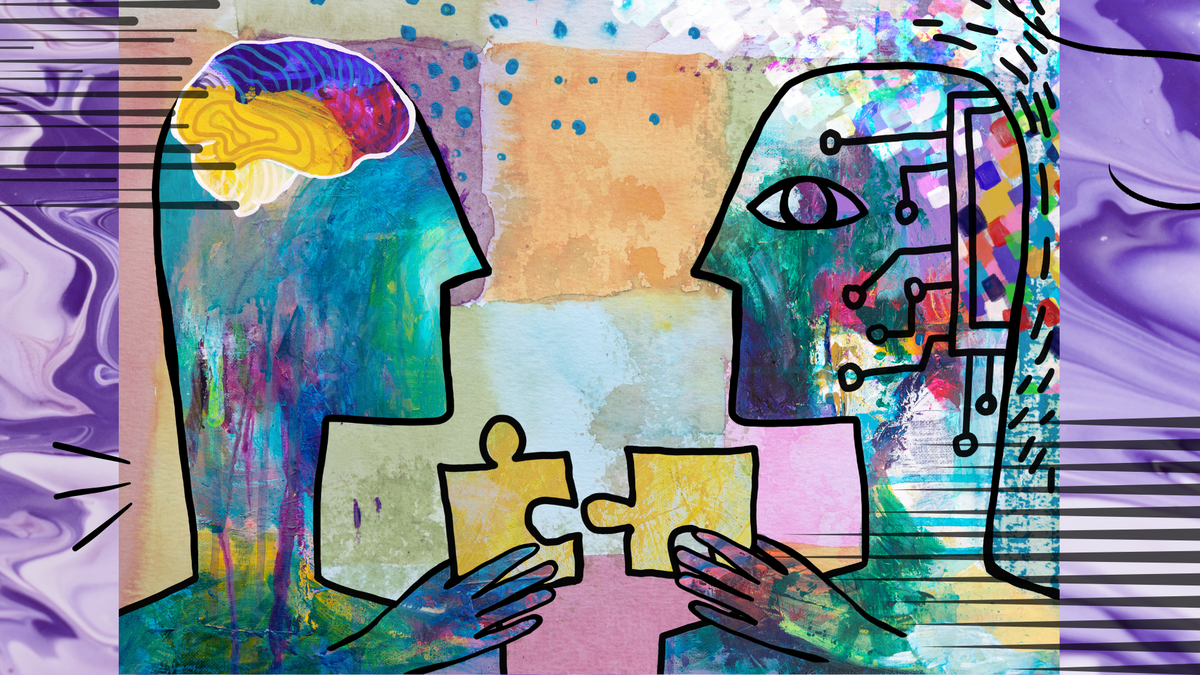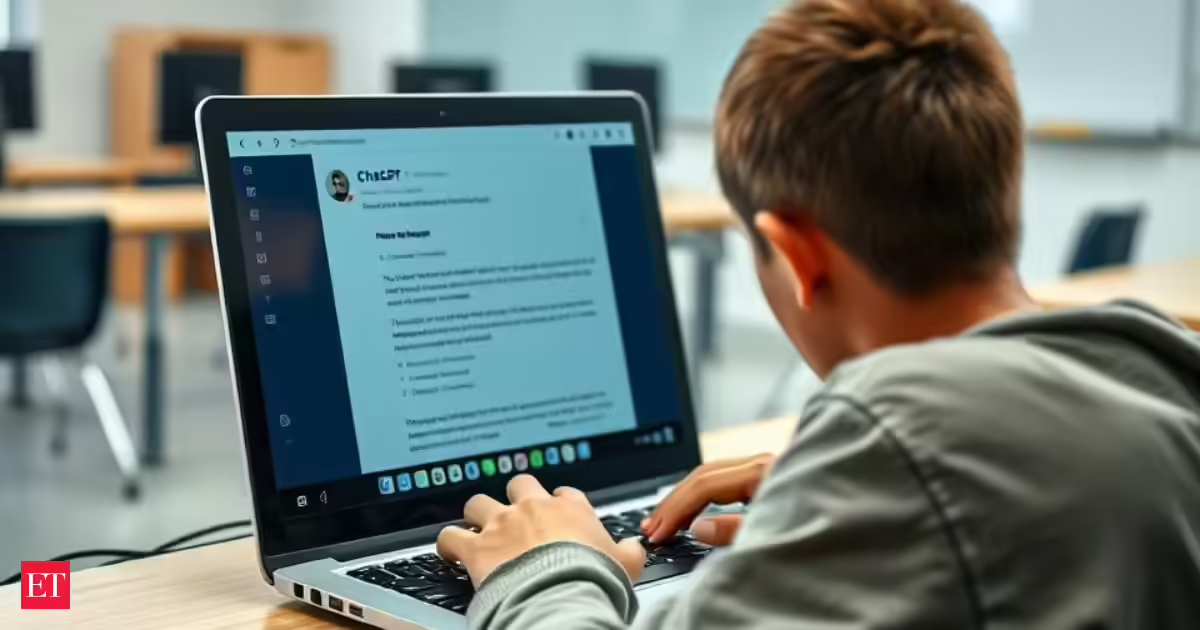
Disclaimer: The following text is entirely human-authored. No “outside” help was sought to outline the piece. Editing was not outsourced to a “foreign hand”. Research was strictly restricted to gossip, Google and good ol’ social media skulking. Synonyms were deployed the old-fashioned way (many thanks, Roget’s International Thesaurus). Sentences were completed unassisted. Deadline was missed by a mile. Slap on that “100% unaided by AI” sticker already.With that out of the way, let’s get started on the much-dreaded, oft-debated, forever-relevant subject of AI.My first brush with it? Many, many decades ago. In the presence of a responsible adult. For a short story.“AIEEEEEEEEEEEEEEEEEEEEEEE!!!!!” went a particularly excitable character from the aforementioned work of fiction.I fondly remember my English teacher’s remarks lovingly scribbled in the margins: “Way too many exclamation marks”, “Couldn’t figure out the rest. Would’ve been easier to read hieroglyphics”, and “Save doodles for art class”. Moral of the story? Using AI in creative writing does not lead to gold star glory.Cut to the present.For the longest time, I thought Gemini was a star sign. And when people claimed they were “into Gemini big time”, naturally, I assumed they were gushing about their affinity for folk born in the third sign of the zodiac. As for Claude, who can forget Phoebe Buffet-Joey Tribbiani’s iconic “Je m’appelle Claude”? Titan? Made in India brand. Llama? South American camel cousin. Rufus? Helloooo, ever watched Gossip Girl? ChatGPT? Street food GujiyaPapdiTokri.Imagine, then, after many, many decades of this blissful, utopic, luddite-y existence, suddenly being bombarded with stuff like:“Do you think bots will replace you?” – Frantic journalists“Really think I’d use ChatGPT to write your book reviews on Amazon?” — Fawning friends and family“Why don’t you write a 10,000-word piece on AI for … <insert name of newspaper/magazine/digital platform>. ASAP. No excuses. It’ll help spread the word about your new book. Heaven knows your feeble attempts on Instagram aren’t helping.” – Fed-up editorThe Uber of the literary worldAt first, I didn’t BOTher to get my pens in a bunch, but when the predictions got more dire, queries more persistent (journalists), book review promises accompanied by winks (friends), and mails in all-caps (editor), I had to do something.After a fair amount of whining and whinging, spiralling and venting, faffing and staying off the net (har har!), doodling and dreaming up delicious possibilities – my piece would go viral, the editor would offer me a weekly column in the vein of Mathrubhootham-meets-Mrs FunnyBones, my Instagram follower count would skyrocket to four digits – I got down to thinking about artificial intelligence and natural intelligence and creating books for kids.My two bitcoins?Kidlit creators (KC) will win the war against AI.There, I said it. Before you do the customary eye roll and go, “That’s what delulu dinosaurs thought before the asteroid hit”, hang on a New York minute. Everyone and their aunt are going on and on about AI posing a threat to us, but is it really? Because last I checked, AI wasn’t exactly creating stuff, merely curating it. Ergo, it still needs people to create original content, so it can dutifully rip it off. If anything, AI is kind of like the Uber of the literary world:It doesn’t actually own the vehicle (copyright).It heavily relies on independent drivers (creators) and uses their vehicles – without their consent – to give a ride to other literary travellersTravellers can hail the vehicle for a ride, but they can’t really pass it off as their own. Not without serious legal consequences. As Anthropic recently found out after losing a copyright case. Even as I type this, they are shelling out a modest 1.5 billion dollars as a settlement to a group of authors for using pirated versions of their books to train their chatbot, Je m’appelle Claude. And Bloomsbury, the publisher of the Harry Potter franchise, are laughing all the way to the bank with a million-pound payout.KC – 1, AI – 0.On to the next. Let me make a sweeping statement (because, why not) about the kidlit community. Making books for children of all ages is not just our profession. It’s our vocation. It’s that siren call which must be answered, that itch which must be scratched, that beast which must be fed, distractions – deadlines, diapers, doomscrolling, Donald dissing – notwithstanding.Believe you, me. We are not in it for the money (there isn’t any) or fame (unless you count getting accosted at grand literature festivals, only to be asked, “Excuse me, can you tell me where the toilets are?” as fame) or glitz and glamour (let’s face it, only Zendaya can pass off tatty sweatpants as high fashion) or because it’s “easy” (you please try entertaining a seven-year-old who’d rather play Roblox) or because we want to eventually write for grown-ups (some of us do that parallelly, thanks very much) or because we want to impart morals and values and raise a generation of sanskaari robots.We create books for children because we love it. We love pulling all-nighters, hunched over our laptops while the rest of the world Netflixes and chills. We love sacrificing family outings, nights out in town with friends and personal grooming-fitness-wellness to dream up wildly exciting stories, scenes and scenarios. We love working ourselves into a frenzy while we are at it – why, the sales of Eno shot through the roof during the writing of this piece alone. And we love doing it over and over, even though the whole world says “kids aren’t reading anymore and parents only ever spend on textbooks” and “children’s literature has a slightly higher crud percentage than literature as a whole” and “why does India have over one hundred literature festivals when it doesn’t have enough readers”.Agrees illustrator, graphic designer and author Sharanya Kunnath, “Increasingly I have been wanting the tactility of actual materials to appear in my work, perhaps as pushback against AI in some part, but also because they genuinely are more joyful to work with. It’s not an immediate process; there’s no undo button, you need to plan properly, you have to wait for things. I don’t see AI as competition in terms of quality; it is competition in terms of speed. There is absolutely no comparison with the vitality of something made by a human being, even if it’s a distracted doodle at the edge of a newspaper.”KC – 2, AI – 0‘We create kidlit to make the world more bearable’Big reveal: Hate. Intolerance. Fake news. Wars. Prejudice. Oppression. Climate change. Inflation. Information overload. Brain rot. Digital fatigue. Family reunions. WhatsApp uncles. Anti-national accusations. You name it – it’s how we deal with it.To paraphrase SRK in Devdas, who on earth creates kidlit to escape the world? We create kidlit to be able to bear it.Somehow, I doubt AI feels strongly about any of what’s happening around us. Oh, that’s right. Machines, software, code, algorithms can’t feel.KC – 3, AI – 0Hope you’re keeping score, dear gentle reader.Anyhoo, enough of the dark stuff. Creating books for kids is what we do for fun. Use AI to brainstorm ideas, outline the story, craft scenes, churn out the entire plot, fact-check (good luck with that!), meet deadlines, or, like in one famous instance, to come up with the musical tastes of the protagonist? Where’s the fun in that?Adds lawyer-turned-award-winning author Mallika Ravikumar, “Recently I was asked to judge a writing competition. I was disappointed by what I saw. I had good reason to suspect that many of the entries had been written by AI. They were far too polished, robotic and grammatically perfect. But if someone wants to be original, authentic and heartfelt, AI is not going to help.”To counter the aforementioned challenge, Vinitha, author of Uma Kapoor vs The Universe, suggests, “We ought to wonder how we can go about boring children with AI. Because once you realise AI has no curiosity, no confusion, no joy in the struggle, it becomes terribly dull. The problem isn’t that kids are using AI. The problem is that we, as adults, have stopped being interesting enough to compete with it. We’ve stopped listening. We’ve stopped sitting with them in their confusion. We’ve handed them screens and then blamed them for liking them. If we want children to think for themselves, we have to show them that thinking is a sport, not a chore.”KC – 4, AI – 0Also, remember the time when we could mug a TON (think: equivalent of terabytes) of useless information? Zillions of telephone numbers? And birthdays? And anniversaries? Without ever relying on a calendar/phone/notes/reminders/FB wall (strictly for Gen X)/another person’s self-congratulatory Instagram post? Now we can barely remember our door number.What if we let AI do all the heavy lifting for us, let tech do all the work, and the same thing happens to our creative impulses? What if we stop feeling the urge to put pen to paper, fingers to keyboard? Shudder. Mr Orwell couldn’t possibly have dreamt up a more disturbingly dystopic future.KC – 5, AI – 0Besides, if AI creates something for us, is it even art? Correct me if I’m wrong (I’m not), but isn’t art something created by humans for other humans about what it means to be human?KC – 6, AI – 0What’s that you say? What about creators who use AI but try to pass it off as authentic output, like those celebrities who drop dozens of apparel sizes overnight, and still deny ever popping Ozempic? Whatever happened to complete transparency and full disclosure? Worry not. Grim cautionary tales abound: International organisations conducting investigations to check if award-winning submissions are indeed human-produced. Big Five publishers withdrawing novels after allegations run rife that it’s AI slop. Creators losing book deals, readers, fans, face.So there.Perhaps kidlit publishers will incorporate a logo that tells human writing apart from AI slop on the cover, like the society of authors in the UK has, perhaps AI is the new reality and it’s not going away anywhere, perhaps artificial superintelligence will start mimicking us better, perhaps AI-generated books will flood the market, perhaps AI will clone itself and become independent of humans, but isn’t that how it’s always been? Every time there’s a new supervillain on the screen, er, scene – video games with their unlimited levels, World Wide Web with its countless pages, e-commerce with its dopamine hits, socials with their endless scrolling – there’s a great hoo-ha about the Postliterate Age.And yet, kidlit creators march on.Says author Richa Tilokani, whose book for middle-graders is forthcoming, “If this is the Age of AI, it’s all the more important that we think, create, engage, examine and articulate our feelings and encourage children to do the same. A world without original artists, writers, poets, thinkers and creators is poorer for it.”In the words of one of my favourite poets, Faiz Ahmed Faiz:“Hum parvarish-e-lauh-o-qalam karte rahenge/ Jo dil pe guzarti hai raqam karte rahege”“We shall continue putting pen to paper / We shall continue pouring out our hearts”We shall not trust AI systems to do most of our work as certain CEOs of tech behemoths would have us do. We shall treat AI like rejection: mope and move forward. And, of course, we shall place our faith in our young readers. We shall trust them to consume and create human-made books. Gen Z and Alpha may love their reels, memes, videos, short-form content and vasteguna-huiyas, but remember the last time someone underestimated them?Vibha Batra is an author, poet, adperson and hand-on-heart tech-neutral. Her 37th book, Saru and Sorry, was published recently.
Thinking is a sport, not a chore: Why children’s literature creators will win the war against AI
A children’s author makes a case for rejecting AI.
1,927 words~9 min read