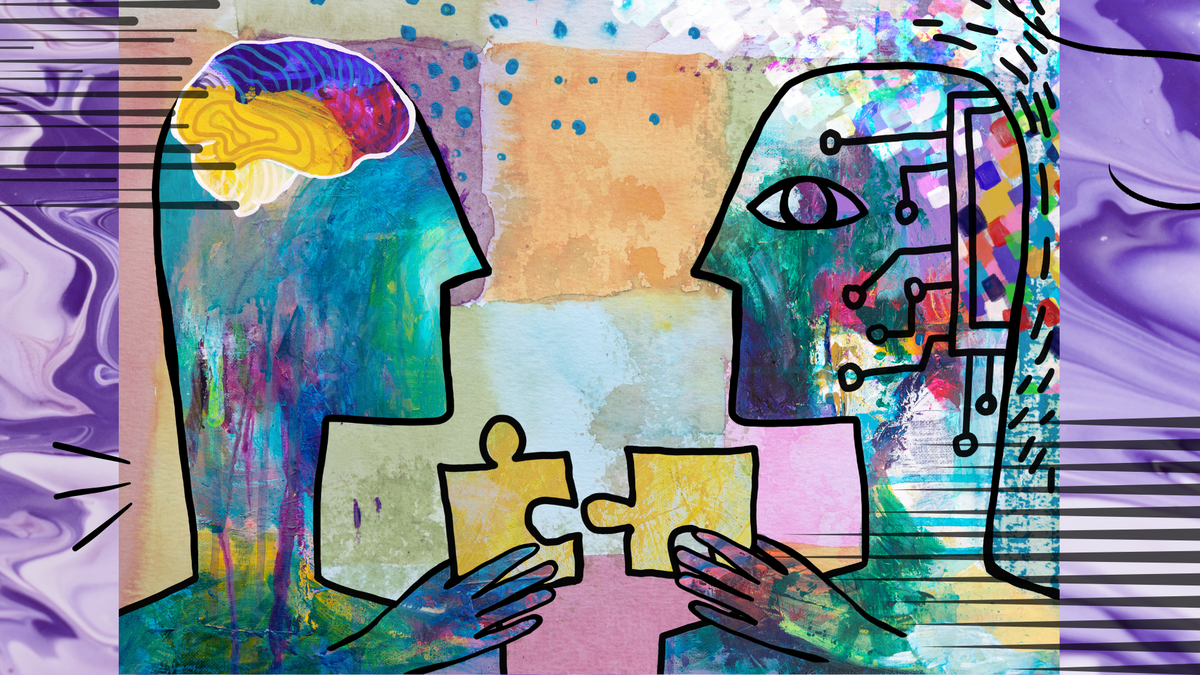
I write by hand before I open my laptop. This is less noble than it sounds. The page may hold the beginning of an essay, a sentence I will later cross out, a note to buy coriander or toothpaste, or to call Mummy. A notebook does not care about hierarchy. It takes the thought and the shopping list in the order they arrive.I have become more protective of this practice since using Artificial Intelligence (AI). My black Moleskine soft cover notebook is where I discover what I think, often by writing something inadequate and letting it rest. I do not want a machine waiting with a fluent answer before I have managed my own awkward one.
Sima Kumar
For years, I wanted little to do with AI, especially in writing. I had spent decades developing judgment and taste through creative direction, branding, and leadership. Language carries memory, geography, humour and all the irregularities through which one person becomes recognisable to another. A machine’s polished approximation of human expression felt absurd and depressing.
“The best use of AI is when it expands your thinking and not when it replaces the act of thinking. Sometimes I use it to verify facts, sometimes for quick research, sometimes to structure a thought, and very often to challenge an idea. One thing I use it a lot for is a pre-mortem.”Rahul MishraFashion designerA 2025 study of 319 knowledge workers, published during the Computer-Human Interaction conference in Japan, found that greater confidence in generative AI was associated with less critical thinking. The nature of the work had also changed, with people moving from doing a task towards checking, integrating, and supervising a machine’s answer. I found that interesting because it described something I had already begun to worry about.‘I write before I prompt’It was easy to maintain my suspicion until my working life changed. I had spent 24 years as a stylist and creative director, before moving into brand leadership and later co-founding a diversity, equity and inclusion business. Then, at 55, I began building a business alone — with plenty of experience, but without the team that had once absorbed the hundreds of small tasks required to keep work moving.My new work draws on yoga, Ayurveda and neuroscience to support women through midlife. Behind it is a less picturesque reality: files, invoices, emails, websites, systems and administrative tasks that seem to breed quietly whenever my back is turned. I needed more capacity, but I could not hire somebody every time another layer of work appeared.So this May, I enrolled in Creator College’s 28-day live programme about turning content into a business. I related to the self-made immigrant success stories of the founders — social media educator Jun Yuh and entrepreneur Shan Hanif — and the fact that they were both practitioners. Hanif taught monetisation and scale for digital products, and one of his public posts, where he warns against taking the first response from ChatGPT and pasting it into client work, stuck with me. Anyone who has used these systems for long enough knows how convincingly they can invent information.That has had real consequences. In 2023, a New York federal judge fined two lawyers and their firm $5,000 after fictitious legal cases generated by ChatGPT were submitted to the court. Hanif’s advice is to research a problem and form a hypothesis before asking AI for help. “Never let AI do the thinking for you,” he writes. “AI is a tool, not a brain.”That was familiar territory to me. I write (my trusty 0.38 Muji pen always at the ready) before I prompt.