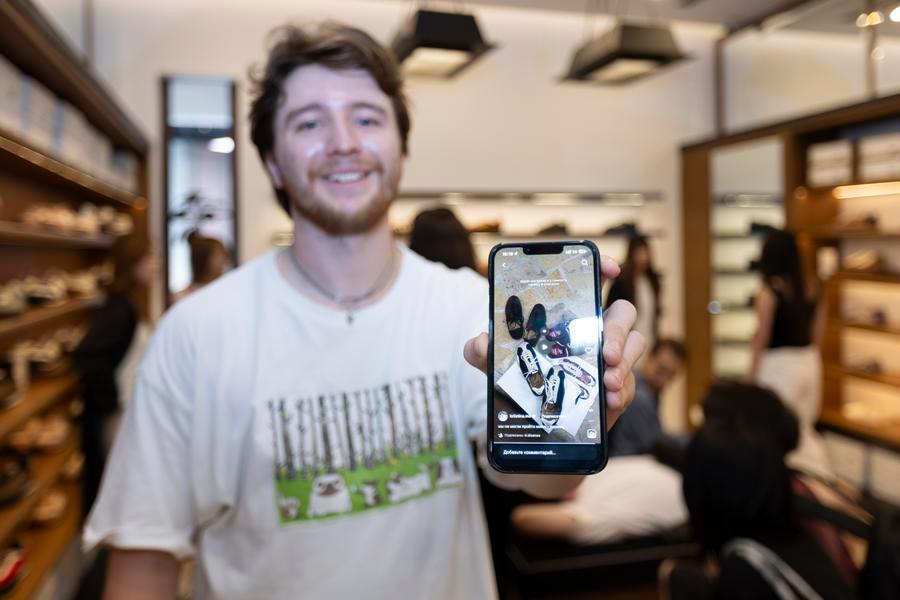
At Chinese handbag brand Songmont’s first overseas store, a pop-up in Bangkok’s CentralWorld shopping center, Nathan from India was buying for his girlfriend back home. The 29-year-old stood out from the crowd with his bright yellow suede trainers from Shanghai-based designer Pane.
It took a lot to get those shoes to India: Nathan said he had to use a transshipment service to deliver them via London. But the effort was worth it: “They are the most comfortable pair of shoes I’ve ever owned. And they just look really good.”
His willingness to tap into emerging brands from China is exactly what those companies are hoping for as they step up growth overseas. A young and trend-conscious consumer base is setting up Southeast Asia to be a testing ground for Chinese premium and luxury brands’ international expansion.
The global luxury sector, with China being the second largest market after the US, has only recently recovered from a yearslong downturn driven almost entirely by collapsing demand in China. Personal spending on luxury goods there shrank 20.1% in 2024 and another 7.3% in 2025, according to Bain & Company.
Persistent weakness in domestic consumer demand has pushed Chinese companies to look for growth abroad, with their overseas profit contribution doubling in the past decade to 16% in 2025. International markets also accounted for 26% of their total revenue last year, according to HSBC.