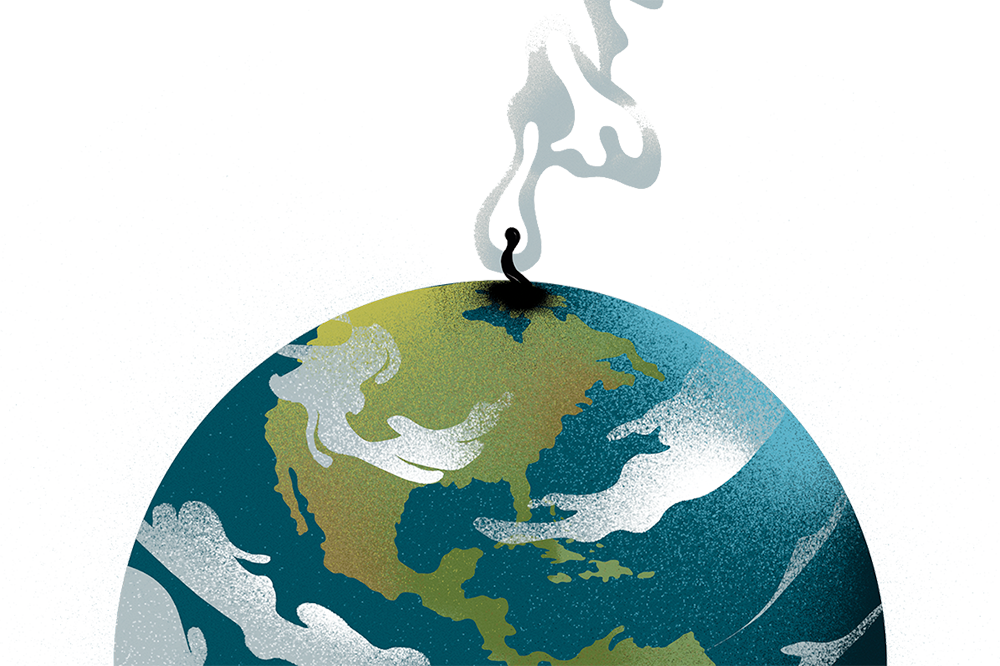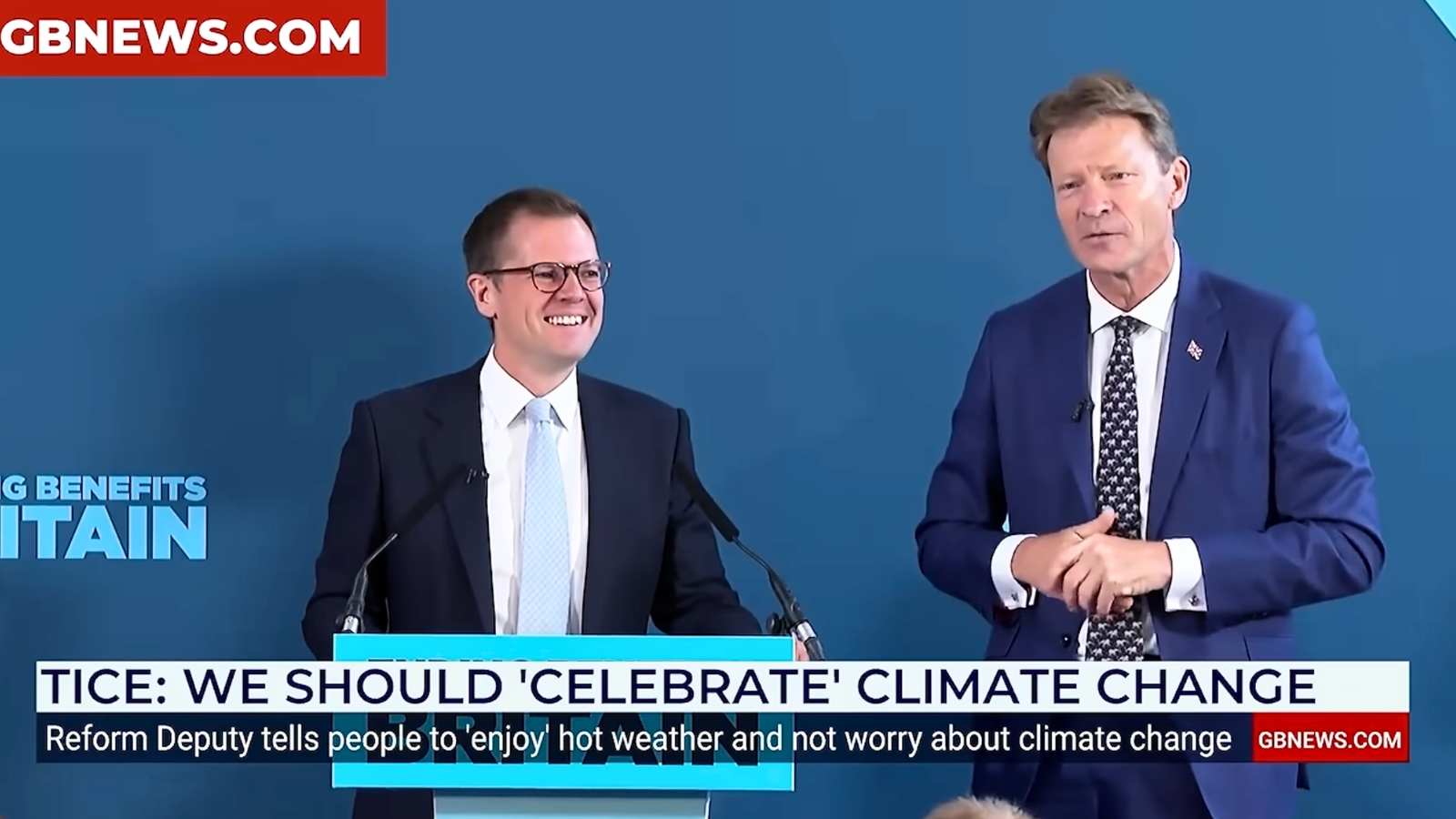
Remember climate change denialism? Remember the large and exceptionally well-funded movement to discredit, in the media and in political life, the idea that the planet was warming and that it was caused by the presence in the atmosphere of carbon from fossil fuels? It seems almost absurd to consider it now, but just as there were movements attempting to discredit the theory of evolution and, further in the past, the idea that the planets orbit the sun, there was once such a movement against climate science. It is in one sense a great relief, a great boon to our collective sanity, that we no longer have to put up with endless “debates” in the media about issues long settled among scientists. It’s unfortunate, though, that the reason for this is that climate change has become such an observable phenomenon in the present – this summer’s extreme temperatures in Europe, for instance, along with the resulting droughts and wildfires – that the case for any kind of climate scepticism has shrivelled in the dry heat of another scorching summer. There are still some individual holdouts, needless to say: the kind of people who, when you write an opinion column about the climate crisis, take it upon themselves to post on social media that in Sligo, where they happen to be, it’s actually a brisk 15 degrees and raining steadily, thereby refuting the notion of a heating planet. But such people increasingly seem eccentric historical curiosities, like those Japanese soldiers who refused to surrender in 1945 and continued carrying out guerrilla warfare in the Philippines into the 1970s. In this vacuum on the political right, created by the near-total dissolution of climate denialism, a new rhetorical strategy has begun to assert itself. It advances in its cynical way the view that, yes, the planet is getting hotter but there’s nothing much we can realistically do about it, and we therefore might as well make the most of it. This strategy, which is a sort of opportunistic mutation of climate scepticism, might usefully be thought of as climate stoicism.Last week in the UK the Reform party’s deputy leader Richard Tice provided a textbook example of how this strategy is now being deployed. London had in recent days experienced temperatures of over 38 degrees, and some 2,700 people had died as a result of the heatwaves of May and June; reporters were, as such, keen to know about Reform’s climate policy. Tice acknowledged climate change was, of course, real, but claimed – entirely falsely – that there was no evidence net zero policies would succeed in stopping it. “Climate change has always happened, and it always will. Maybe the smarter thing to do is to adapt to it than to think arrogantly that you can stop it,” he said. “When it’s a bit warm, let’s enjoy it. And if it means that English wine and sparkling wine gets better and better, fantastic! That means we can take on the French. Let’s celebrate some of these things, rather than just being sort of doom and gloom about it.”It probably goes without saying that, since it was set up in 2019, Reform UK has received tens of millions of pounds from wealthy donors with links to the fossil fuel industry. A gift of £5 million to the party’s leader Nigel Farage from Christopher Harborne – a billionaire who, among other interests, owns a jet-fuel brokerage business – is currently the focus of a parliamentary inquiry. It’s easy to laugh at the sort of stuff Tice is coming out with here; easy and, it seems to me, highly salutary. There’s a particular kind of absurdly English complacency after all, to the idea that a series of heatwaves as extreme as that recently experienced across the Continent – some 16,000 excess deaths were recorded in a single week of the June heatwave, most of them in northern European countries unaccustomed to extreme heat – should be thought of as just a bit of nice weather to be enjoyed. This is a sort of mutation of the “keep calm and carry on” tendency, the Blitz spirit the British are so proud of. But the point of the Blitz, and of that country’s heroic struggle alongside their American and Russian allies against the Nazis, was that they were actually fighting. What Tice and people like him are suggesting, in drawing on the dwindling reservoirs of this national mythos, is something more like “keep calm and surrender”.It’s also tempting here in Ireland to succumb to our own kind of complacency: a complacency about our never having incubated a national politics of the sort typified by Reform UK. It’s not that this sort of thinking in relation to climate change doesn’t exist here. Our own version of climate stoicism, rendered in irreducibly Irish terms, was memorably given voice by the Kerry Independent TD Danny Healy-Rae. “God above is in charge of the weather and we here can’t do anything about it,” as he put it in a speech in the Dáil in 2016. “If we go back to the 11th and 12th centuries this country was roasted out of it, and in the 15th and 16th centuries we were drowned out of it.” Such views are, nonetheless, fairly fringe ones in Irish politics, whereas Reform are in with a decent chance of winning the next UK general election. [ Ireland’s warming seas pose risk to public health, scientists warnOpens in new window ]But perhaps this country’s more potent version of climate stoicism is not Healy Rae’s divine meteorological providence, but rather the far more popular and politically palatable approach of just saying we’re going to do things and then not actually doing them. Making full-throated commitments to reducing carbon emissions by 51 per cent by 2030 for instance and then failing to do anything close to what’s needed to get there. According to a forecast earlier this summer by the Environmental Protection Agency, the country is on track to reduce emissions by, at best, 25 per cent by 2030, and if the Government continues pursuing current climate policies the reduction is likely to be as little as 13 per cent. This approach is far more suited to the temperament of the Irish political establishment than Tice’s talk of enjoying the weather and making wine while the sun shines. It allows everyone to agree with the inarguable principle that we must change our ways without ever having to undergo the discomfort or political upheaval of actually doing so. The pasteboard of political rectitude with nothing at all underneath it. Both approaches amount in the end to the same thing. And both are more or less equally agreeable to those whose economic interests are served by our continuing to do nothing.
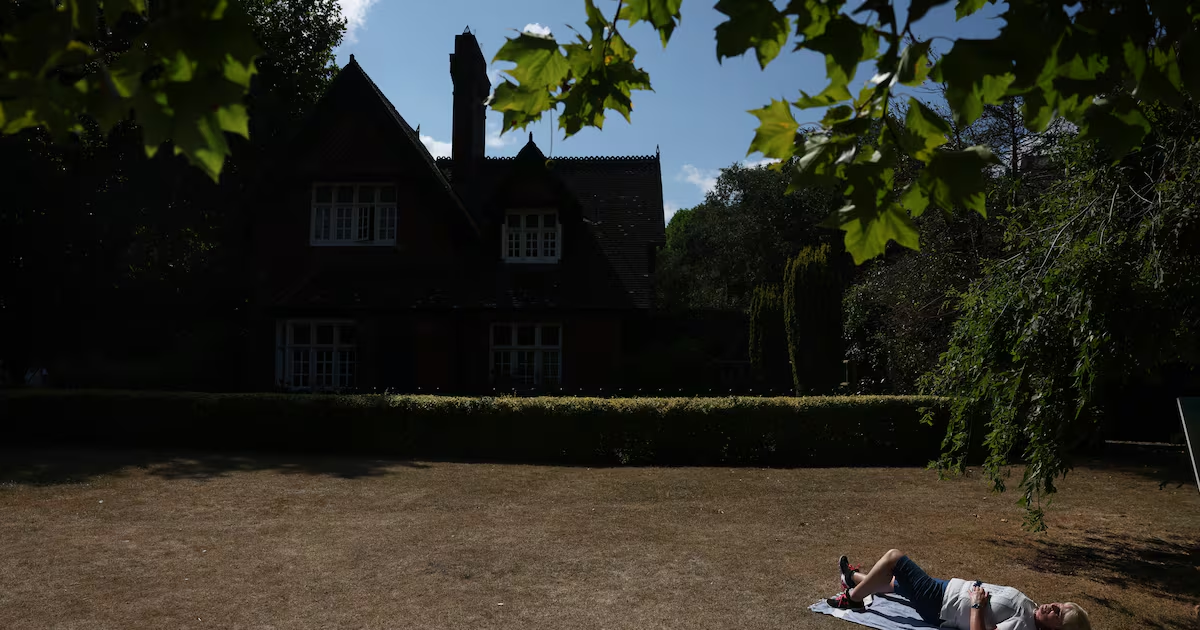
Mark O’Connell: Any kind of climate scepticism has shrivelled in the dry heat of another scorching summer
Any kind of climate scepticism has shrivelled in the dry heat of another scorching summer
1,127 words~5 min read