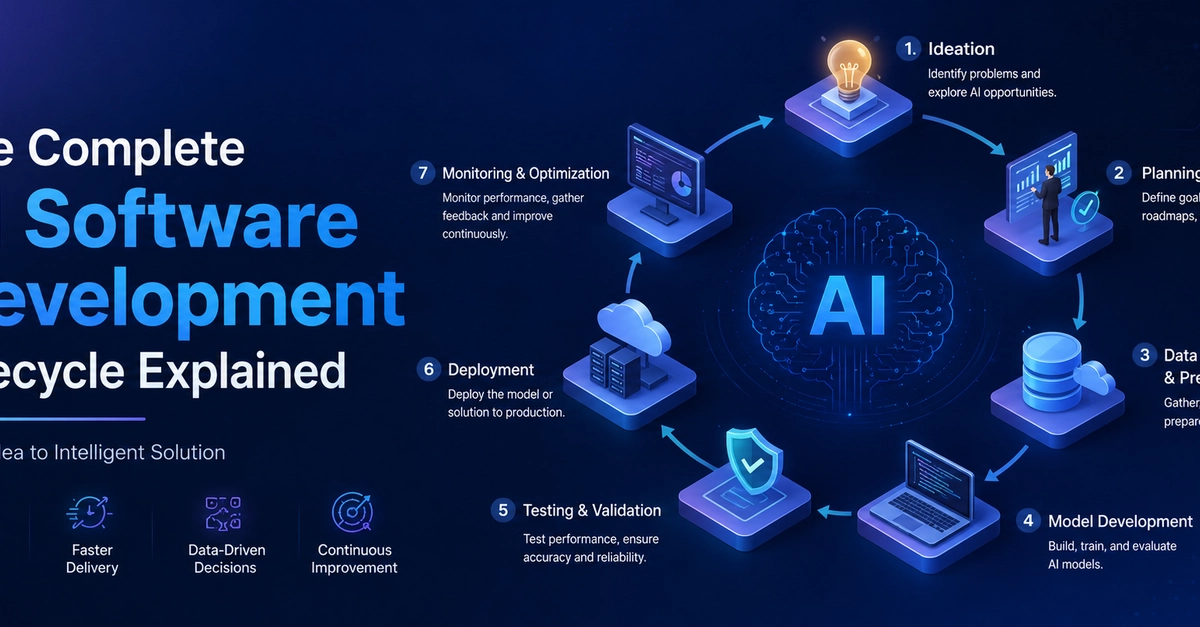
If you've shipped anything in the last year, you've probably noticed your workflow doesn't look the way it did in 2022. You're not just writing code anymore. You're reviewing what an agent wrote, correcting its assumptions, and deciding when to trust it versus when to take the wheel yourself.
You're not imagining this shift. A 2026 Software Lifecycle Engineering Decision Maker Survey from Futurum Research found that 76.6% of organizations are now actively using AI in their development workflows, with another 20.4% evaluating implementation. That leaves only about 3% of teams sitting this out entirely (futurumgroup.com). Mitch Ashley, who leads software lifecycle research at Futurum, put it bluntly: 2026 is the point where developers stop being pure code authors and start becoming engineers of agent-driven development.
But adoption numbers only tell half the story. A separate industry roundup on AI in software development statistics found that teams using AI coding tools report roughly 4x faster code generation, but also 10x more security vulnerability findings, with code review cycles taking twice as long and post-merge bug fixes tripling (softjourn.com). Read that again. The speed is real, but so is the tax you pay later if you don't restructure how you review and validate that output.