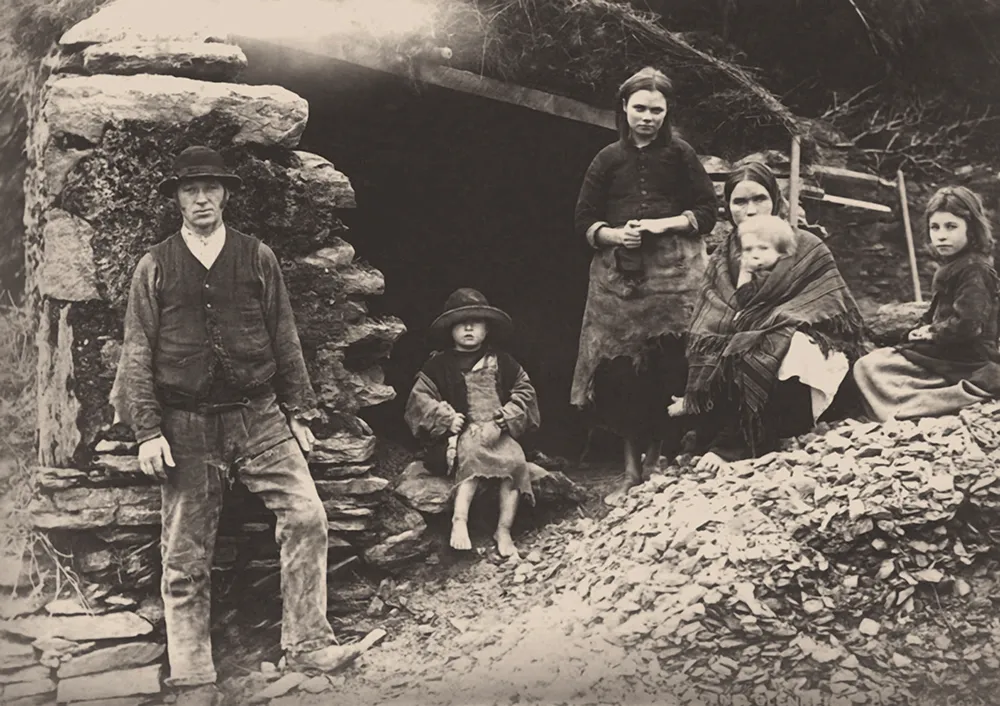
The Princess of Connemara by Alan Esslemont (Conamara Publishing, €15)Lust, land, literature and love drive Esslemont’s generational saga. Spanning from 1783 to 1905, the epic story begins with the fallout of Theobald Wolfe Tone’s scandalous affair with Eliza Martin, a lonely politician’s wife, in the wilds of Connemara. Eliza’s story is worthy of a novel in itself, but the book’s ambitious timeline climbs the family tree. Set against the backdrop of Ballinahinch Castle, we are three generations in before meeting our main heroine, Mary Letitia Martin, the heiress to the estate. Granddaughter to the man known as “Humanity Dick”, Mary is determined to protect her tenants. As Ireland is gripped by famine, the woman dubbed “The Princess of Connemara” is faced, like the Martins before her, with a choice between love and loyalty. Céire SadlierThe Judges of Ireland 1866-1921 by Daire Hogan (Four Courts Press, 520pp, €65)The expression “British rule”, used popularly to describe the governance of pre-Independence Ireland, obscures the fact that much of that governance was by middle-class Irishmen, Catholic as well as Protestant. How many of those who speak loosely of “British judges” and “Ascendancy rule” know that Thomas Molony, the last Lord Chief Justice of Ireland before Independence, was the devout Catholic nationalist son of a small-time hotelier in Dublin’s Bolton Street, and was educated by the Christian Brothers at O’Connell Schools? His predecessor James Campbell was a policeman’s son. Daire Hogan provides a corrective to popular perceptions in his account of the judges in the half-century preceding Independence. He highlights the large role played by political allegiance in their appointment, a phenomenon that survived into independent Ireland. Charles LysaghtAlone in Japan: A Journey to the Future by Tom Feiling (Allen Lane, £25)The accounts of westerners in Japan comprise a travel genre staple as well worn as the 18th century grand tour, with many such books merely being repositories of truisms. Tom Feiling’s book breaks with tradition and employs the Japanese travelogue as a fractured history of the future. If Japan was once at the cutting edge of technology, we can now see perhaps the most advanced forms of the demographic crises, social atomisation, economic failure and responses to natural disaster which will define the coming century. Feiling’s position in this book is that of an investigative reporter, casing the margins of megacities and dying villages, searching for clues as to what has gone so wrong in a rapidly ossifying nation, and what, if anything, might remedy it. Seoirse Swanton
Books in brief: The Princess of Connemara, The Judges of Ireland 1866-1921 and Alone in Japan: A Journey to the Future
New books from Alan Esslemont, Daire Hogan and Tom Feiling
414 words~2 min read