Story audio is generated using AI
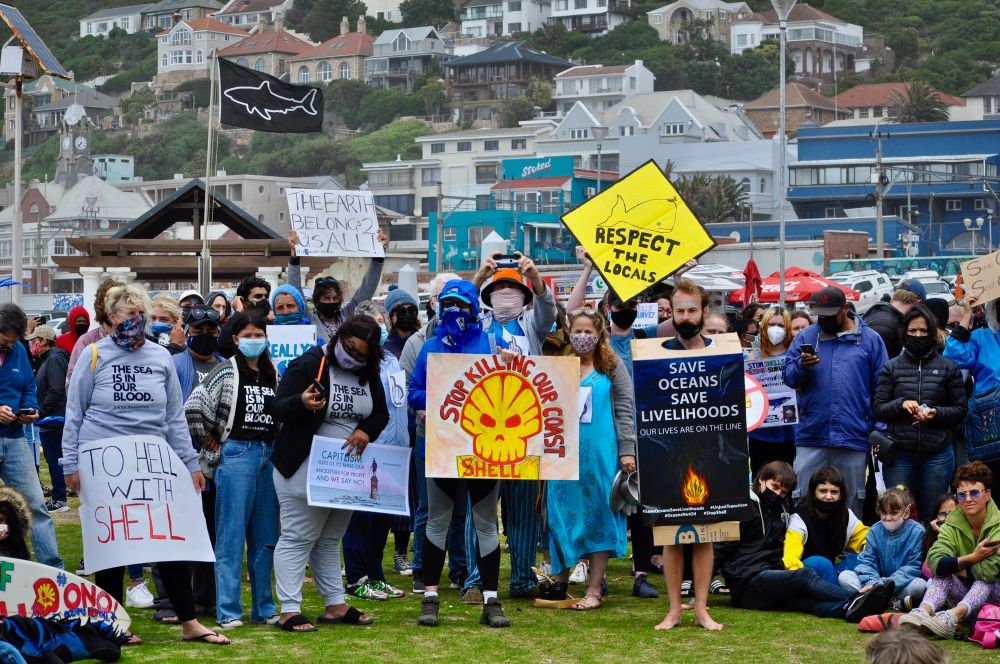
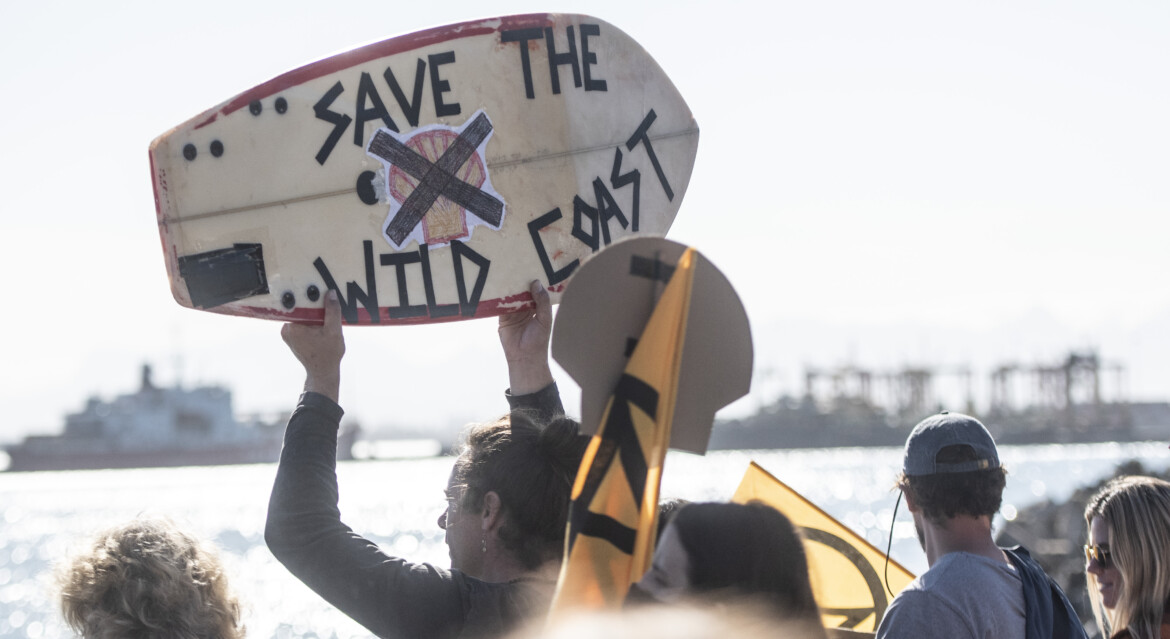
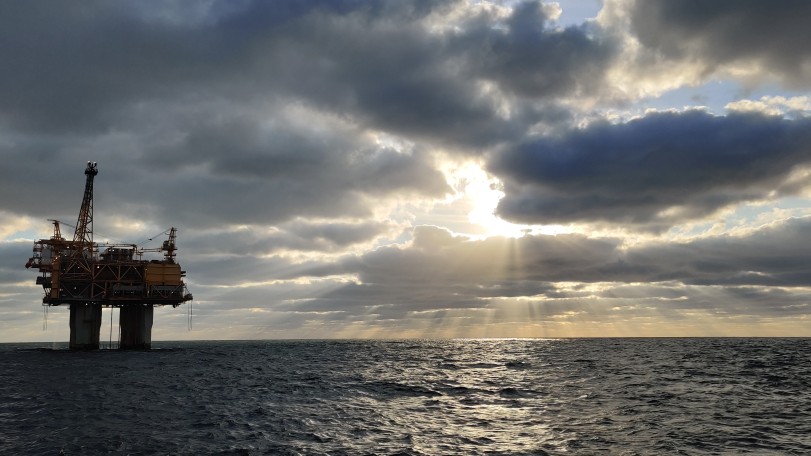
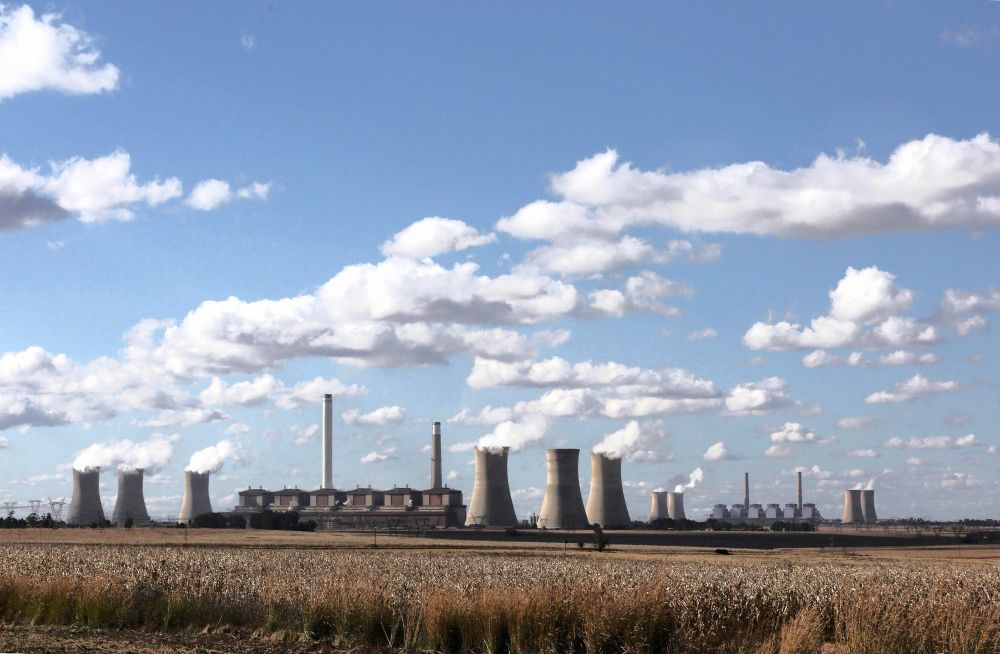
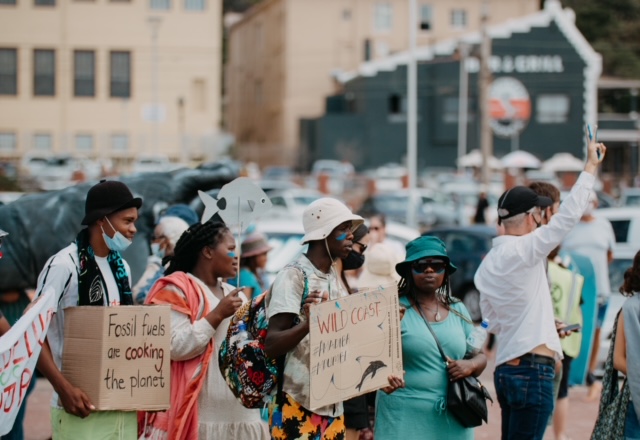
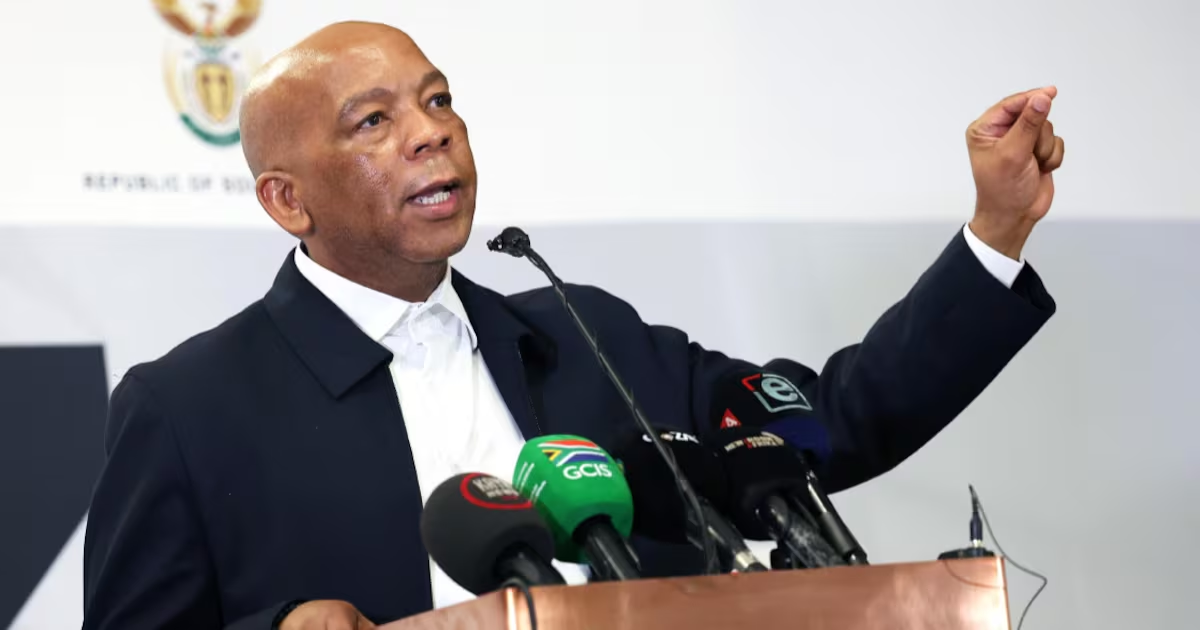
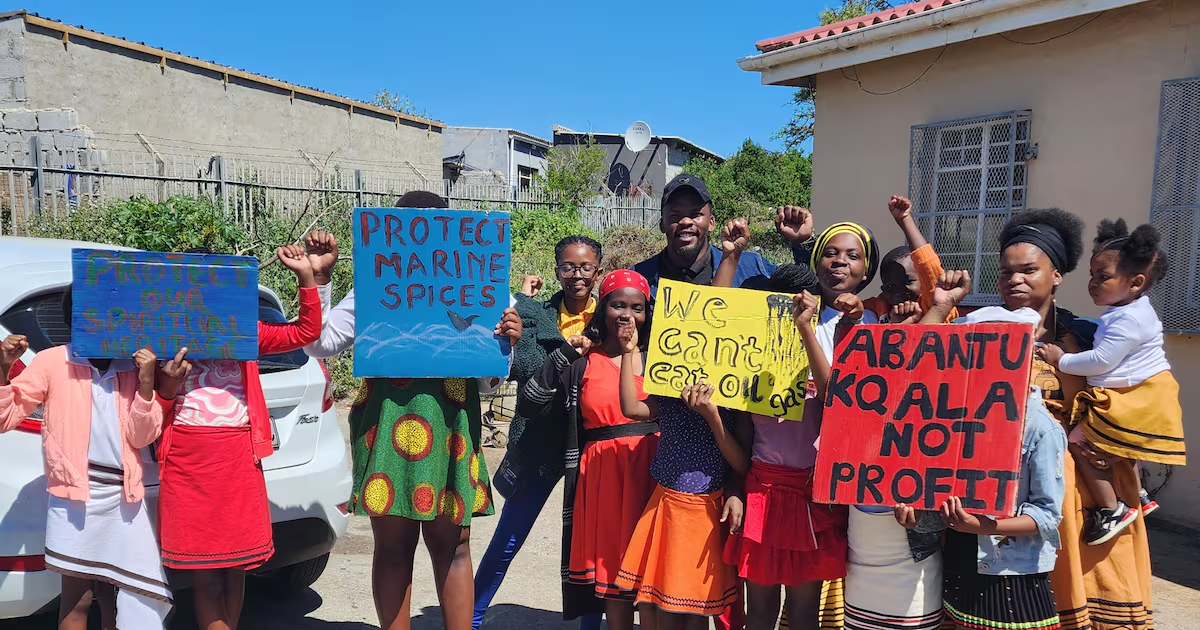
South Africa’s coal and oil projects are coming under increasing pressure from civil society, community and environmental groups supporting efforts to reduce the country’s carbon footprint. On Wednesday, electricity & energy minister Kgosientsho Ramokgopa approached the Supreme Court of Appeal (SCA) in Bloemfontein in a bid to overturn a lower court decision that set aside the government’s plan for 1,500MW of new coal-fired power.Fossil fuels have been the mainstay of global power generation, and this is no different in South Africa, where 80% of energy generation comes from Eskom’s coal-fired power stations.While coal is vital for the baseload, its emissions footprint cannot be ignored, nor can the economic benefits of power stability for South Africa’s growth prospects.This is one of the reason why Ramokgopa is appealing the decision by judge Cornelius van der Westhuizen, who in 2024 ruled in favour of NGOs, citing that in drafting the proposed 1,500MW, officials did not take into consideration the environmental impact on children and future generations.However, the environmental impact of coal is not the only concern of NGOs. On Monday, public interest organisations penned a letter to mineral & petroleum resources minister Gwede Mantashe and the CEO of the Petroleum Agency of South Africa, Bongani Sayidini, over their concerns about oil and gas exploration in the Orange Basin.The Climate Justice Coalition, Natural Justice, the Masifundise Development Trust and the South African BDS Coalition flagged the environmental impact of Israeli oil and gas firm Navitas Petroleum’s intention to operate in the Orange Basin.At the heart of the concern is the risk of allowing the Israeli company to operate in the strategic and potentially profitable offshore oil block. This was sparked by offshore gas explorer Eco Atlantic’s decision to transfer a 37.5% stake in the Orange Basin’s block 1 to Navitas. The NGOs described block 1 as being inside an ecologically significant marine region on the offshore Atlantic coast of South Africa and Namibia. They warned that any future exploration would have negative implications for marine ecosystems, fisheries, coastal communities and livelihoods. Offshore drilling could likely result in pollution of the marine environment and the risk of oil spills or blowouts, they said. “Deep-sea drilling carries especially high risks, including challenges in monitoring and containing leaks and spills,“ they added. “The high potential reserves of the Orange Basin indicate that the project would have a significant contribution to climate change, with global impacts and especially high impacts in Africa and on communities with nature-based livelihoods.”Government ministers, including Mantashe, have repeatedly criticised NGOs for pushing an anti-development agenda that has included litigation against not only coal but also gas and oil projects. Mantashe was also vocal about NGOs litigating against the state after the courts blocked Shell’s plan for offshore exploration on the east coast.The high potential reserves of the Orange Basin indicate that the project would have a significant contribution to climate change, with global impacts and especially high impacts in Africa and on communities with nature-based livelihoods.— NGOsBut Paul Lado, an attorney at the Centre for Environmental Rights, said taking action against the state was imperative.Lado said on Friday that NGOs did not oppose development for its own sake. He said environmental organisations generally recognise the importance of economic development, particularly in South Africa, where jobs are scarce. But he added: “Environmental rights and economic development are not mutually exclusive. “Our constitution expressly requires that these interests be balanced through development that is sustainable. That means asking not only what economic benefits a project may bring but also who benefits, who bears the risks and whether those risks can be avoided or managed.“ Thami Nkosi, activist support and training co-ordinator at the Centre for Environmental Rights, said it was important for NGOs to raise their voices, pointing to this month’s Constitutional Court ruling to block Shell’s oil search off the Wild Coast. “The relationship that has been undermined, the relationship that communities have with the land that they live in – this is mostly done for commercial extraction,” he said. Business Times