Three months ago I was on a call with the founder of a logistics company in Dubai. He had spent a chunk of money on an LLM-powered chatbot trained on his own operations manual, customer emails, and tariff documents. The chatbot was confident, well-spoken, and wrong about his own business — it "remembered" an import duty rate that had changed eighteen months ago, and quoted a customer-facing policy that had been retired.
"You fine-tuned it, right?" I asked.
"No," he said. "We just... gave it all the documents."
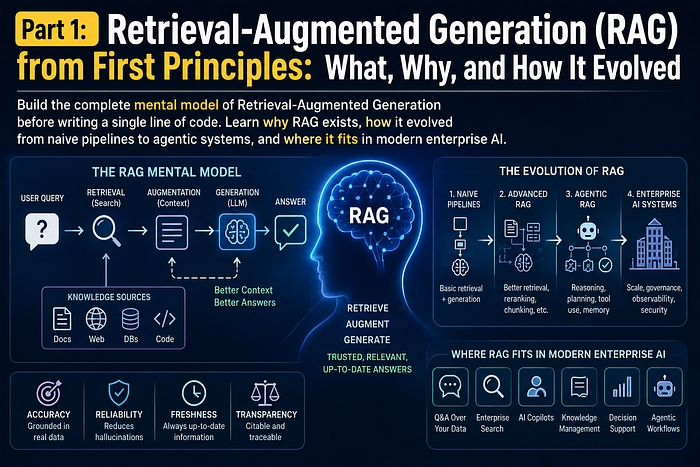
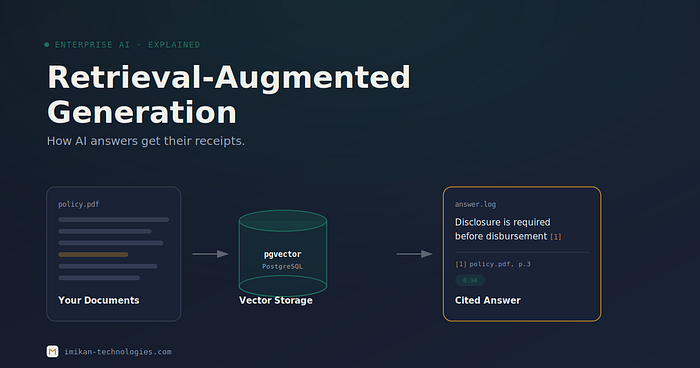
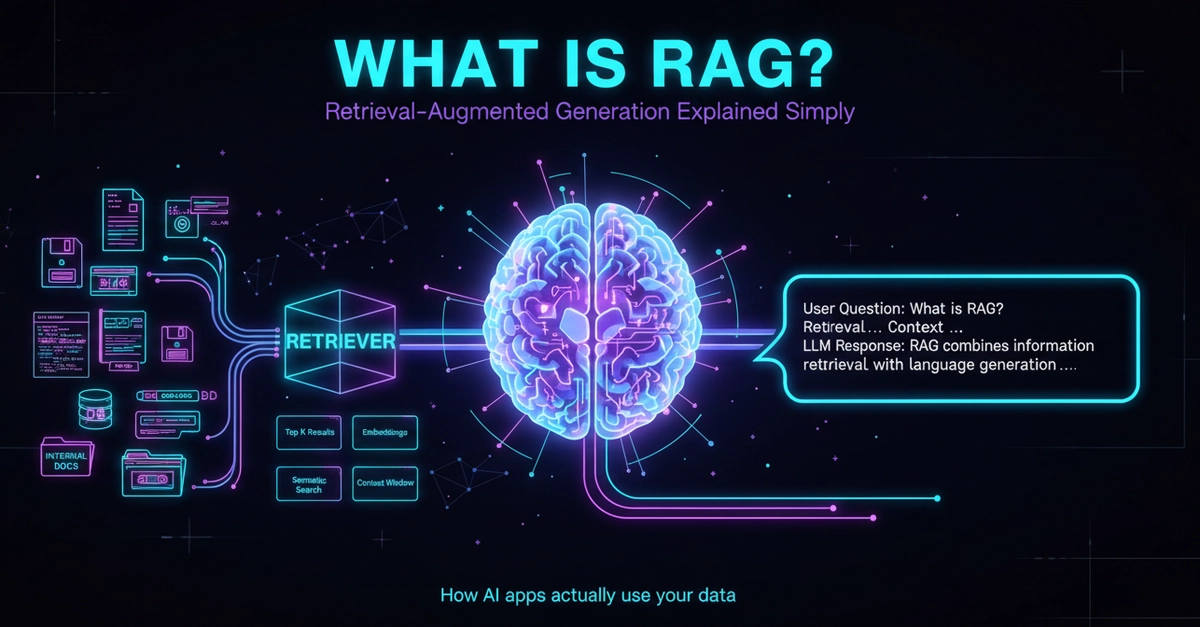
That is the moment most people discover they did not build what they think they built. Pasting documents into a model's context window is not the same as making the model know your data. The architecture that actually solves this problem — that connects a language model to a private corpus without retraining it — is called Retrieval-Augmented Generation, and it is the single most important pattern in applied AI right now. In this article I am going to walk through what it is, why it works, how to build it, and exactly where it breaks.
The Problem RAG Solves, in One Paragraph