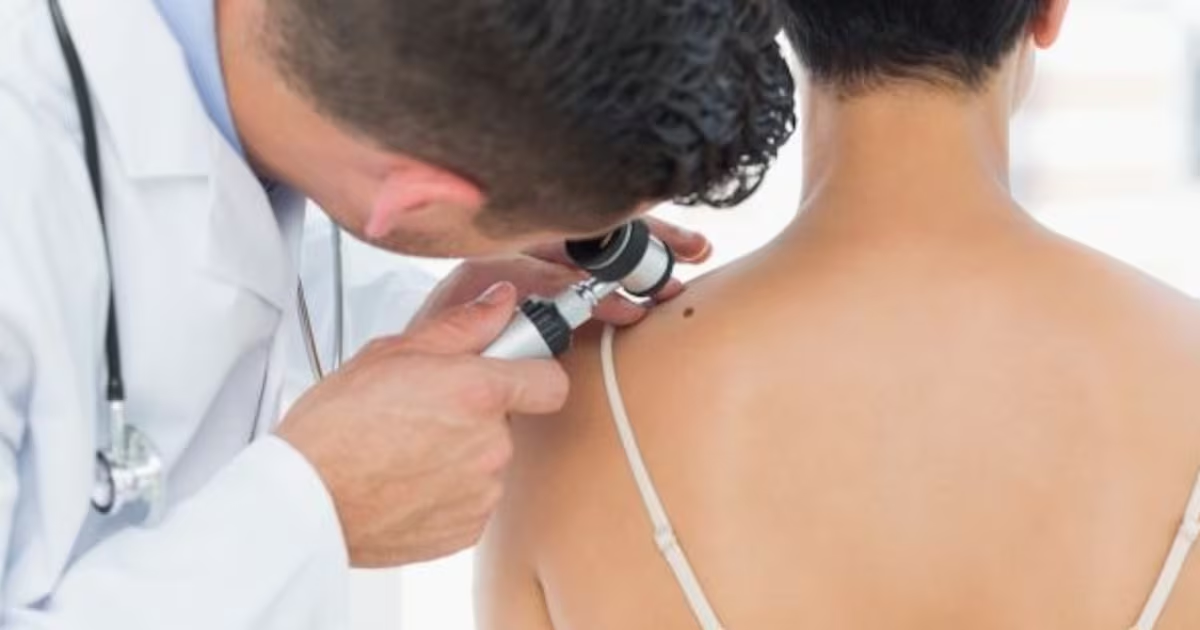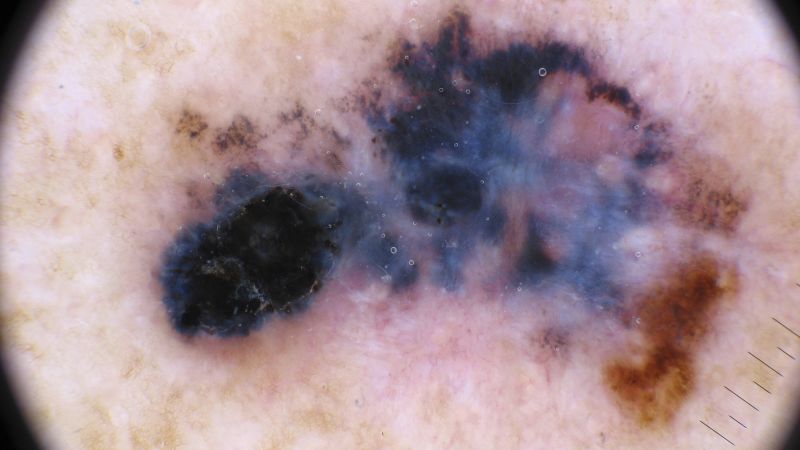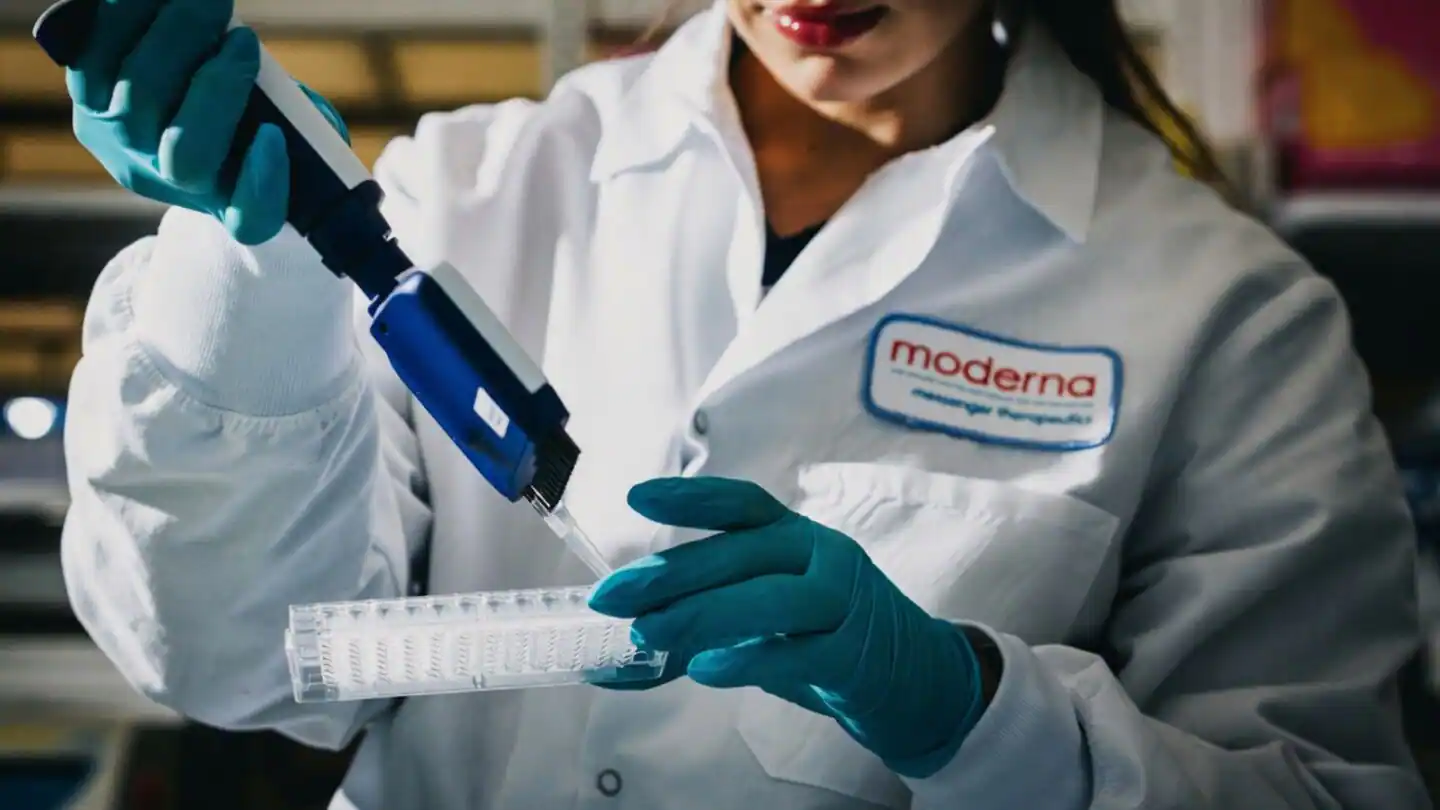
Moderna and its business partner, Merck, said the dual treatment, compared to Keytruda alone, extended how long patients live without the cancer returning, as well as how long they live without new cancerous lesions appearing in other parts of the body.The companies have yet to release detailed data from the randomized Phase 3 clinical trial. But if the results hold up, they could herald broader use of the technology, known as individualized neoantigen therapy. Moderna’s stock price nearly tripled Wednesday on the news.“From a science perspective, this has been one of the holy grails,” Moderna’s chief development officer, David Berman, said. “I have gotten lots of texts from melanoma experts around the world just thrilled that this has finally worked, because if it works here, it’s bound to work in other tumors as well.”Robert Langer, a cofounder of Moderna and renowned biomedical engineering professor at MIT, called the results a “potential paradigm shift” for cancer treatment.Langer, who developed the liquid nanoparticles that deliver mRNA into the body, noted Merck and Moderna are studying the use of personalized vaccines in several trials across other tumors, including non-small cell lung cancer, bladder cancer, and renal cell carcinoma.“So far, the only proof is with melanoma, but it’s a stunning example of what can be done,” Langer said. “I don’t see any reason why it wouldn’t work with other types of cancer.”In an earlier mid-stage trial, the drugmakers reported in June that giving patients both the individualized mRNA vaccine and Keytruda decreased the risk of recurrence of the disease and new lesions appearing elsewhere in the body, both by 49 percent, compared to Keytruda alone after patients had been followed for five years, according to STAT, the Globe’s sister publication.The results were welcome news for Moderna. The homegrown 16-year-old company has struggled in recent years to reinvent itself following its breakout success during the pandemic and subsequent fall from favor when noted vaccine skeptic Robert F. Kennedy Jr. took the helm of the US Department of Health and Human Services. In 2025, the Trump administration canceled a $766 million contract with the firm to develop an mRNA vaccine against bird flu and other viruses that could cause future pandemics.Earlier this month, the US Food and Drug Administration approved Moderna’s mRNA flu vaccine for older adults after a will-they-won’t-they battle with the federal agency that initially refused to review the shot, citing issues with Moderna’s data collection. Outside experts said Moderna’s vicissitudes reflected the shifting political headwinds that vaccine makers will almost certainly continue to face. Indeed, Moderna no longer uses the term “vaccine” to describe its melanoma treatment, as the word has become radioactive in today’s political climate. The company instead calls it a “therapy.” Kennedy has criticized the mRNA platform, but Langer said a rapidly growing body of evidence shows it is safe and has many applications.“Whether you look at Galileo or Copernicus, in the end, science wins,” Langer said.Business analysts and investors seem to agree. Moderna’s share price closed at more than $174, up from $63 at market close Tuesday. Based on comments made by Moderna’s top executives, the company should win approval of the melanoma vaccine from the FDA and start marketing it next year, said Tyler Van Buren, an analyst with TD Cowen.Van Buren nonetheless said it was premature to predict Moderna’s experimental personalized mRNA vaccines will work against other cancers. Trials of those vaccines need to conclude first, he said.The idea of a personalized cancer vaccine is not new. Years ago researchers recognized that advances in genomic sequencing could make it easier to identify and target cancerous tumors, said Dr. Catherine Wu, chief of transplant and cellular therapies at Dana-Farber Cancer Institute. Cancer is often tricky to distinguish in the body, because the mutated cells can resemble normal cells — in other words, they have “little cloaks of invisibility,” Wu said. Now, scientists have better ways to recognize the tiny differences on the surface of cancer cells, making it possible to train the body’s immune system, via a vaccine, to attack them. What’s particularly encouraging about the new results is the scope of the trial, which included more than 1,000 patients, and the use of customized vaccines. Phase 3 trials, the last step before a company can request FDA approval, are “usually the signal of whether a field continues or dies,” Wu said. Creating individualized vaccines can be difficult and expensive, said Wu, who was not involved in Moderna’s trials. But as the shots become more widely available, that process should get faster. “I’m fully confident that our industry partners will solve that problem,” Wu said. Dr. Ryan Sullivan, director of cutaneous medical oncology at Mass General Brigham Cancer Institute, said the success of this form of cancer vaccination could usher in a new pillar of treatment for patients. Sullivan enrolled patients in the Phase 2 and Phase 3 trials of the Moderna therapy and helped shape the design of the trial. “I have excitement for the field, excitement for our patients,” Sullivan said. “Obviously there’s a lot of steps that have to be taken and fulfilled before it becomes a tangible thing we can offer patients, but it’s an announcement that just makes me happy that we’re seeing positive results on a trial.”Before Wednesday, Moderna‘s stock had lost more than 80 percent of its value from its peak early in the pandemic. Moderna’s vaccine to fend off COVID made billionaires out of several of the biotech’s founders and top executives.The company made layoffs last year, and now has 2,600 employees in Massachusetts, a spokesperson said. Previously, it had 4,434 employees, according to a 2025 industry snapshot by the trade group MassBio.Manufacturing of the melanoma vaccines takes place at Moderna’s facility in Marlborough.Myles Minter, a health care research analyst at the investment bank William Blair, said it’s hard to overstate how big a deal the late-stage results of the melanoma trial is to Moderna.The company has four FDA-approved products, but they are all vaccines to ward off infectious diseases: COVID, RSV, and seasonal flu.Minter, who in March told the Globe that Moderna needed to “diversify away” from vaccines for infectious diseases, said the new results from the trial show the company is well positioned to do that.“There is now a line of sight to a non-infectious disease growth trajectory for Moderna,” he said. “That did not exist yesterday.”Marin Wolf can be reached at marin.wolf@globe.com. Jonathan Saltzman can be reached at jonathan.saltzman@globe.com.
A ‘paradigm shift’: Moderna cancer vaccine results could herald new world of treatment - The Boston Globe
The vaccine, tailor-made to the genetic sequence of a patient’s cancer and paired with existing treatment, has the potential to be a game-changer.
1,072 words~5 min read