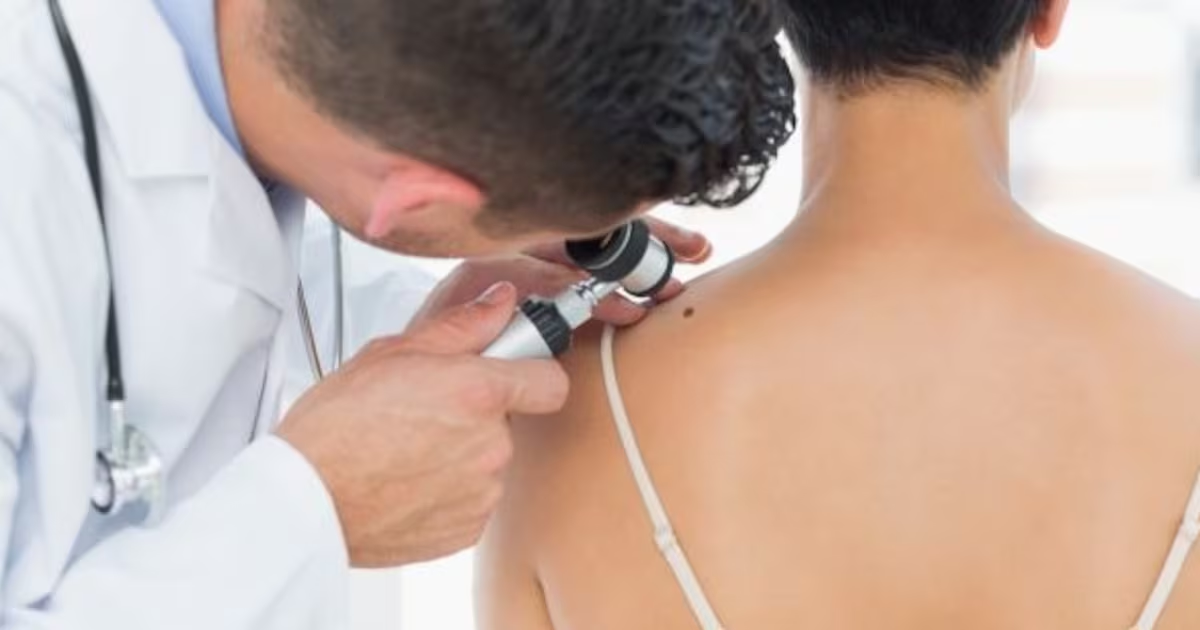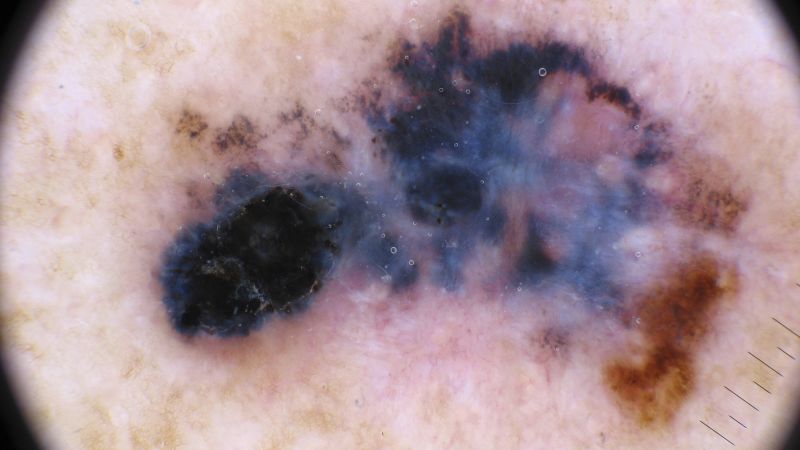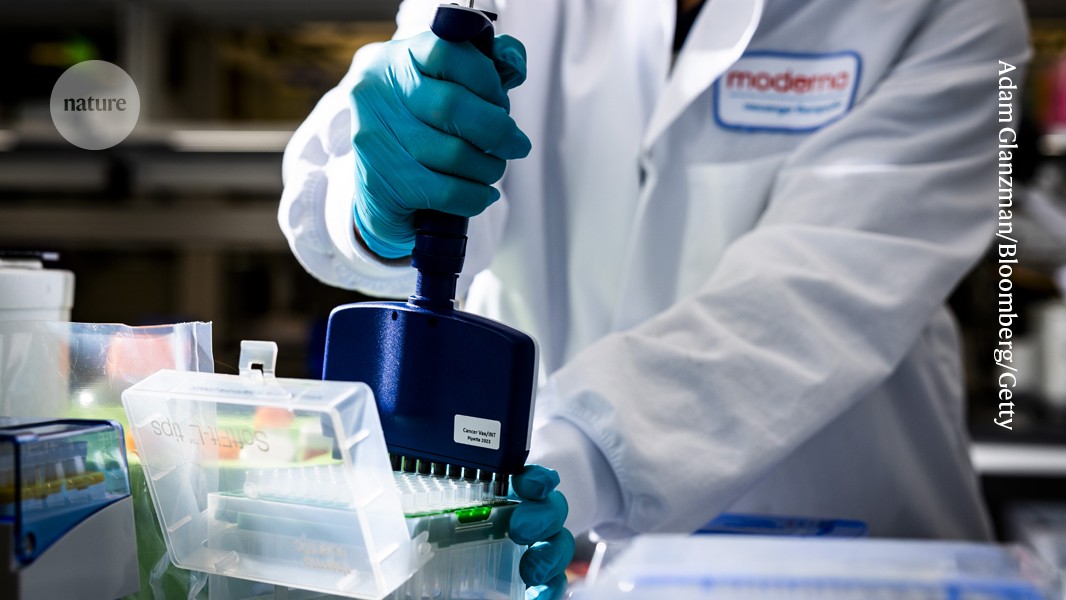
Drugmakers Moderna and Merck have scored a breakthrough with a personalised cancer vaccine that doctors hope could eventually work against many types of cancer.The companies said their vaccine helped prevent the recurrence and spread of melanoma – the deadliest form of skin cancer.Moderna expects thousands of melanoma patients could benefit within the first few years of the treatment being approved.Why is this a breakthrough?There is excitement among researchers because this marks the first positive results in a large, late-stage clinical trial for an mRNA-based cancer therapy – an important milestone for a technology that became widely known through COVID-19 vaccines.More than 1,000 patients with high-risk melanoma took part in the Phase 3 trial. The patients had their tumours surgically removed but remained at high risk of the disease returning.Early results showed the treatment, known as intismeran autogene, extended the length of time the patients remained cancer-free.Seth Cheetham, director of the Australian Personalised mRNA Cancer Immunotherapy Hub, hailed the vaccine as a “real breakthrough” in individualised medicine.“This is a final-stage study in a large population of people with melanoma that's really showing that this is outperforming the standard of care for treatment of these patients,” he told CNA.Still, experts have emphasised caution as the full results have not been released and it is not yet known precisely how much the vaccine reduced the risk of recurrence or spread.The trial is ongoing and participants will continue to be followed to determine its effect on overall survival.There are, however, encouraging longer-term results from an earlier, mid-stage trial.Five-year data presented in June showed that adding the vaccine to Merck’s immunotherapy drug Keytruda, an established treatment that helps the immune system fight cancer, cut the risk of the cancer returning by half.The combination also reduced the risk of it spreading to other parts of the body by 59 per cent, compared with Keytruda alone.Moderna and Merck said they saw no new or increase in the rate of side effects from adding the vaccine to Keytruda.How does the vaccine work?This is a treatment vaccine, not a preventive vaccine. It is designed for patients who already have cancer, and its aim is to stop the disease from coming back or spreading.The vaccine is also personalised: Each one is made based on the genetic characteristics of an individual patient's tumour.Doctors analyse a sample of a patient's tumour and use mRNA technology to target specific mutations within the cancer cells. A customised jab is then designed to teach the immune system to recognise and attack those cells. “Even the same types of cancer – for example, melanomas – can be very different,” said Cheetham.“So, this (treatment) uses the genetic blueprint of each individual tumour to design a vaccine that will enable your body to recognise those tumour cells better and eradicate them from the body.”How quickly can the vaccine be available?Despite being individually tailored, the vaccine can be produced within weeks. Each custom-made vaccine for the trial took six to eight weeks to develop.But the treatment still needs regulatory approval before it can be widely used. The drugmakers have said they would begin filings with regulators for approval.Cheetham believes it is realistic that the treatment could reach patients within the next two years.While experts believe the treatment would be expensive, there could be significant economic benefits.“Biological treatments are generally quite expensive. But the health economics of saving people's lives and reducing their hospital stays is also very powerful,” said Brandon Wainwright, a professor at The University of Queensland’s Institute for Molecular Bioscience.“From an economic point of view, this would be feasible for both companies and health systems.”Could this work against other cancers?Potentially – and this is one of the biggest reasons researchers are excited about the melanoma result.Because the vaccine is designed around mutations in an individual tumour, doctors hope the same basic approach could be applied to other types of cancer.But not all cancers will necessarily respond equally well.Wainwright said one factor is how many genetic changes a tumour carries. Generally, cancers with more mutations provide more potential targets for a vaccine.Another is the tumour microenvironment – the cells and other material surrounding a tumour, some of which can suppress the immune response and make a cancer harder to attack.Trials are already under way in several other cancers.Merck and Moderna are testing the combination in non-small cell lung cancer, and are also studying it in bladder, kidney, pancreatic and stomach cancers.Roche and BioNTech are developing a similar personalised mRNA treatment for colon and pancreatic cancers.Cheetham said early-stage research had already shown promise in difficult-to-treat cancers such as pancreatic cancer.“The hope is that this technology will be really broadly applicable to quite a wide range of cancers, and that this melanoma trial was really just the start of a wave of those trials,” he said.Wainwright added: “We've seen some early significant success with difficult tumours (that) has been published in the highest journals. I treat this whole field with enormous optimism.”
CNA Explains: What we know about the Moderna, Merck breakthrough cancer vaccine
The personalised vaccine has succeeded in a final-stage melanoma trial. Here’s how it works, when it could become available and why researchers hope the approach can be used against other cancers.
843 words~4 min read