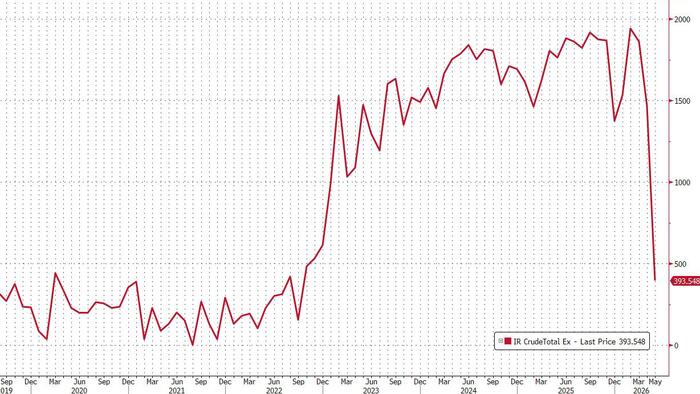
Iran’s oil export machine has been reduced to a trickle. Crude loadings from the country have fallen to roughly one-seventh of where they stood before the US-Israel conflict escalated in late February 2026, a collapse so severe it has effectively sidelined one of OPEC’s most important producers from global markets.
Pre-war, Iran was shipping between 1.5 and 1.85 million barrels per day. By May 2026, that figure had cratered to around 260,000 bpd.
The blockade’s grip
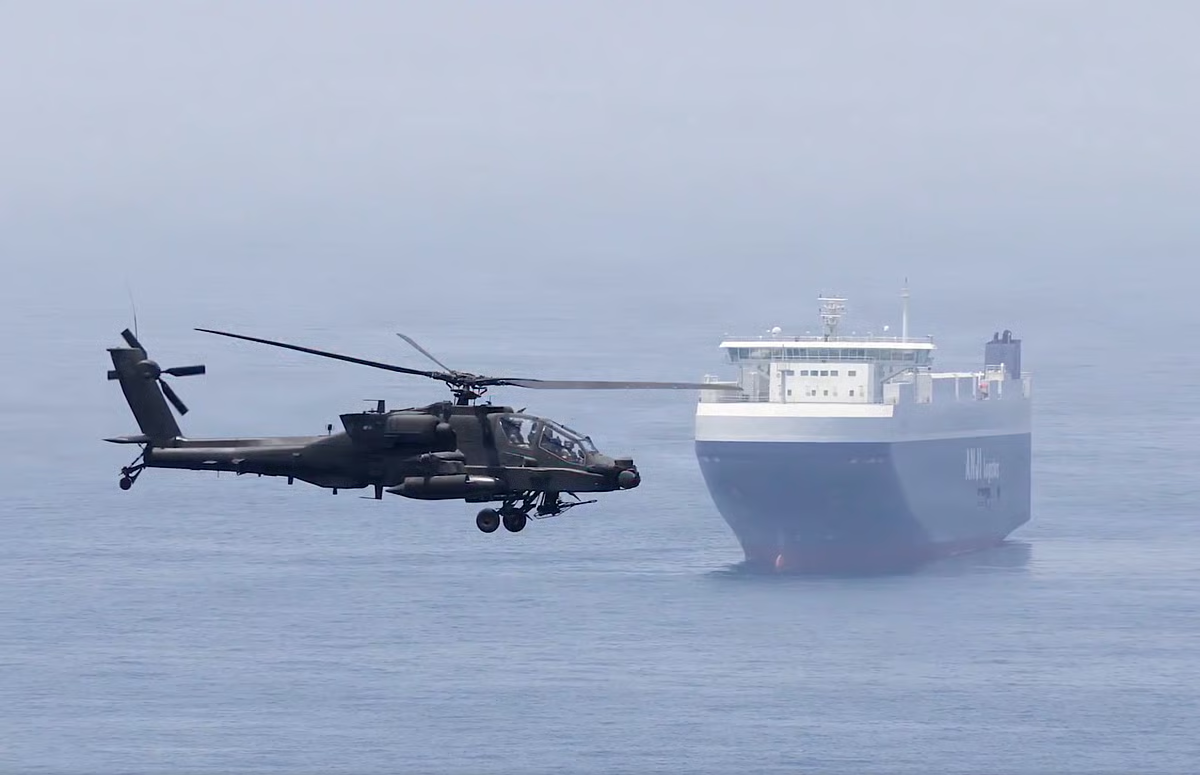
The mechanism behind the decline is straightforward: a US naval blockade of Iranian ports and the Strait of Hormuz, launched in tandem with the escalation that began on February 28, 2026. The chokepoint through which roughly a fifth of the world’s oil typically flows became, for Iranian tankers at least, a closed door.
An interim US-Iran deal in June briefly loosened the constraints, allowing loadings to recover to approximately 1.3 million barrels per day. That window didn’t last. A renewed blockade in mid-July slammed exports back down.