Read The Diplomat, Know The Asia-Pacific
Engagement may be required, but appeasement is not.
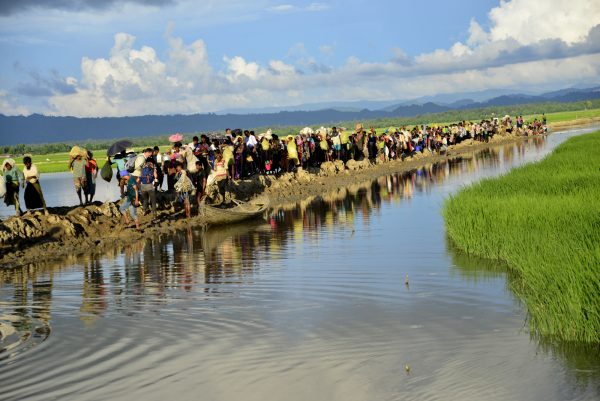
In this Sept. 9, 2017 file photo, hundreds of Rohingya people enter Bangladesh after fleeing from Rakhine State in Myanmar.
Bangladesh is reportedly considering a dialogue between the Myanmar government and the Arakan Army, with a view to facilitating the repatriation of the 1 million Rohingya refugees currently living in Bangladesh. As the Arakan Army occupies significant territory in Rakhine State, there is a real need for effective communication. But communication based on the need of the moment should not be interpreted as political trust, recognition, or partnership. Will engagement with the Arakan Army ensure that Rohingya rights will be safeguarded – or little by little legitimize an armed authority that has allegedly committed serious abuses to the very people Bangladesh is trying to send back?
The Myanmar military is responsible for the atrocities that occurred in 2017, including killings, mass rape, destruction of villages, and forced displacement. However, the Rohingya community has not been made safe by the end of the military rule in some areas of Rakhine. Instead the actions of the new rulers have caused serious concerns.