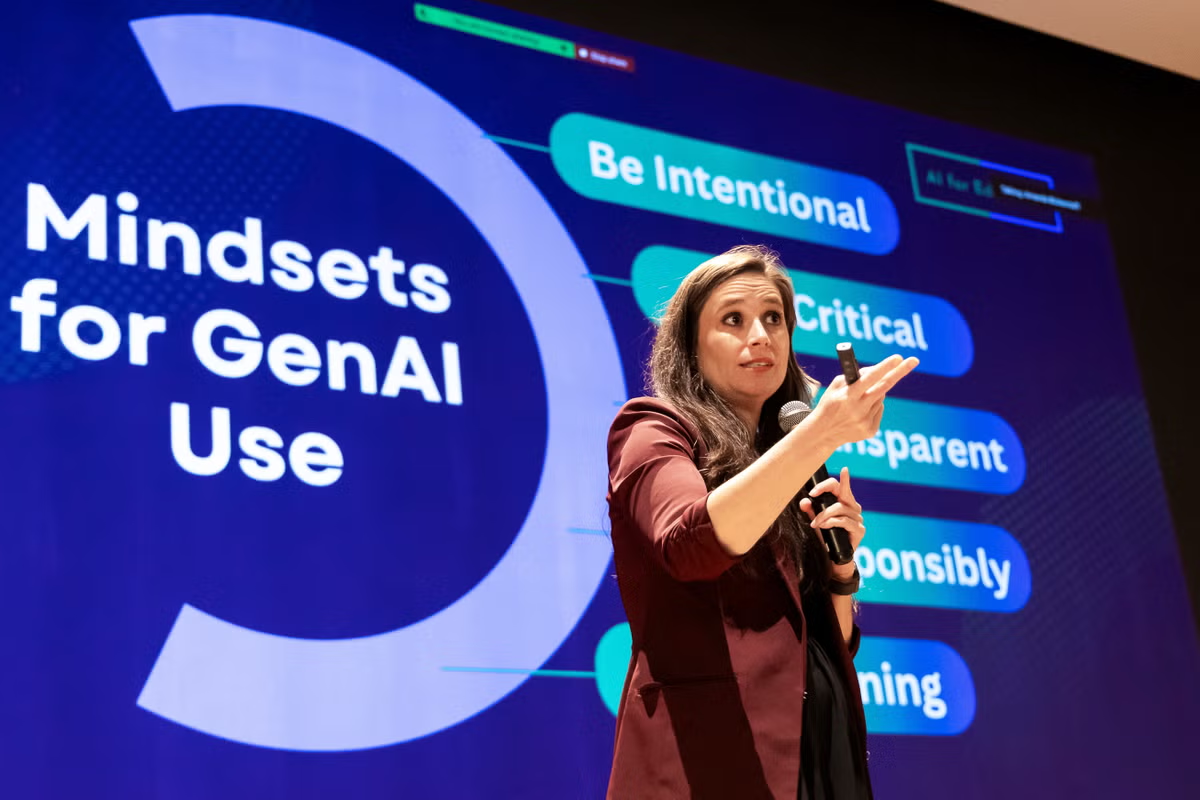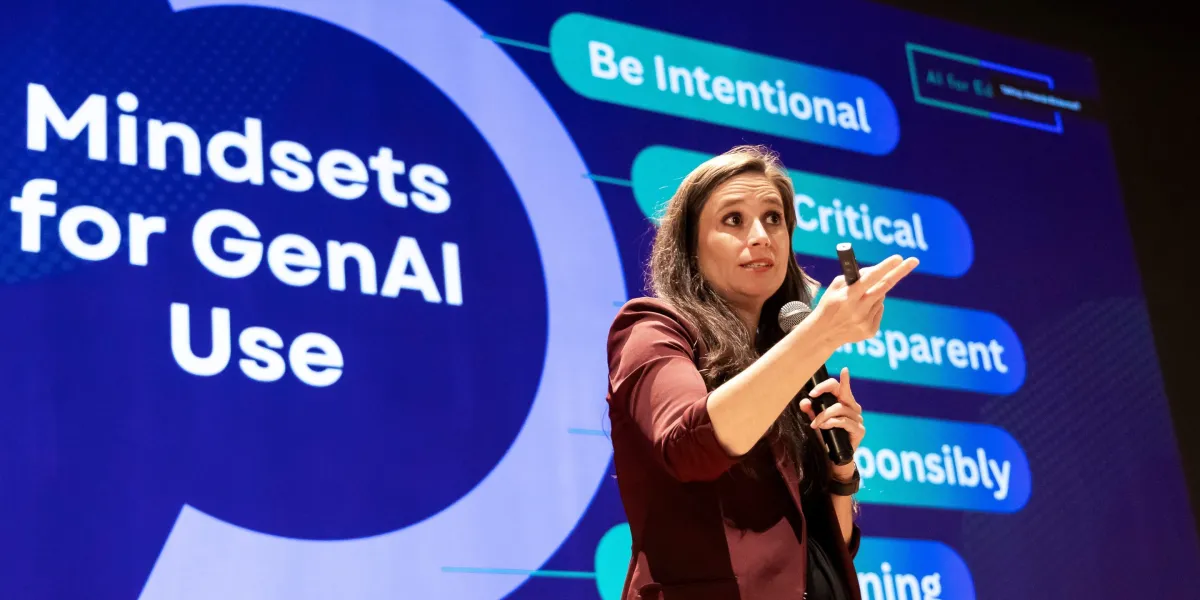
Artificial intelligence chatbots have become the bane of teachers everywhere, but to prepare for the new school year, a group of educators in Charleston, South Carolina, packed into a high school auditorium and talked about inviting AI into the classroom.
The teachers and principals watched as an instructor prompted an AI tool to “create a map of the world.”
The result drew gasps of disbelief and laughter. Projected on a large screen was a map riddled with bizarre errors. Mali was spelled “Mail.” Egypt was identified as “Sopth.” In place of Libya was something simply called “Africa.” Dozens of other countries’ names were misspelled or written in pure gibberish.
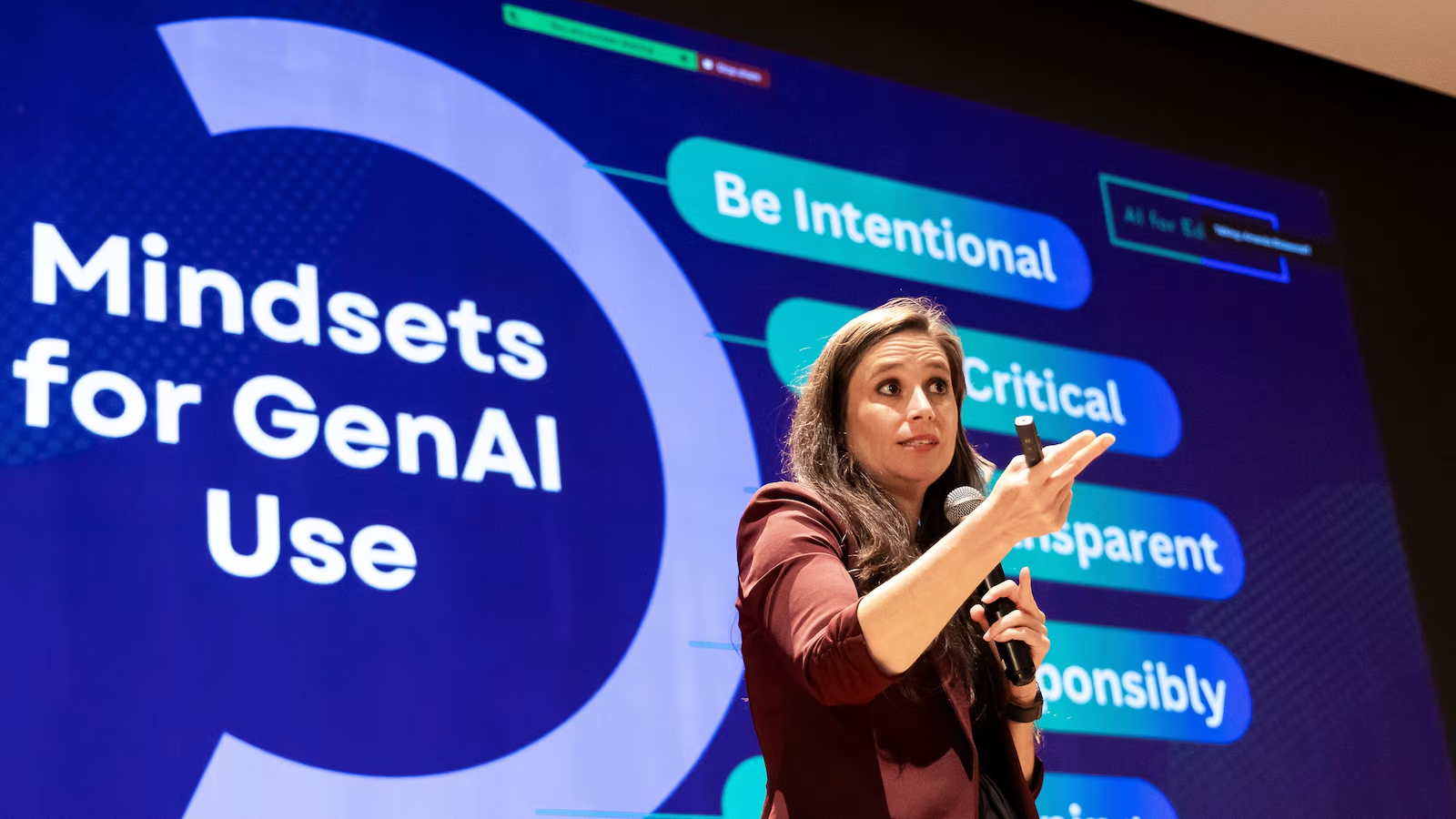
“If you ever want kids not to over trust these tools, try the map demo,” said the instructor, Amanda Bickerstaff, founder and CEO of AI For Education, an organization that helps schools draft AI policies and train teachers and students in what she calls safe, ethical and effective use of the technology.
After initially trying to ban AI use, a growing number of U.S. public schools are trying a new strategy: encouraging classroom experimentation, partly so students can see its shortcomings, including generative AI’s notorious tendency to “hallucinate,” or fabricate information.