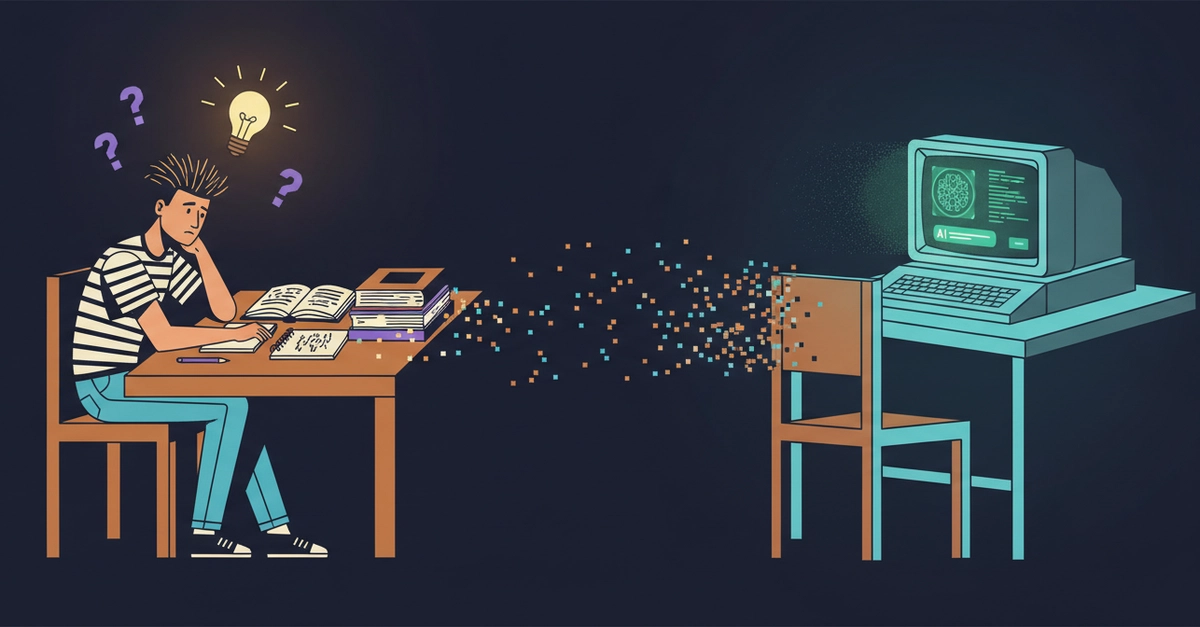
It’s disconcerting to envision human thought becoming redundant or deemed inferior due to advancements in artificial intelligence. But for all its ills, AI cannot be ignored or wished away. It’s here to stay, and I want my students to understand the stakes of becoming too reliant on this technology.
I can’t blame them for wondering why they should dedicate so much time and effort to honing their writing and critical thinking skills if large language models appear to do a passable job.
Yet this situation has major implications for culture and societies.
It’s easy to envision a future where AI dependency leads to intellectual conformity and the erosion of critical thinking. Researchers are already documenting these effects, which threaten to render the hard work of wrestling with ideas a lost art.
This is why I think it’s critical for educators to confront AI head-on. The key, I believe, is teaching students to distinguish AI’s pattern recognition skills from its inability to daydream, inhabit human perspectives and authentically express itself.