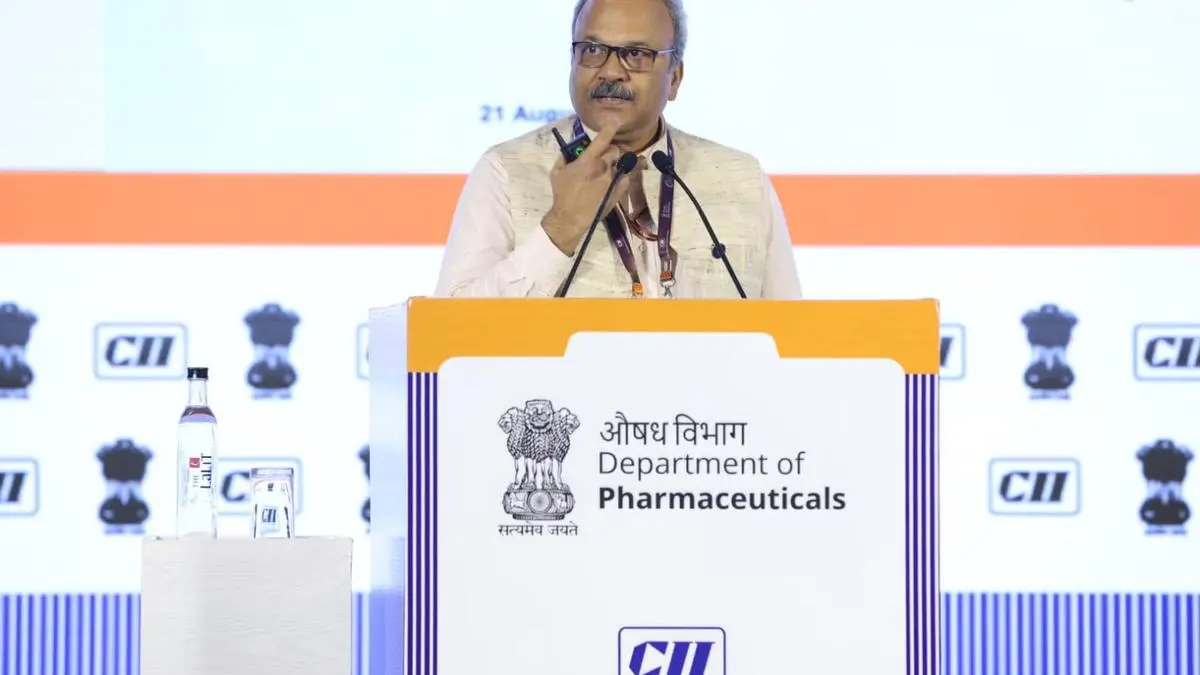
Drug Controller General of India (DCGI) Rajeev Raghuvanshi
The Central Drugs Standard Control Organisation (CDSCO) will significantly step up audits and inspections of medical-device manufacturers as the regulator gets additional manpower, said Drug Controller General of India (DCGI) Rajeev Raghuvanshi at the CII Global MedTech Summit on Friday.Several constraintsRaghuvanshi said that over the past two years, since medical devices came under a more comprehensive regulatory framework, CDSCO had largely focused on issuing permissions and licences to the industry because of resource constraints. Around 40,000 product licences had been issued during this period, while audits and inspections of manufacturers had not received the same level of attention.“As we are getting more and more resources, you will see the audits in medical-device industry increasing significantly from now,” he said, adding that the industry had sufficient time to understand the regulations and prepare for compliance.He said companies should, therefore, be prepared for audits and inspections going forward, and that such regulatory action should not come as a surprise. Raghuvanshi said the regulator was also getting additional officers. The Union Public Service Commission had recently sent a list of 20 additional medical-device officers, who are expected to join in the next few months. This would double the existing strength of the medical-device regulatory team, he said.He added that the government had given in-principle approval for around 1,500 new positions in CDSCO, including specialised scientific personnel who would review applications in both the drug and medical-device sectors. The DCGI also said CDSCO had established a separate functional vertical for medical-device regulation, with greater operational independence being planned for the sector. A new senior-level position had been created to strengthen the vertical, while recruitment rules had also been amended to include engineering qualifications for medical-device regulators.Raghuvanshi said the domestic medical-device industry had been growing strongly, with local manufacturing increasing while imports had largely stagnated. However, he said the industry needed to shift from manufacturing larger volumes of relatively lower-risk products towards more sophisticated and innovative devices.He pointed to the faster growth of Class A and B devices compared with Class C and D devices, and said that India must reverse this trend. The country must also expand its presence in higher-risk Class C and D in-vitro diagnostic devices, he said.He said only around one in seven of the medical devices approved in the country were investigational devices — those being developed without a predicate device. This, he said, was low for a country seeking to move “from volume to value” and become a hub for medical-device innovation.Raghuvanshi also sought to counter concerns over lengthy regulatory timelines. He said the average or median time taken for medical-device import licences was around 145-147 days, or roughly four to five months, against a nine-month commitment under the regulator’s charter.in-vitro diagnostic licencesHe said for in-vitro diagnostic licences, the timeline was around 105 days, while Class C and D manufacturing licence approvals took about 108 days. He said the regulator was also working on further reforms, including greater digitisation and use of artificial intelligence in regulatory processes.Raghuvanshi said CDSCO had spent the last two to two-and-a-half years implementing the medical-device regulations and now had a better understanding of the gaps. “You will see many more reforms coming,” he said.He also urged manufacturers to focus on adoption of medical technologies in rural India, saying the industry’s responsibility should not end with developing and manufacturing devices but should extend to ensuring that technologies such as point-of-care diagnostics and teleconsultation reached underserved areas.Published on August 21, 2026