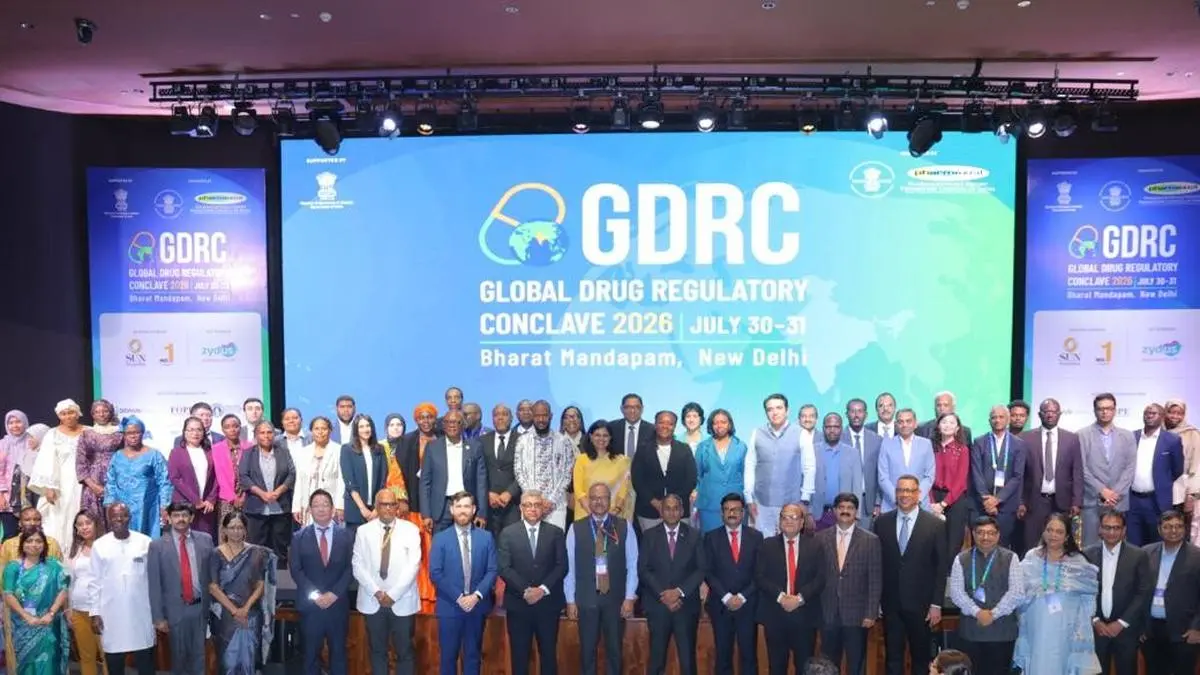
Attendees at the Global Drug Regulators Conference 2026 at Bharat Mandapam on Thursday, in New Delhi
The Central Drugs Standard Control Organisation (CDSCO) will roll out the first phase of an end-to-end digital drug regulatory platform within the next 18 months, Drugs Controller General of India (DCGI) Dr Rajeev Singh Raghuvanshi announced at the inaugural Global Drug Regulatory Conclave (GDRC) 2026.Dr Raghuvanshi said the upcoming platform will integrate the entire pharmaceutical regulatory value chain, from research and clinical development to manufacturing, approvals, distribution, and post-market surveillance, into a single digital ecosystem connecting regulators, manufacturers, and other stakeholders.The move marks a step in India’s efforts to modernise its pharmaceutical regulatory framework.Reducing DelaysDr Raghuvanshi said that more than 99 percent of CDSCO’s regulatory processes have already been digitised, improving transparency and reducing approval timelines.He further said CDSCO is piloting Artificial Intelligence across regulatory processes to create a faster and more data-driven regulatory system. GMP and Certificate of Pharmaceutical Product (COPP) certificates will soon feature QR-code-based digital authentication, allowing overseas regulators to instantly verify their authenticity and reducing verification delays.Dr Raghuvanshi said CDSCO has introduced a fully digitised export No Objection Certificate (NOC) system, globally aligned regulatory reliance mechanisms, and accelerated approval pathways for innovative therapies.Future Plans“Around 25–30 percent of clinical trials are currently being considered for waiver for eligible innovative products, he said. He also highlighted the role of MedTech Mitra, which has supported more than 800 startups in navigating regulatory pathways, adding that similar facilitation mechanisms are being planned for biologics and other emerging technologies,” he said.The Global Drug Regulatory Conclave 2026, organised by CDSCO in association with Pharmexcil, brought together global regulatory authorities, policymakers, researchers, industry leaders, and international organisations to discuss the future of pharmaceutical regulation.Speaking at the event, Namit Joshi, Chairman, Pharmexcil, said India’s position as the “pharmacy of the world” provides an opportunity to become a stronger global regulatory partner.He said GDRC would help bring regulators and industry together to promote harmonised standards, clearer regulatory pathways, and faster access to quality and affordable medicines, while strengthening confidence in Indian pharmaceuticals across global markets.The two-day conclave focused on strengthening regulatory cooperation, advancing digital transformation, promoting regulatory science, encouraging innovation, and building resilient global healthcare supply chains to ensure timely access to safe, effective, and affordable medicines.Global AcceptanceSpeaking at the event, Bhavin Mehta, Vice Chairman of Pharmexcil, said India is intensifying efforts to boost pharmaceutical exports by addressing non-tariff barriers and promoting greater global acceptance of the Indian Pharmacopoeia. Mehta said the initiative was conducted with the objective of strengthening India’s pharmaceutical exports. “We wanted to increase our exports, and there are some non-tariff barriers that are slowing our progress,” Mehta said.“We wanted to collaborate with drug regulators so that they have more confidence in the Indian system and the Indian regulatory system. We want them to start seeing India as a developed country rather than an underdeveloped one,” he added.He said the second major objective of the forum was to encourage more countries to adopt the Indian Pharmacopoeia.“Right now, 24 countries have accepted the Indian Pharmacopoeia. We are promoting to the world that if a population of 1.4 billion can safely use medicines based on the Indian Pharmacopoeia, then why not the whole world?” he said.Published on July 30, 2026