Professionals with engineering backgrounds and experience in the medical device industry will also be eligible to be considered for the country’s top drug regulator position
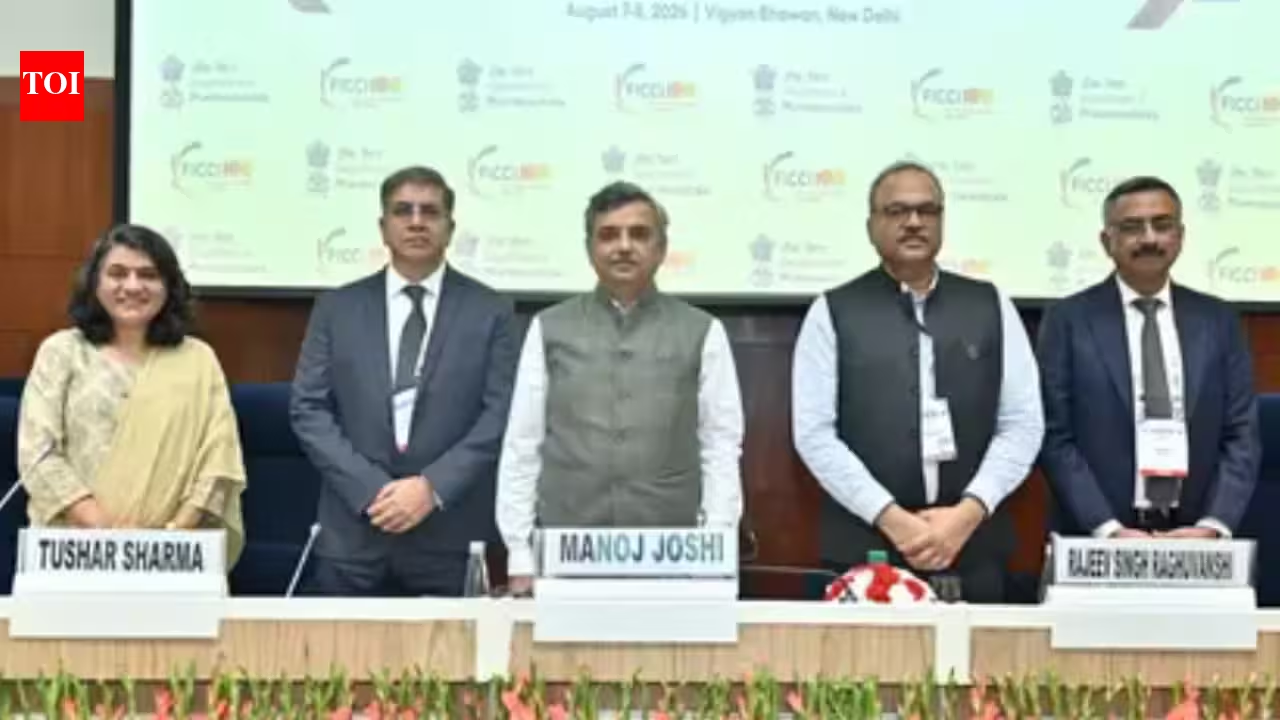
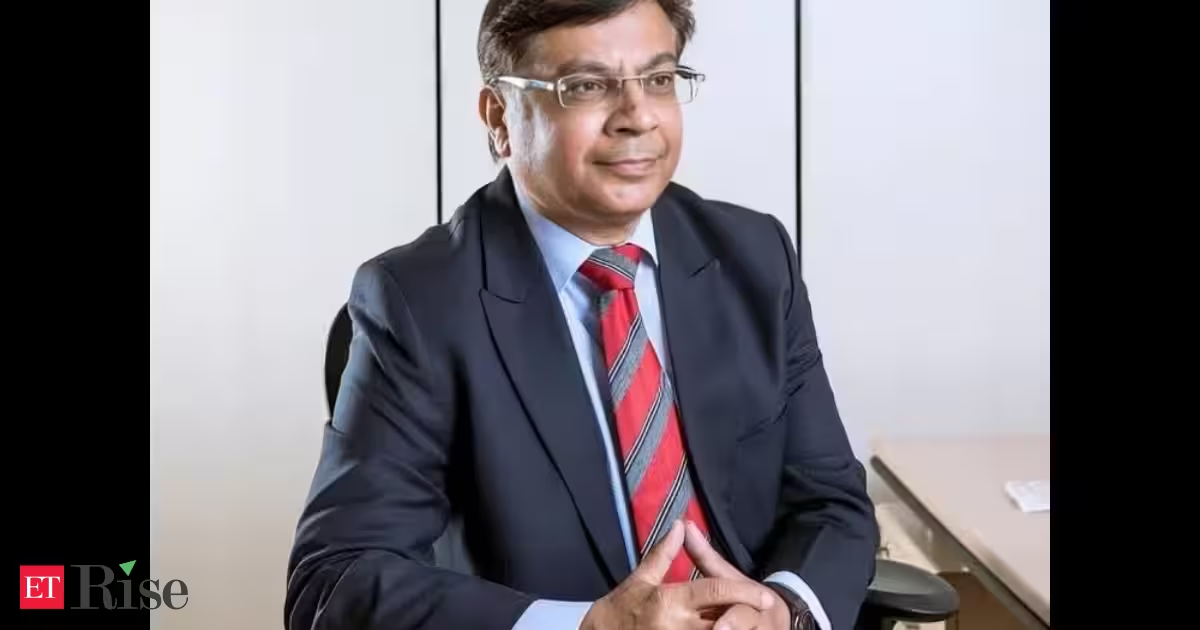
In a major boost to India’s medical device regulatory ecosystem, the Centre has announced the creation of 1,500 new posts in the Central Drugs Standard Control Organisation (CDSCO), with a significant share of the recruits set to strengthen regulation of medical devices, Drugs Controller General of India (DCGI) Rajeev Raghuvanshi announced on Thursday.Speaking at an 9th edition of India Medical Device 2026, Raghuvanshi said many of the newly sanctioned posts would be allocated to the medical device regulatory system, helping build an internal scientific cadre to evaluate applications, provide regulatory guidance and support innovation.“The good part is that the 1,500 new positions which the government has allocated for CDSCO would go to the medical device regulatory system in creating an internal scientific cadre for evaluating applications, hand-holding and giving advice,” he said. “A good number of those people would actually be from the medical device background, the engineering background, software developers and AI experts.”Raghuvanshi said the expanded workforce would improve scientific capacity within CDSCO and support India’s ambition of becoming a global hub for affordable medical technologies.The DCGI said CDSCO has already established a dedicated medical devices vertical staffed by professionals with specialised qualifications and experience in medical devices. He said the leadership of the vertical has been separated from other regulatory functions, while around 30-35 new positions are already under recruitment through the Union Public Service Commission (UPSC). Regulators specialising in ophthalmic medical devices are also expected to join in the coming months.The DCGI said the recruitment rules for the post of Drugs Controller General of India have been revised to include qualifications relating to medical device regulation. Under the new rules, professionals with engineering backgrounds and experience in the medical device industry will also be eligible to be considered for the country’s top drug regulator position.Regulatory reformsHighlighting ongoing regulatory reforms, Raghuvanshi said India grants waivers for clinical investigations for innovative medical devices wherever appropriate. He added that the European Union (EU) has now been added to the list of trusted regulatory jurisdictions, alongside the US, Canada, the UK, Australia and Japan.“We give a waiver for clinical investigation if it is required for any innovative medical devices,” he said, adding that devices already approved in the EU and the other recognised jurisdictions would be eligible for more regulatory waivers in India.He also pointed to the recent release of the medical device software guidelines, which lay down the regulatory framework for the development, evaluation and approval of software-based medical devices.Another major reform in the pipeline is the proposed waiver of the T-licence requirement for medical device research and development (R&D). A T-licence (Test Licence) for a medical device is an official permit issued by regulatory authorities like the CDSCO. It allows companies to manufacture or import small quantities of a device strictly for testing, evaluation, clinical investigation or training, rather than for commercial sale.At present, manufacturers require a T-licence even to undertake R&D. Raghuvanshi said discussions on removing this requirement have been completed and the proposal has been approved by the Drugs Technical Advisory Board (DTAB).“Very shortly you will see the notification waiving the T-licence, and you will be free to do all your R&D without intervention of the regulator,” he said.Published on August 7, 2026