Almería province, Spain —
On a hot sunny summer afternoon, Amoateng Foster leans against a table in a makeshift open-air classroom in southern Spain, facing outward toward the improvised student seats. This is not an unfamiliar setting for Foster, 44, who was a math teacher in Ghana before making the perilous journey through the Sahel toward Libya, and then across the Mediterranean into Italy, finally arriving in Spain.
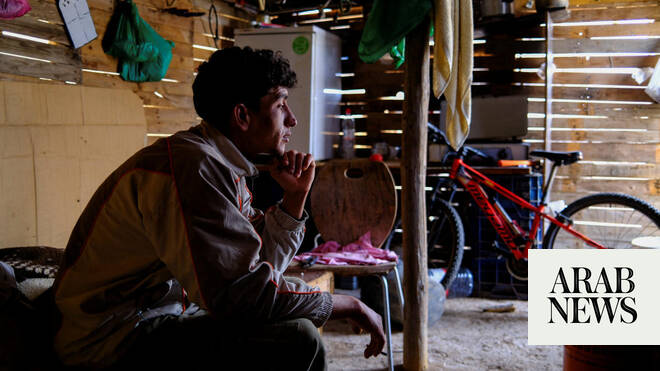
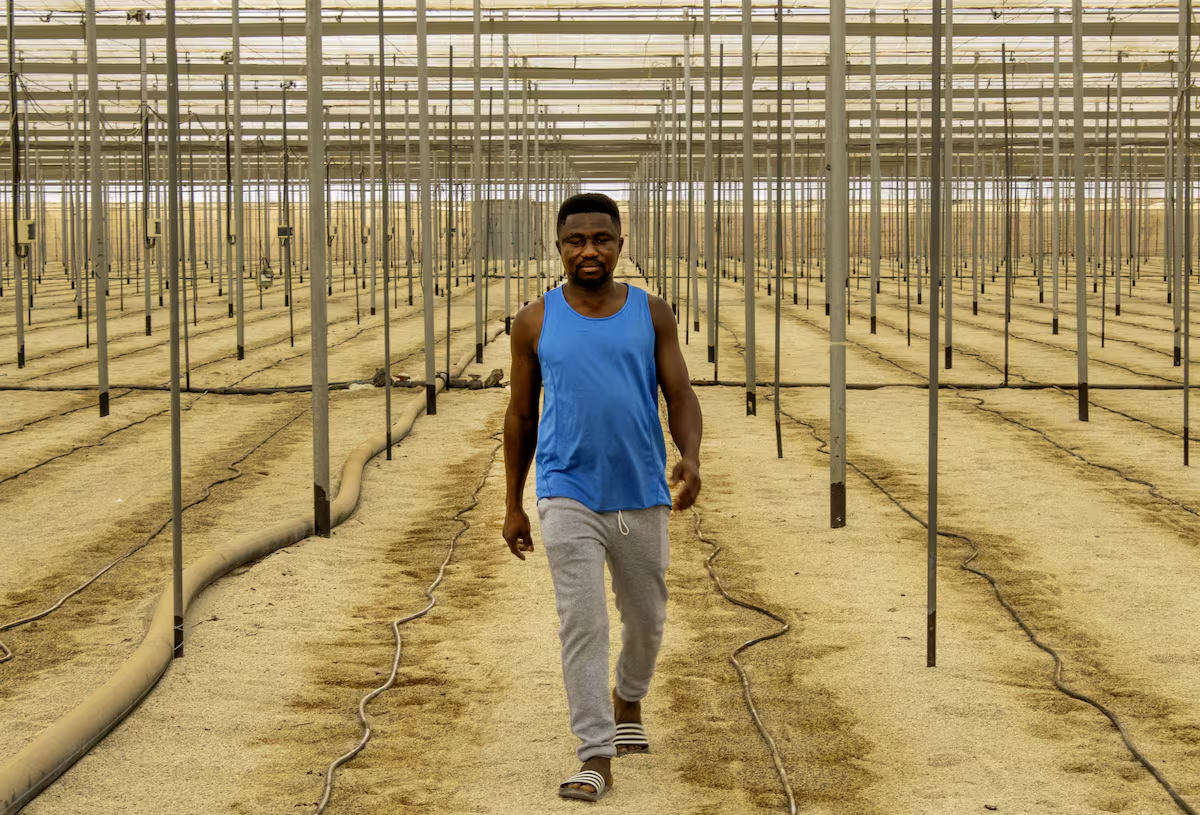
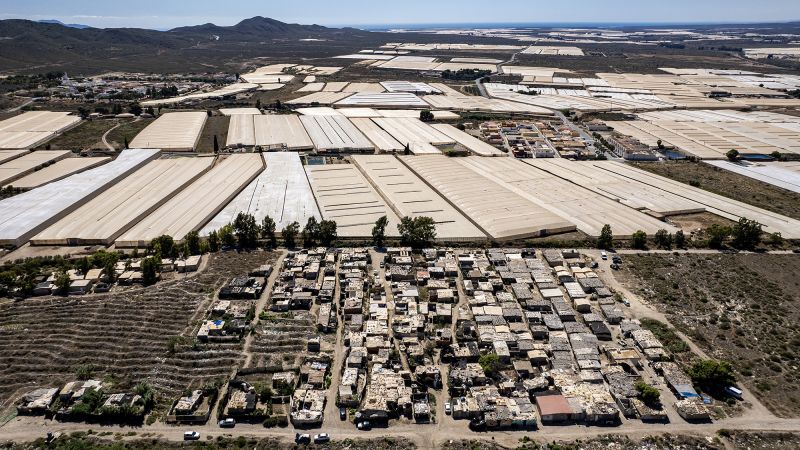
He now lives in an informal settlement for migrants in Almería province, where he and thousands of other workers toil in seemingly countless greenhouses across the sun-baked region to produce the fruit and vegetables that sustain Europe during the winter. The conditions are harsh and the pay, for those in a more precarious situation, is terrible.
“It’s not easy being here if you don’t have proper documentation,” he said, taking stock of his life in Spain. Like many across the African continent and beyond, he was drawn to Europe by the promise of a better job, a better life. But reality has not lived up to his expectations, proving immeasurably hard and degrading in many ways.
“If you are outside the fence, you may think that is rosy here,” he said. “It’s not rosy here.”