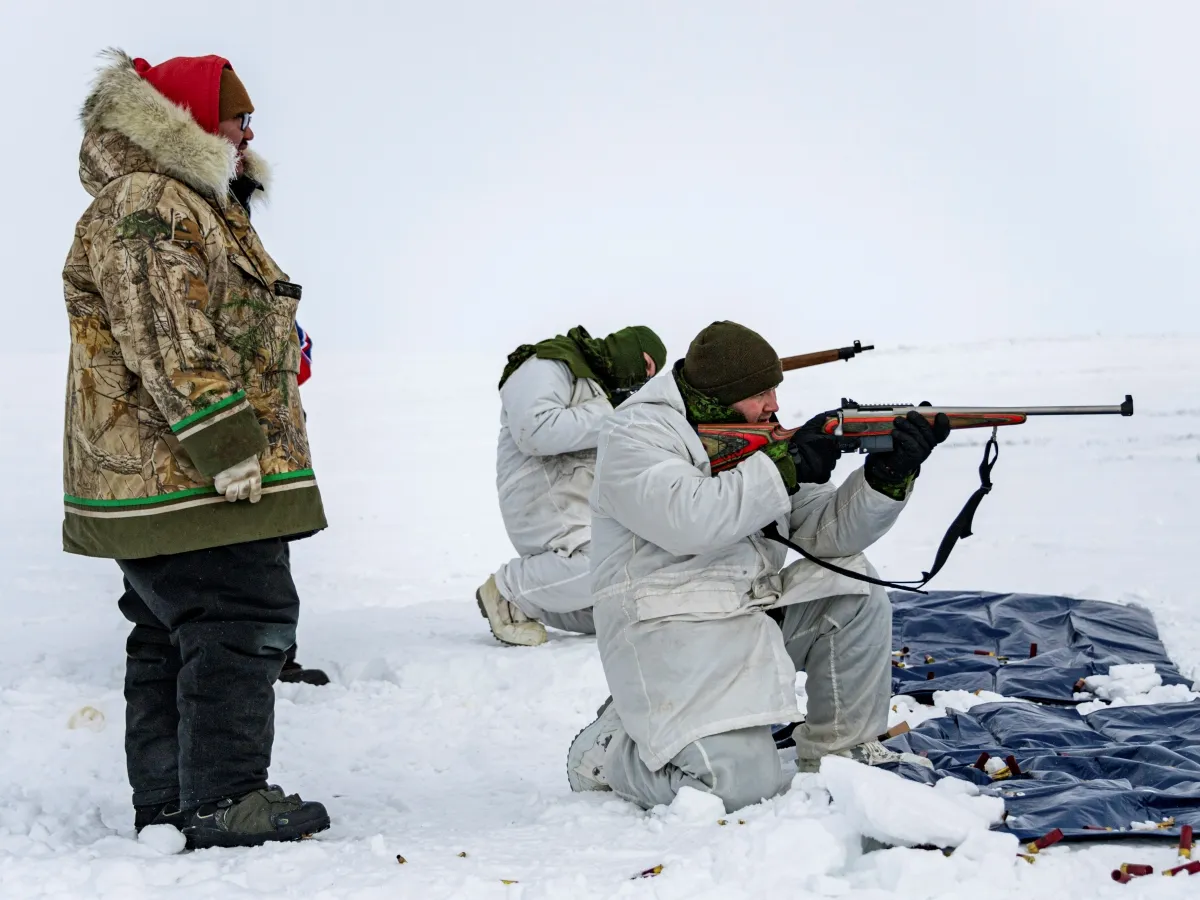
Skip to Content Subscribe My Account Manage My Subscriptions FAQ Newsletters Canada Canadian True Crime Canadian Politics Health World Israel & Middle East Financial Post NP Comment Longreads Puzzmo Diversions Comics NP News Quiz New York Times Crossword Horoscopes Life Eating & Drinking Style Sponsored Play for Ontario Travel Travel Canada Travel USA Travel International Cruises Travel Essentials Culture Books Celebrity Movies Music Theatre Television Business Essentials Advice Lives Told Tails Told Shopping Buy Canadian Home Living Outdoor Living Kitchen & Dining Tech Style & Beauty Personal Care Entertainment & Hobbies Gift Guide Travel Guide Amazon Prime Day Deals Savings National Post Store More Sports Hockey Baseball Basketball Football Soccer Golf Tennis Driving Vehicle Research Reviews News Gear Guide Obituaries Place an Obituary Place an In Memoriam Classifieds Place an Ad Celebrations Working Business Ads Archives Healthing Epaper Manage Print Subscription Profile Settings My Subscriptions My Offers Newsletters Customer Service FAQ Newsletters Canada World Financial Post NP Comment Longreads Puzzmo Diversions Life Shopping Epaper Manage Print Subscription HomeNP CommentMichel Maisonneuve: Canada must defend the North to keep itWe need military bases, ports and transportation corridors to truly remain sovereignLast updated 6 minutes ago Canadian Forces personnel under the supervision of a Canadian Ranger fire the C19 Ranger Rifle during a military exercise in March 2023. Photo by Canadian Forces“Mon pays, ce n’est pas un pays, c’est l’hiver,” Gilles Vigneault sings — my country is winter. Canada is shaped by cold, distance and northern regions inhabited by resilient people. Whether we embrace it or not, we are a polar nation.Enjoy the latest local, national and international news.Exclusive articles by Conrad Black, Barbara Kay and others. Plus, special edition NP Platformed and First Reading newsletters and virtual events.Unlimited online access to National Post.National Post ePaper, an electronic replica of the print edition to view on any device, share and comment on.Daily puzzles including the New York Times Crossword.Support local journalism.Enjoy the latest local, national and international news.Exclusive articles by Conrad Black, Barbara Kay and others. Plus, special edition NP Platformed and First Reading newsletters and virtual events.Unlimited online access to National Post.National Post ePaper, an electronic replica of the print edition to view on any device, share and comment on.Daily puzzles including the New York Times Crossword.Support local journalism.Create an account or sign in to continue with your reading experience.Access articles from across Canada with one account.Share your thoughts and join the conversation in the comments.Enjoy additional articles per month.Get email updates from your favourite authors.Create an account or sign in to continue with your reading experience.Access articles from across Canada with one accountShare your thoughts and join the conversation in the commentsEnjoy additional articles per monthGet email updates from your favourite authorsSign In or Create an AccountorSovereignty over nearly 10 million square kilometres must be demonstrated: we must prove we can protect the vast North, develop its resources and create opportunities for its people. We must stop thinking small.The North holds immense underdeveloped resources coveted by other nations, yet Canada has limited means to monitor the region, deter adversaries or respond to incursions.The National Post newsletter that doesn’t hold back, giving readers the unvarnished truth on media, politics and culture.By signing up, you consent to receive the above newsletter from Postmedia Network Inc.A welcome email is on its way. If you don't see it, please check your junk folder.The next issue of Right? will soon be in your inbox.We encountered an issue signing you up. Please try againA northern strategy needs four priorities: deterrence, defence of the territory, resource development and corridors for transportation and communications. The first two require forces able to deploy nationwide and operate seamlessly with allied polar nations, plus permanent — or at least persistent — northern basing, with First Nations as full partners.Consider the Northwest Passage. When the U.S. oil tanker Manhattan transited in 1969, Canada called it internal waters; Washington disputed the claim and went through, and Ottawa protested. The dispute remains: Canada considers the passage internal waters, while the United States considers it an international strait. How will we react when adversaries transit these “internal” waters? Sovereignty means having an answer beyond protest.Whatever one thinks of climate change, northern temperatures have risen and keep rising. The cause is not the issue here; reversal is not on offer; adaptation is. Climate change, as University of Calgary Arctic security expert Robert Huebert puts it, has “converted the Arctic from a barrier into a corridor.”That corridor leads to resources other states want secured. Russia leads Arctic development, with dozens of vessels able to operate in and under ice; China calls itself a “near-Arctic” state and, as of 2022, holds equity in more than two dozen Canadian mining companies.The Arctic is also a route to challenge the United States through a lightly defended Canada.“Lightly defended” is no exaggeration. Based in Yellowknife, the Canadian Armed Forces’ Joint Task Force North covers the Yukon, the Northwest Territories, Nunavut and the Arctic Ocean — nearly 40 per cent of the country’s land mass — with about 300 personnel. The Canadian Rangers, a lightly armed part-time reserve of nearly 5,000, are the eyes and ears of much of the North, where every operation, resupplying a community or maintaining a radar, is a sovereignty operation.The nearest fighter bases able to answer a NORAD emergency, Bagotville, Que., and Cold Lake, Alta., are many flying hours away. In contrast, the United States keeps several military bases in Alaska and more than 20,000 active-duty personnel. Canada cannot exercise northern sovereignty principally from southern bases.In May, the eight Arctic allies committed to more presence, surveillance and joint training in the North.Security underpins trade, but infrastructure underpins security. The unmanned radars, drones and undersea sensors used at present help identify threats, but the Canadian Armed Forces are poorly placed to manage a major northern crisis. Canada has no year-round ice-free Arctic port, and the deepwater facility at Nanisivik never became fully operational before the military began shutting it down in May.Against that record, the March 12 announcement of $40 billion in northern investment is a real opportunity: infrastructure in Nunavut and the Northwest Territories, expanded forward operating locations at Yellowknife, Inuvik and Iqaluit, and upgraded Arctic airports. But promise must now become action.Much of our prosperity depends on extracting and delivering resources, some of them in the North. Distance and climate make that difficult; the private sector can help. Indigenous partners must share in the returns, and dual-use projects stretch public investment by serving communities, commerce and national defence.The idea is not new. In 1968, Lt.-Gen. Richard Rohmer proposed an east-west mid-Canada corridor from Labrador City, N.L., through Flin Flon, Man., to Fort Nelson, B.C., with highways, railways and communities to draw Canadians northward. Ontario is exploring the Ring of Fire; Quebec has its Plan Nord.Newer concepts run south to north: from southern Manitoba to an expanded port at Churchill, or through improved facilities at Port Nelson. Either shortens the route to Europe against the haul to Atlantic or Pacific ports.Grays Bay, on Nunavut’s Coronation Gulf, shows how these objectives can converge: a 230-kilometre all-season road toward the Northwest Territories border, a deepwater port on the Northwest Passage and an airstrip. It could become Canada’s first overland link to a deepwater Arctic port, with royalties to Indigenous partners.It is also a reminder that development alone does not guarantee sovereignty. The road and port would help unlock the Izok Lake and High Lake zinc-copper deposits, which is owned by MMG Limited, a company controlled through a majority interest by China Minmetals, a Chinese state-owned enterprise.Canada needs northern investment, but it must understand who ultimately controls strategically important resources.Full sovereignty requires legal independence, political self-determination and territorial integrity, and the means to see, deter and respond across one’s territory. The North holds wealth that can raise every Canadian’s standard of living through responsible, market-driven development; corridors, east-west and north-south, will carry it to market.Winter is our country. It is time we governed like it.National PostMichel Maisonneuve, a retired lieutenant-general of the Canadian Armed Forces, is a senior fellow at the Frontier Centre for Public Policy, which is hosting the “Reclaiming the North” conference on Arctic development in Winnipeg on Sept. 14 and 15. He is the author of In Defence of Canada. Join the Conversation This website uses cookies to personalize your content (including ads), and allows us to analyze our traffic. Read more about cookies here. By continuing to use our site, you agree to our Terms of Use and Privacy Policy.
Michel Maisonneuve: Canada must defend the North to keep it
We need military bases, ports and transportation corridors to truly remain sovereign
1,413 words~6 min read