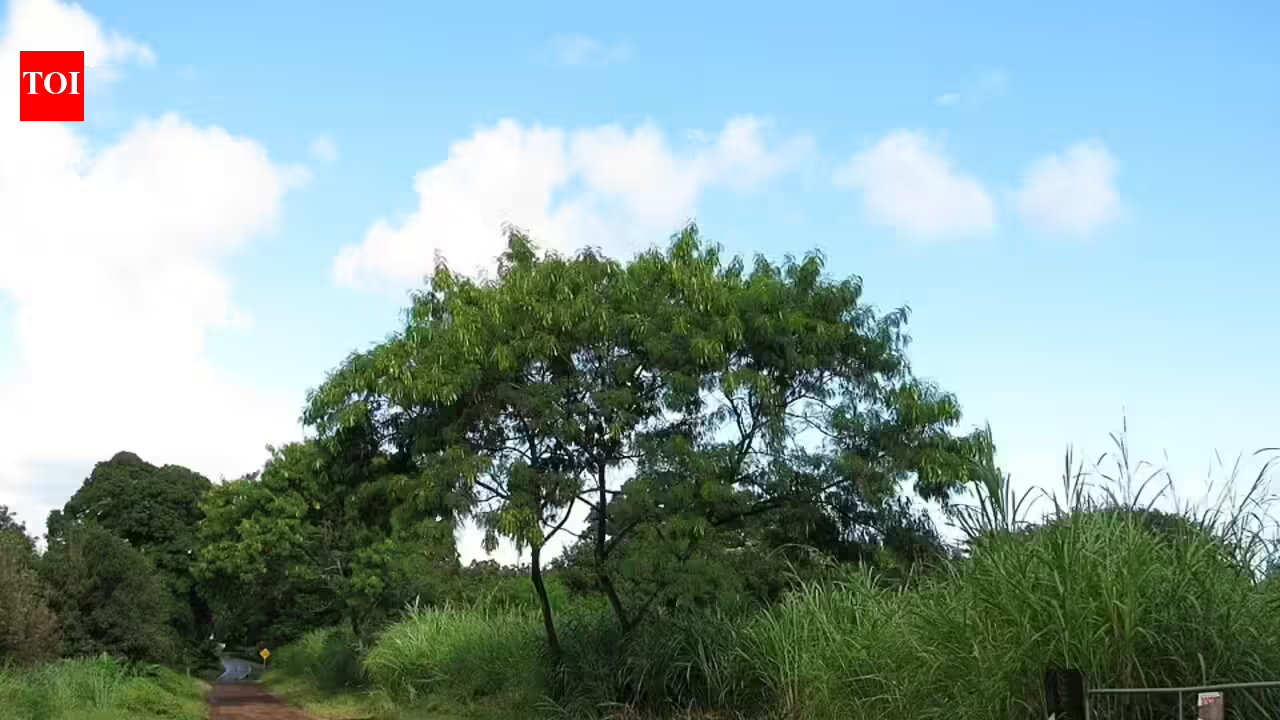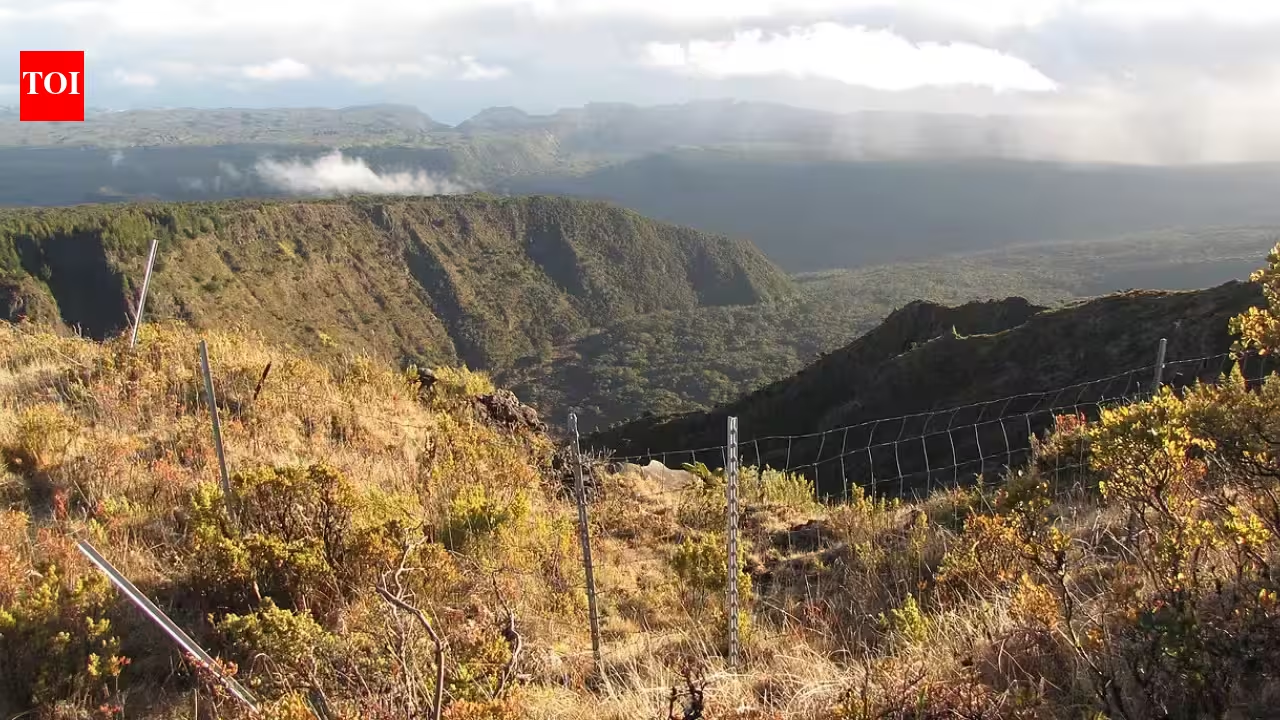
The Haleakalā summit showcases a striking contrast between thriving ecosystems and areas affected by grazing. Native flora in Hawaii struggles against invasive mammals, which also pose risks to indigenous birds and insects that evolved without natural predators. Image Credits: Forest Starr and Kim Starr / Wikimedia CommonsPicture two patches of the same volcanic landscape, separated by little more than a line of wire fencing. On one side, grazing animals can strip vegetation and disturb the ground. On the other, native plants have a chance to grow without being repeatedly eaten. At the summit of Haleakalā on Maui, that contrast became one of the clearest examples of how simply keeping invasive mammals out can help protect an ecosystem that evolved without them.Haleakalā National Park explains that many of Hawaii's native plants evolved in isolation for millions of years without large grazing mammals. As a result, they often lack the physical or chemical defences that plants elsewhere developed against herbivores. Introduced animals such as feral goats and pigs therefore created a pressure that many native species were never adapted to withstand.The problem was particularly serious in Haleakalā's high-elevation habitats, where rare plants are found nowhere else. Goats browse vegetation and can trample plants, while pigs disturb the soil as they root for food. Keeping these animals away from sensitive areas became an important part of protecting the mountain's native vegetation.How the fence changed the landscapeThe fencing around Haleakalā's summit was not a quick fix. It was part of a long-running conservation effort that developed over decades, with major fencing and animal-removal work taking place during the late 20th century. The basic idea was straightforward: create a physical boundary around sensitive areas, remove feral goats and pigs from within it, and prevent new animals from moving back in.That distinction matters because the fence itself is a legacy of earlier conservation work, rather than something the park is simply putting up today. Maintaining protected areas and controlling animals that breach those boundaries remain part of the wider management challenge, but the major summit fencing effort dates back decades.The ecological logic behind the approach is easier to understand when the two sides of a fence can be compared directly. Where grazing is excluded, plants that would otherwise be repeatedly browsed have a better opportunity to establish and reproduce. Outside protected areas, introduced herbivores can continue to alter vegetation and disturb the ground.The Haleakalā example also sits within a much larger conservation effort across Hawaii. Steven C. Hess's 2016 review in Mammal Study describes invasive mammals as a major driver of ecological change across the Hawaiian Islands, through herbivory, predation and other pressures. The review documents extensive efforts to remove feral goats and pigs from Hawaiian landscapes, alongside efforts to control rats, cats, mongooses and other introduced mammals in places where they threaten native wildlife.Those projects have taken many forms, depending on the species and landscape. Fences have been designed to prevent mammals from entering protected areas, while trapping, hunting and other removal methods have been used to reduce populations already inside. The scale varies from relatively small protected sites to large areas of native habitat.To combat this, park authorities implement strict measures to exclude these ungulates, managing remaining populations to safeguard critical habitats for native species. Image Credits: Forest Starr and Kim Starr / Wikimedia CommonsWhat Haleakalā's fence can teach us?Haleakalā's story is ultimately less about a piece of wire than about removing a pressure that native species never evolved to handle. The mountain's plants developed in an ecosystem largely free of mammalian grazers. Once goats and pigs arrived, they changed that ecological equation.Protecting native habitat therefore requires more than planting rare species or waiting for damaged vegetation to recover. It can also mean stopping the animals that continue to eat, trample or disturb the plants in the first place. Fencing provides one way to create that protection across large and difficult landscapes.The same principle has been used elsewhere in Hawaii, although the species and circumstances differ from those at Haleakalā. Conservation projects on other islands have used predator-proof fencing and intensive animal control to protect seabirds, native forest birds and other vulnerable species. These examples should not be confused with the Haleakalā summit project, but they show how exclusion has become a recurring tool in Hawaiian conservation.For visitors, the lesson is also practical. Haleakalā National Park asks people to help prevent the spread of invasive plants and diseases by staying on designated trails and cleaning boots and equipment before and after visiting sensitive areas. Small actions matter because an isolated island ecosystem can be particularly vulnerable to organisms introduced from elsewhere.The recovery story at Haleakalā is therefore not that a fence magically restored the mountain. It is that removing an ongoing source of pressure gave native vegetation a better chance to survive. Decades after the major summit fencing work began, the protected landscape offers a visible reminder of what can happen when invasive grazing is kept out, and native species are given room to recover.On a mountain where many plants evolved without large grazing mammals, the boundary matters. Inside it, native vegetation has a chance to persist. Outside it, introduced herbivores can continue to shape the landscape. The difference shows why, in some ecosystems, conservation begins with something remarkably simple: deciding what needs to stay out.
Hawaii fenced the summit of Haleakalā against goats and pigs; native plants recovered inside while grazing continued outside
Picture two patches of the same volcanic landscape, separated by little more than a line of wire fencing. On one side, grazing animals can strip vegetation and disturb the ground.
882 words~4 min read