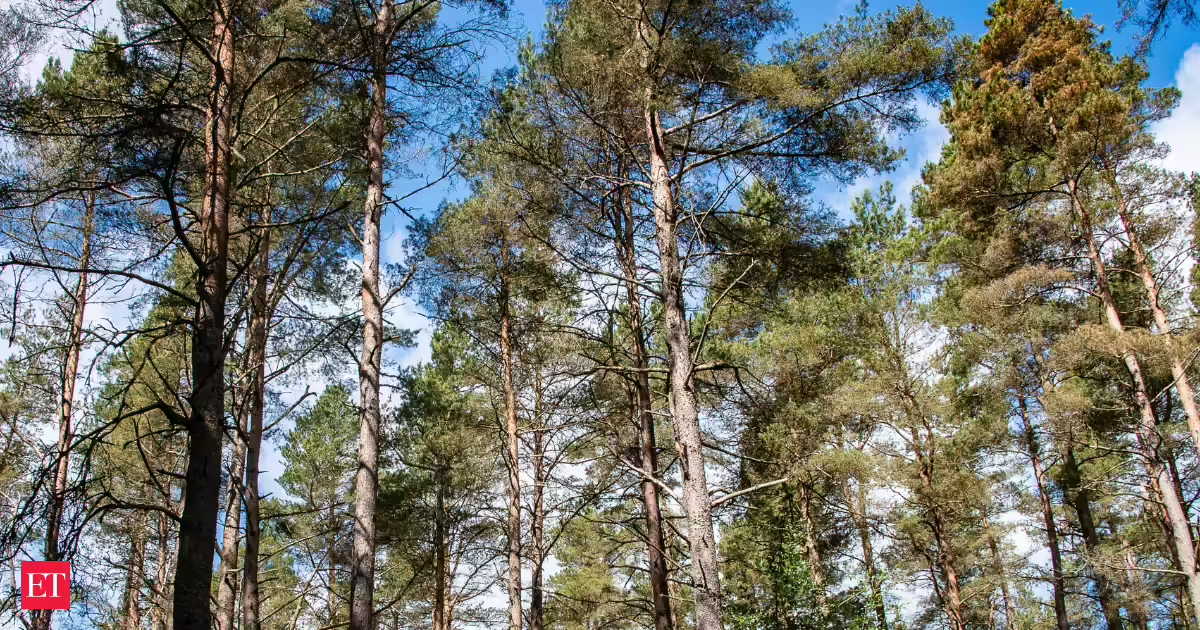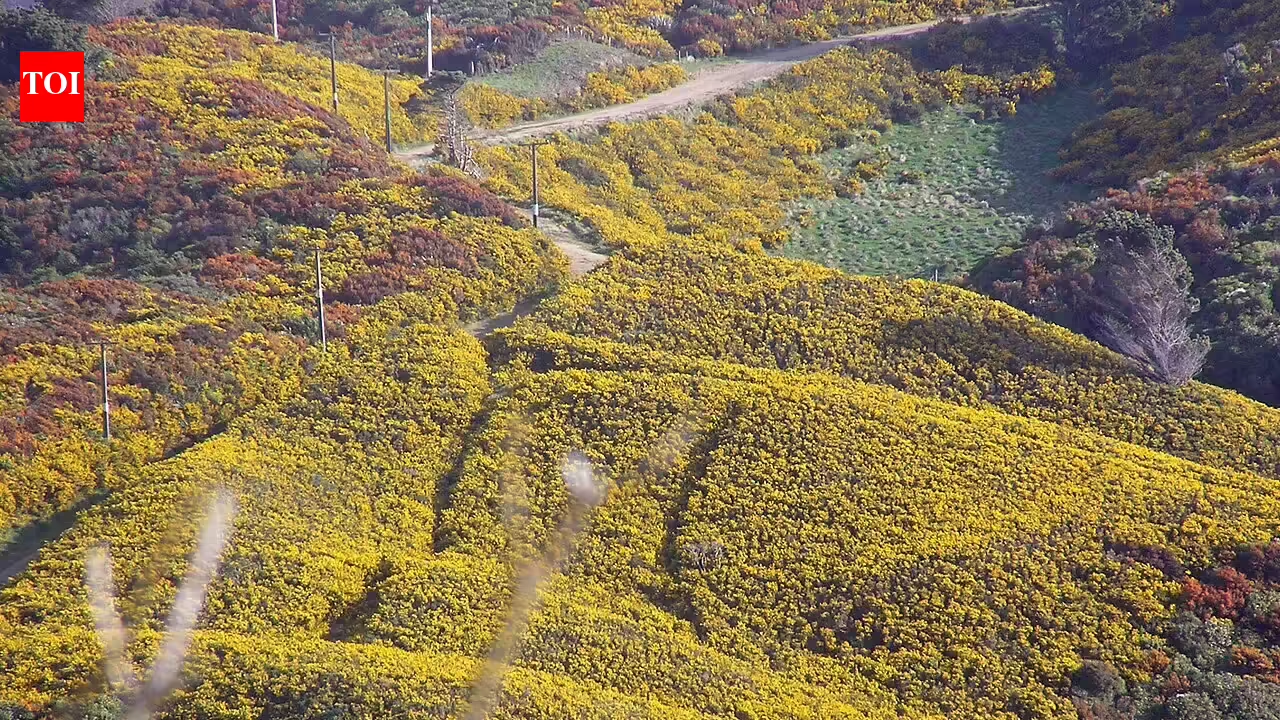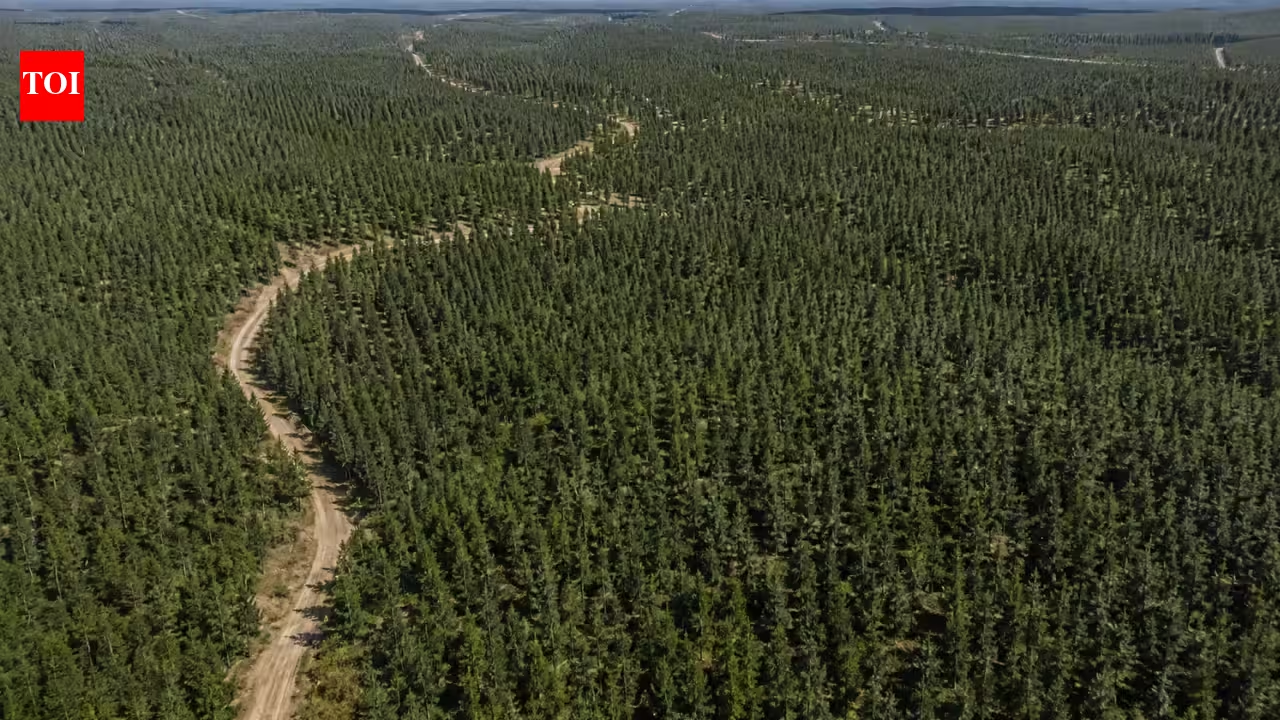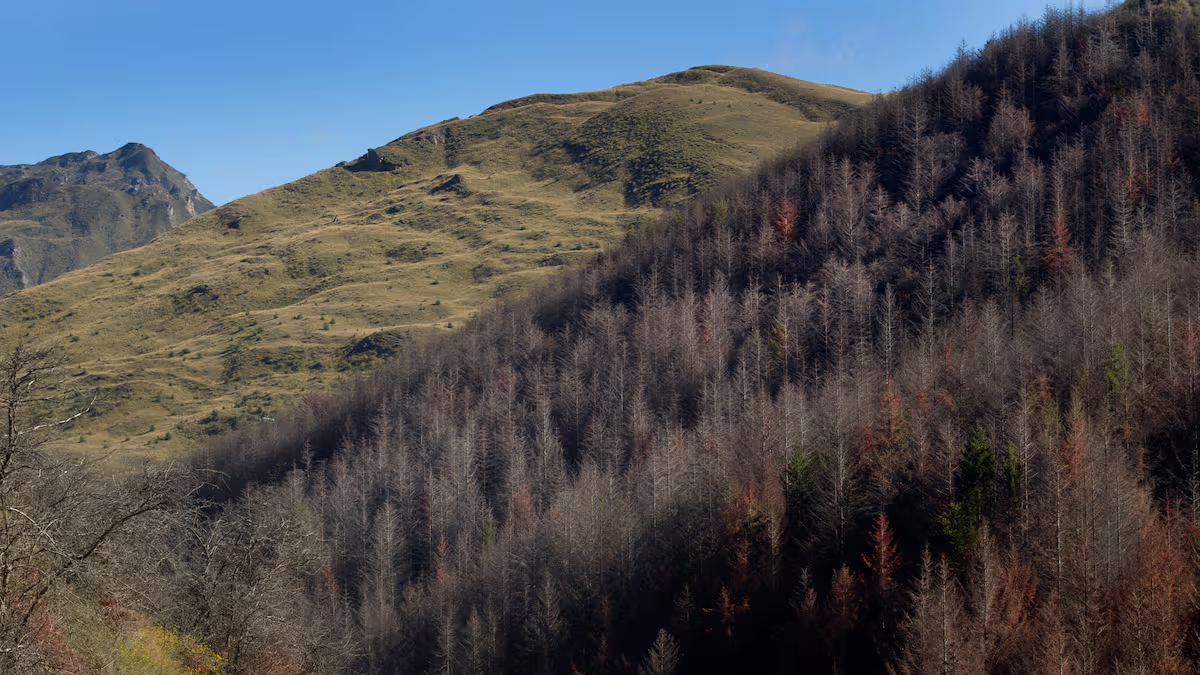
New Zealand's pristine mountains face an unexpected ecological crisis. Introduced European conifers, initially planted for timber, have become a biological invasion, outcompeting native flora. Image Credit: Wikimedia CommonsWhen we see pictures of pristine mountain landscapes, we often picture untouched wilderness. We imagine rolling fields of native tussock grass waving gently under crisp blue skies, rare alpine flowers blooming in isolated rock crevices, and unique local ecosystems thriving precisely as they have for thousands of years. For generations, traditional conservation narratives have taught us that these remote, high-altitude environments are safe from the immediate threats of human industrial expansion. The common belief is that if we simply leave these rocky peaks and sweeping alpine meadows alone, the natural boundaries of altitude and cold weather will keep them completely protected.But an unexpected look into the botanical history of our planet introduces a completely different narrative to our modern understanding of ecological vulnerability. Among New Zealand’s iconic peaks, an environmental crisis set in motion by early European settlers is still unfolding. By introducing fast-growing foreign tree species to support a timber industry and control soil erosion, early European settlers altered the natural balance of the landscape. Today, those well-intentioned timber plantations have transformed into a biological invasion of self-seeded trees, known locally as wilding conifers, which are quietly staging a massive takeover of the high country.This profound ecological shift has been mapped in a study titled Ecology and consequences of invasion by non-native wilding conifers in New Zealand. The paper notes that the spread is not simply a matter of seeds taking hold, but of a historical land-use shift, strong introduction pressure and species traits such as rapid growth and early reproduction. It also warns that these invasions can leave belowground legacies, including altered nutrient cycling and soil biota, that persist even after the trees are removed. By examining how these introduced trees interact with the local environment, the investigators discovered that the trees are fundamentally restructuring everything from the composition of the soil to the availability of fresh water.The hidden underground networks driving a high country takeoverTo fully understand why these introduced pines are such incredibly successful invaders, it helps to look at the unique biological traits that allow them to outperform native flora. In their native North American and European habitats, these conifers face natural checks and balances like specific insect pests, intense plant competition, and harsh climatic limits that keep their populations stable. When transplanted into the rich, open landscapes of the southern hemisphere, the trees encountered a highly favourable environment completely free from their traditional biological enemies. This lack of resistance allows the trees to grow rapidly, produce viable seeds at an incredibly early age, and scatter their lightweight seeds across multiple kilometres with the help of strong mountain winds.The study suggests that part of the invasion’s success lies below ground. When these trees establish themselves in a new area, they do not just take up physical space above ground. The research notes that the conifers co-invade alongside specialised, non-native mycorrhizal fungi, which are beneficial underground organisms that attach to the tree roots. These foreign fungi alter local soil chemistry and disrupt the nutrient cycling that native tussock grasses and alpine shrubs depend on.This underground change can make it difficult for native vegetation to recover, even after the trees are cut down. As the conifers multiply and form dense forest canopies, they cast deep shade over the surrounding terrain. This loss of sunlight can suppress low-growing native plants and reduce local biodiversity. Furthermore, because these massive pine canopies intercept large amounts of rainfall before it can ever touch the ground, they significantly reduce water yields in local catchments, threatening the stability of nearby river systems and hydroelectric lakes.These fast-growing trees, aided by foreign fungi, alter soil and water resources. A multi-million dollar national effort now battles this 'green tide' through strategic removal to protect the unique alpine ecosystems. Image Credit: Wikimedia CommonsA multi-million dollar race against an advancing green tideIdentifying these invasive patterns has changed how the country manages public conservation land. For many decades, land managers treated wilding pines as a minor aesthetic nuisance that could be managed with occasional, localised cutting projects. However, the modern realisation that these trees are expanding their footprint at an alarming rate each year has triggered a coordinated, multi-million dollar national biosecurity response. The long-term goal is to contain or eliminate these source populations before removal becomes more costly.According to the management frameworks detailed in the study, stopping this biological advance requires a highly strategic combination of mechanical removal and targeted chemical control. Specialised field crews are deployed into rugged, hard-to-reach terrain to fell mature trees before they can produce new cones. In areas where the tree infestation is too dense for manual chopping, authorities utilise advanced aerial application techniques to precisely deliver triclopyr-based mixtures, ensuring high mortality rates across dense blocks of older trees without causing widespread drift into surrounding native bush.The fight against wilding conifers highlights the long-term responsibilities of environmental stewardship. By showing how a nineteenth-century resource choice can contribute to a modern biosecurity crisis, the study suggests that interventions in nature can have long-term consequences. Recognising that protecting a landscape requires actively defending its original botanical integrity encourages modern conservationists to look far beyond the surface beauty of a green forest, showing that true ecological health often depends on keeping our native mountains clear of foreign invaders.
New Zealand in the 1850s planted millions of Monterey pines for timber, but the invasive trees now threaten native mountain landscapes despite costly control efforts
When we see pictures of pristine mountain landscapes, we often picture untouched wilderness. We imagine rolling fields of native tussock grass waving gently under crisp blue skies, rare alpine flowers blooming in isolated rock crevices, and unique local ecosystems thriving precisely as they have for thousands of years.
899 words~4 min read