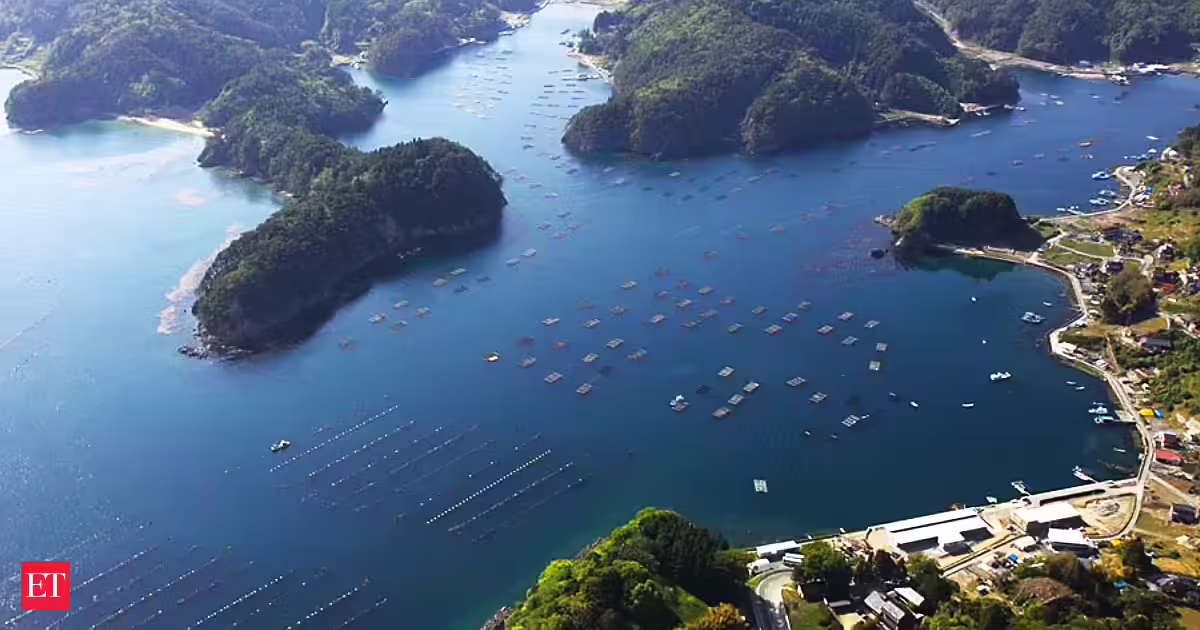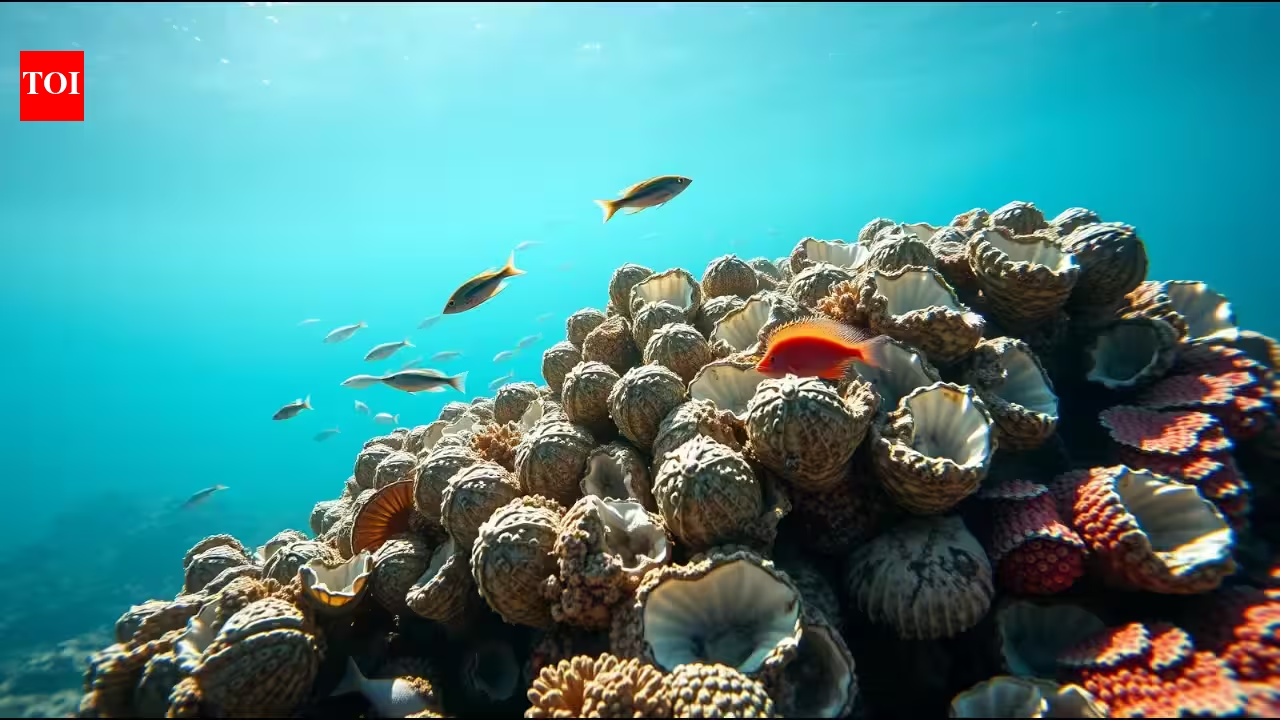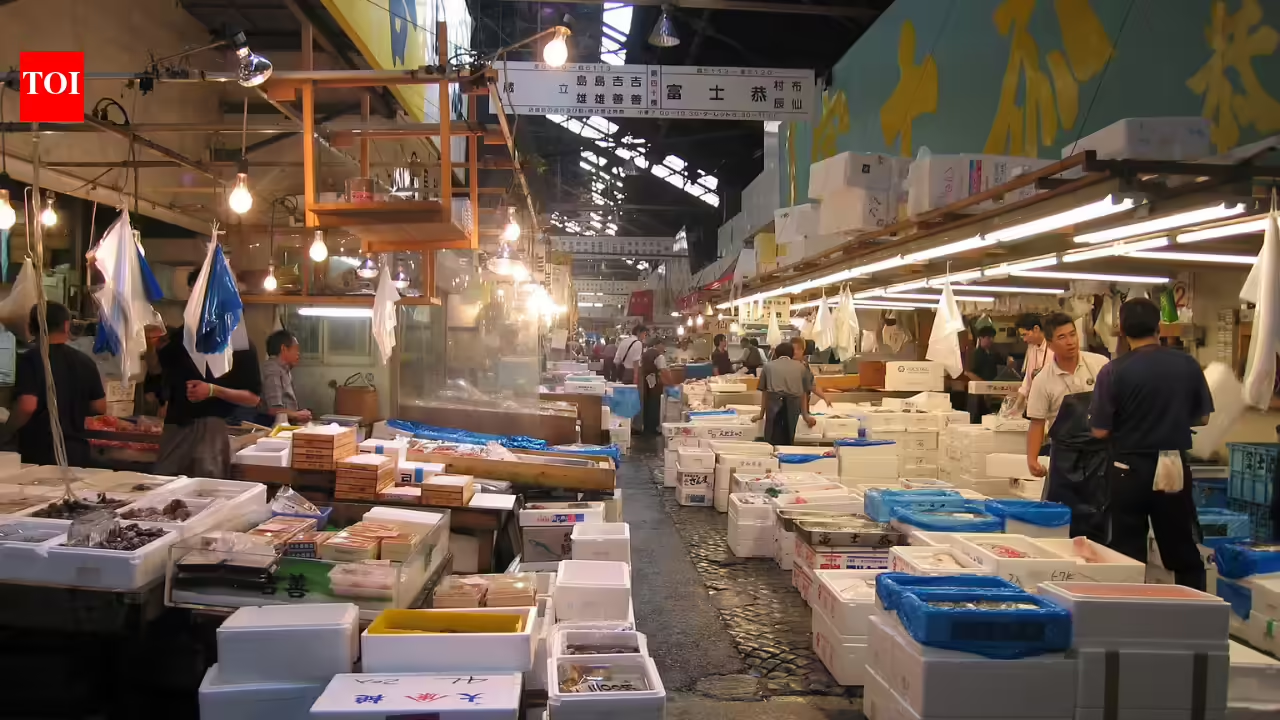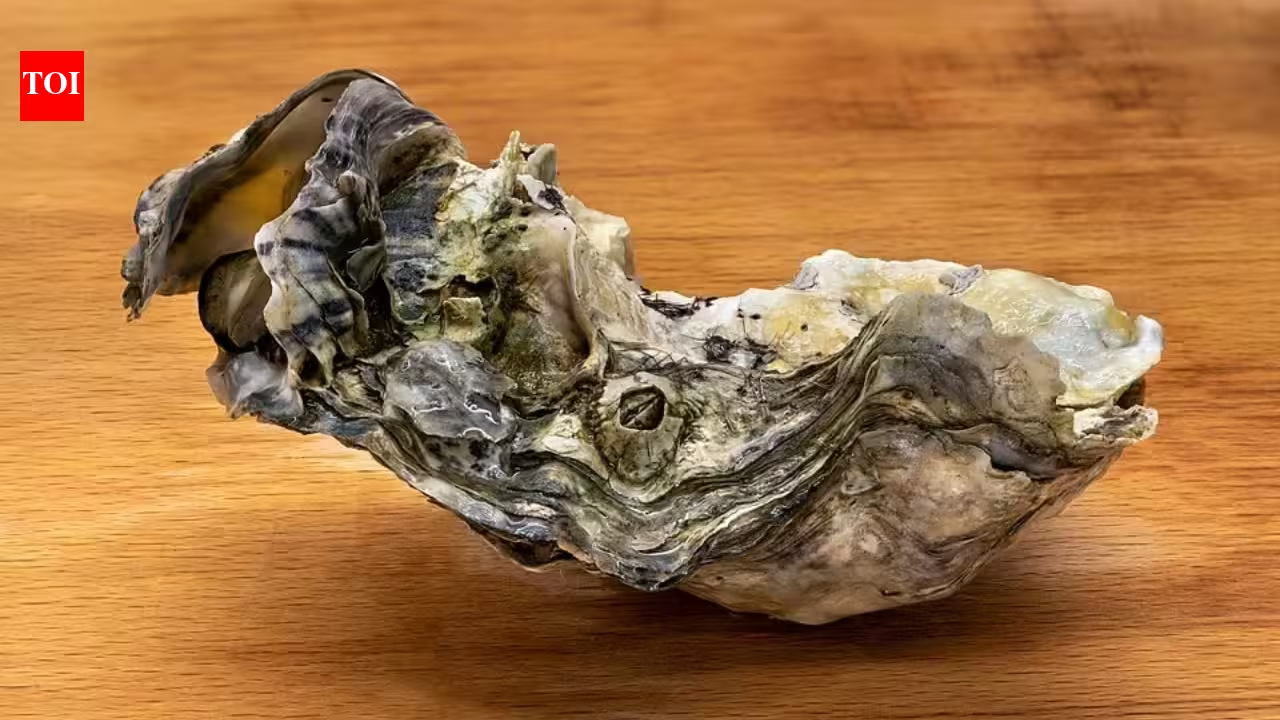
A Pacific oyster. Image credits: Wikimedia Commons.In the late 1910s and 1920s, oyster growers on the US Pacific coast turned to Japan for an unlikely solution to a worsening crisis. The region’s native Olympia oyster industry had declined dramatically after decades of overharvesting, pollution and deteriorating habitat. Growers began importing the Pacific oyster (Crassostrea gigas) from Japan, hoping that a larger, faster-growing oyster species could keep the declining industry alive. Initiated by accidental early shipments, the intentional scaled cultivation of these imports expanded rapidly throughout the 1920s, serving as the foundation of modern West Coast oyster farming. According to NOAA Fisheries, Pacific oysters, or Japanese oysters, were introduced to the United States from Japan in the 1920s and now support a Northwest shellfish industry contributing an estimated $270 million annually to the regional economy.When the native oyster industry began collapsingThe story began with the rapid decline of the Olympia oyster, the only oyster species native to Washington waters. Indigenous populations had harvested these oysters for thousands of years, although the commercial production expanded during the 19th century. The Pacific Shellfish Institute noted that the Olympia oyster industry reached its peak in the 1890s before declining sharply because of overharvesting and deteriorating water quality. By 1915, the native oyster harvests in Puget Sound were almost nonexistent.Washington Department of Fish and Wildlife records show that this ongoing commercial transition became irreversible when sulfite waste from a pulp mill, which opened at Shelton in 1927, severely affected the few remainingnative oyster populations in southern Puget Sound. It is worth noting that over the following decades, ongoing pollution continuously suppressed the reproduction, recruitment, abundance, and growth of native Olympia oysters. This environmental barrier solidified the industry's shift toward the hardier Japanese replacement, thus ensuring the transition became permanent.Notably, growers had already experimented with other species, as reported by several federal archives. Records of West Coast oyster cultivation show that American oysters from the Atlantic coast were introduced into Washington, but survival was poor. Meanwhile, Pacific oysters from Japan offered a more promising alternative because they were better adapted to the region’s conditions and grew rapidly.Japanese oysters arrived in the Pacific Northwest after several failed experiments Historical records reviewed by NOAA show that growers shipped adult oysters from Japan in the early 1900s, while a 1919 shipment of 400 cases from Japan’s Miyagi Prefecture unintentionally carried millions of viable juvenile oyster "spat"- young oysters that had settled and permanently attached themselves to the adult shells. Those surviving seed oystershelped establish Pacific oyster cultivation in Washington’s Samish Bay.Pacific oyster near a shore. Image credits: Wikimedia Commons.However, by the 1920s, importing Pacific oyster seed had become a deliberate strategy for rebuilding commercial oyster production. The imported species proved hardy and became a dominant oyster cultivated on the West Coast. The shift was dramatic: Pacific oysters are substantially larger than the native Olympia oysters and reach market size much faster. NOAA reported that as the species thrives under diverse environmental conditions, it has become a leading aquaculture species on the West Coast. Unlike crops that require feed, farmed oysters obtain their food by directly filtering naturally occurring phytoplankton from seawater, thus making shellfish farming fundamentally different from many forms of livestock or finfish aquaculture.The imported species gradually became naturalised in parts of Washington, with Pacific oysters now established in areas including Puget Sound. They are co-managed as a wild resource by Washington state and Native American tribes. However, while these wild populations maintain self-sustaining numbers for public and tribal harvesting, their spawning cycles fluctuate dramatically based on annual water temperatures. To insulate the commercial economy from this seasonal volatility, modern commercial growers rely heavily on advanced hatcheries to secure a predictable, year-round supply of specialized seed. Today, the legacy of those imported oysters underpins a major coastal economy, as NOAA estimates that the resulting Pacific Northwest shellfish industry contributes $270 million per year to the regional economy and supports more than 3,200 jobs, especially in coastal communities.
In the 1920s, America turned to Japanese oysters as its native industry declined; their descendants now support a Pacific Northwest shellfish industry worth over $270 million
In the late 1910s and 1920s, oyster growers on the US Pacific coast turned to Japan for an unlikely solution to a worsening crisis. The region’s native Olympia oyster industry had declined dramatically after decades of overharvesting, pollution and deteriorating habitat.
659 words~3 min read