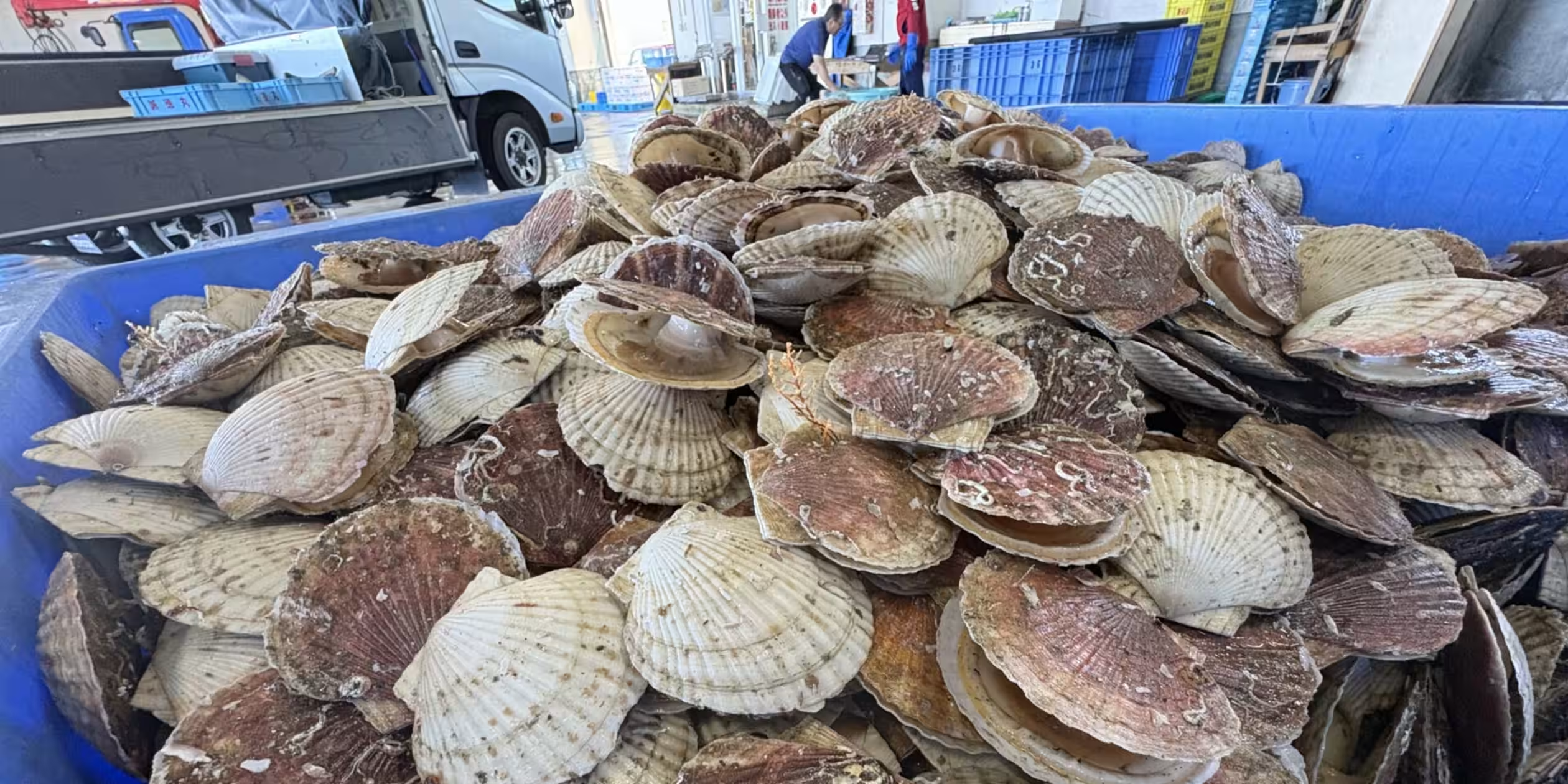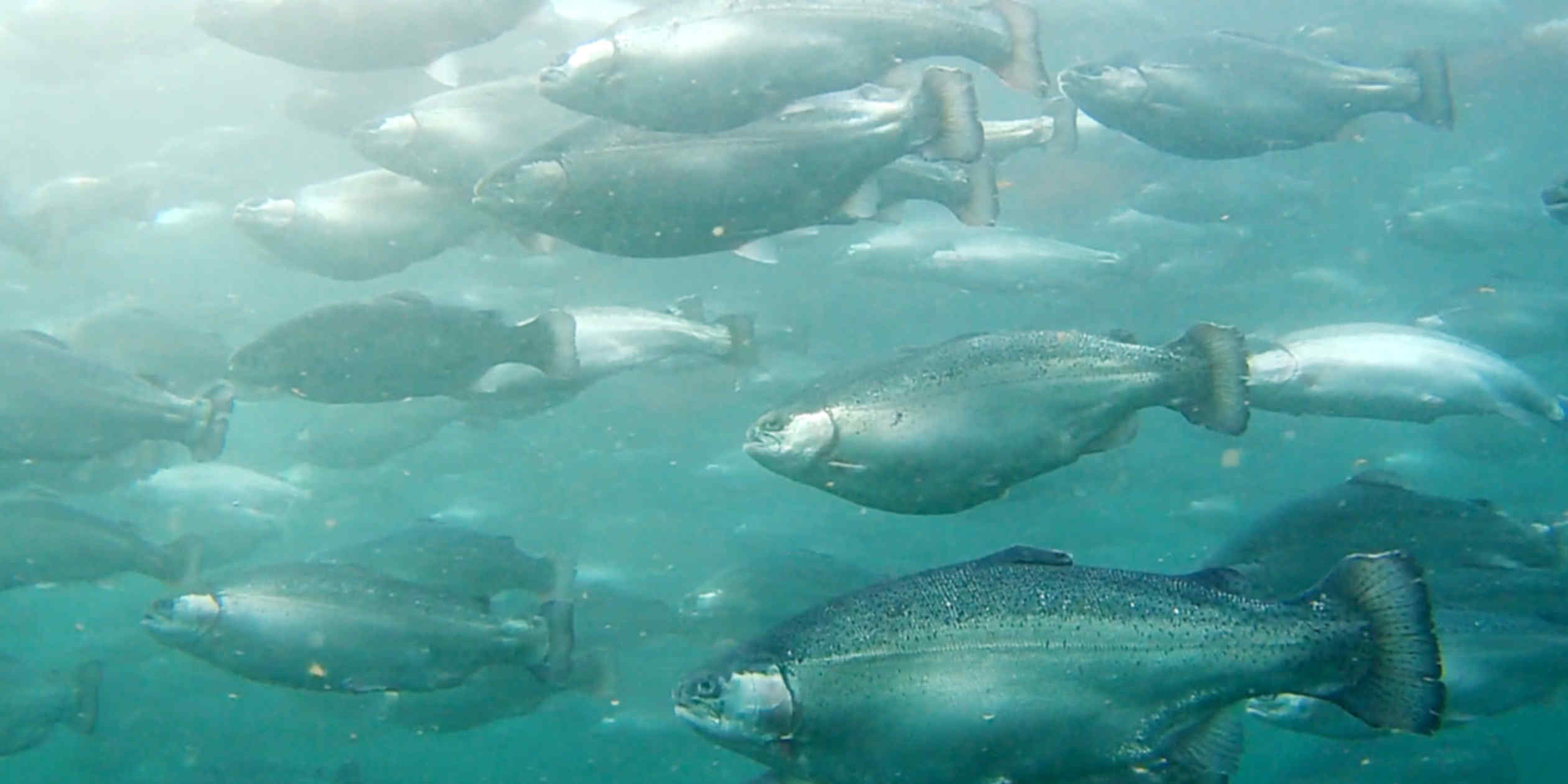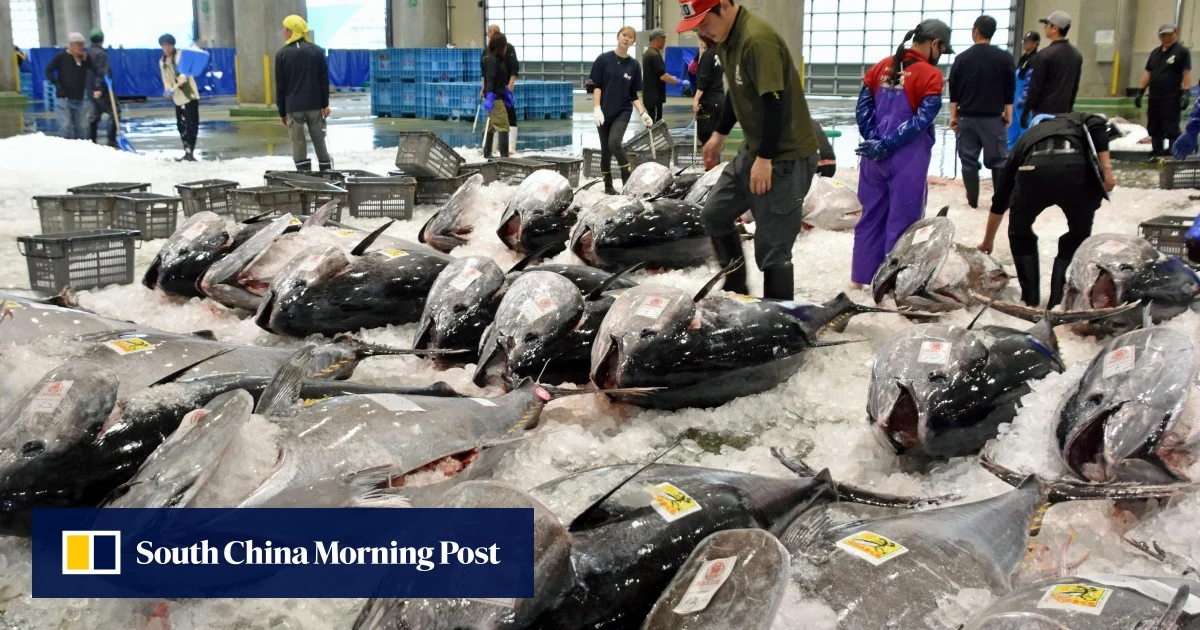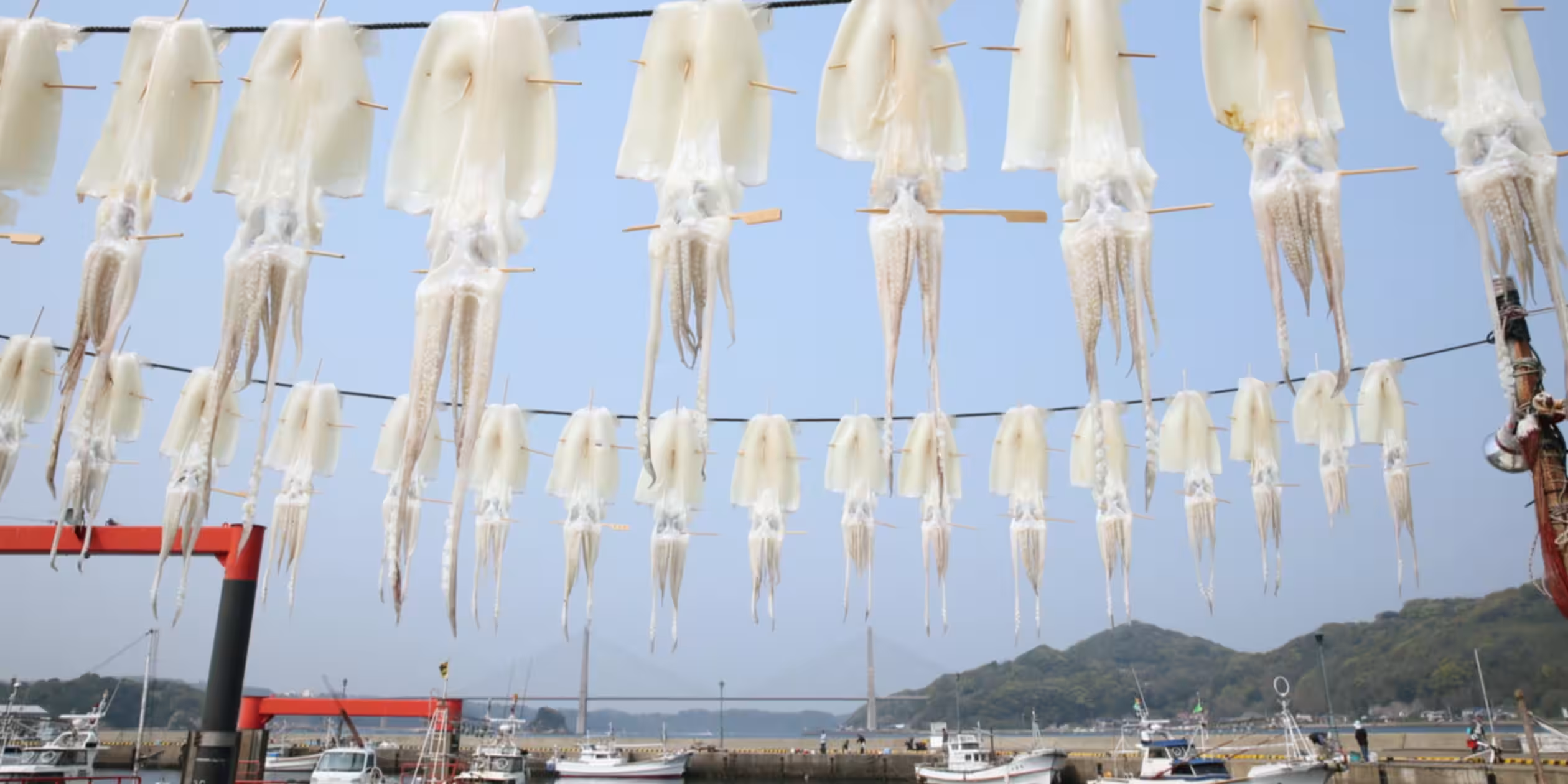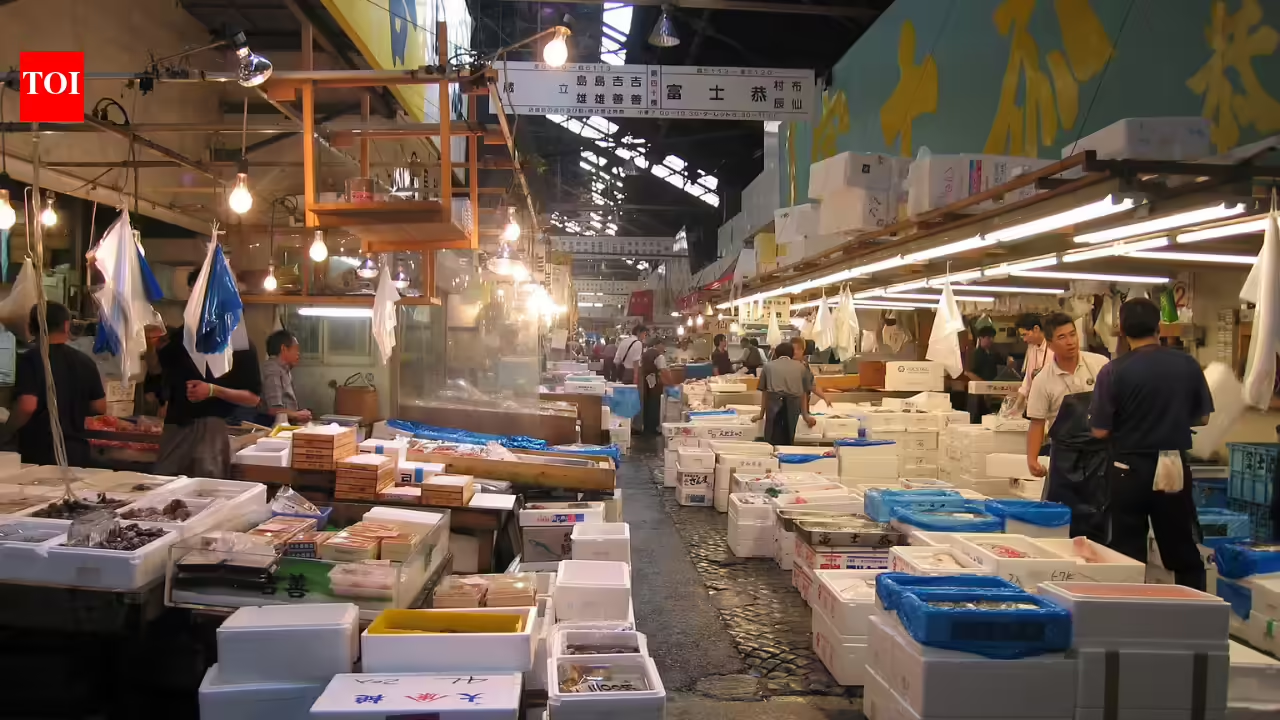
The stalls at the fish market | Wikimedia CommonsJapan sits at the meeting point of two powerful ocean currents, the cold Oyashio flowing from the north and the warm Kuroshio moving through the Pacific, creating productive fishing grounds around an island nation whose cuisine has been shaped by the sea for centuries. Yet geography has not translated into seafood self-sufficiency. Japan has become heavily dependent on international supply chains for fish and shellfish, even as domestic waters remain central to its food culture, producing a striking contradiction in one of the world’s best-known seafood markets.According to the FAO report The Japanese Market for Seafood, Japan’s fishery output had already been declining for three decades when the report was published in 2015, with an aging fishing fleet and workforce contributing to concerns that resources in Japanese waters were not being fully utilized. The report found that Japan’s seafood self-sufficiency rate stood at 58 percent in 2012, meaning domestic production was supplying only a little over half of the country’s seafood needs.The stalls at the fish market | Wikimedia CommonsA seafood giant became increasingly dependent on importsThe roots of that dependence stretch back through decades of change in the Japanese fishing industry. Domestic production declined from earlier peaks while imports became an increasingly important part of the national seafood supply, allowing Japanese consumers, restaurants and retailers to continue buying species sourced from fishing grounds far beyond the country’s own waters.According to the USDA Seafood Market Update for Japan, Japan imported approximately half of its edible seafood supply in the period covered by the 2023 report. Domestic seafood production had fallen from 7.69 million metric tons in 1976 to 3.15 million metric tons in 2019, a decline of 59 percent, while Japan imported $15 billion worth of seafood products in 2022 and ranked as the world’s third-largest seafood importer. The figures show that imports are not a marginal supplement to Japanese fisheries but a structural part of the modern food system.The paradox has continued even as Japanese people themselves have been eating less fish. The FAO report described weakening familiarity with seafood among younger consumers, while the USDA later pointed to rising prices and the perceived inconvenience of preparing fish compared with other proteins as factors behind declining consumption.Fishermen cutting tuna at Tsukiji | Wikimedia CommonsThe gap remains despite falling seafood consumptionAccording to Japan’s FY2024 White Paper on Fisheries, the self-sufficiency rate for fish and shellfish stood at an estimated 54 percent in fiscal 2023, while annual per-capita consumption had fallen to 21.4 kilograms after peaking at 40.2 kilograms in fiscal 2001. In 2024, Japan still imported 2.16 million tons of fish and fishery products, valued at more than 2 trillion yen, with China, Chile, and the United States among the major suppliers.Japan’s seafood story, then, is not simply one of a resource-poor country buying food from abroad. It is a case in which an island nation surrounded by exceptionally productive waters has seen domestic production weaken through structural and demographic pressures while a sophisticated import network has filled the gap. The seas remain rich, but the seafood reaching Japanese dinner tables increasingly reflects a global supply system rather than the waters immediately beyond the country’s coastline.
Japan is surrounded by some of the world's richest seas, yet imports much of the seafood on its dinner tables
Japan sits at the meeting point of two powerful ocean currents, the cold Oyashio flowing from the north and the warm Kuroshio moving through the Pacific, creating productive fishing grounds around an island nation whose cuisine has been shaped by the sea for centuries. Yet geography has not translated into seafood self-sufficiency.
534 words~2 min read