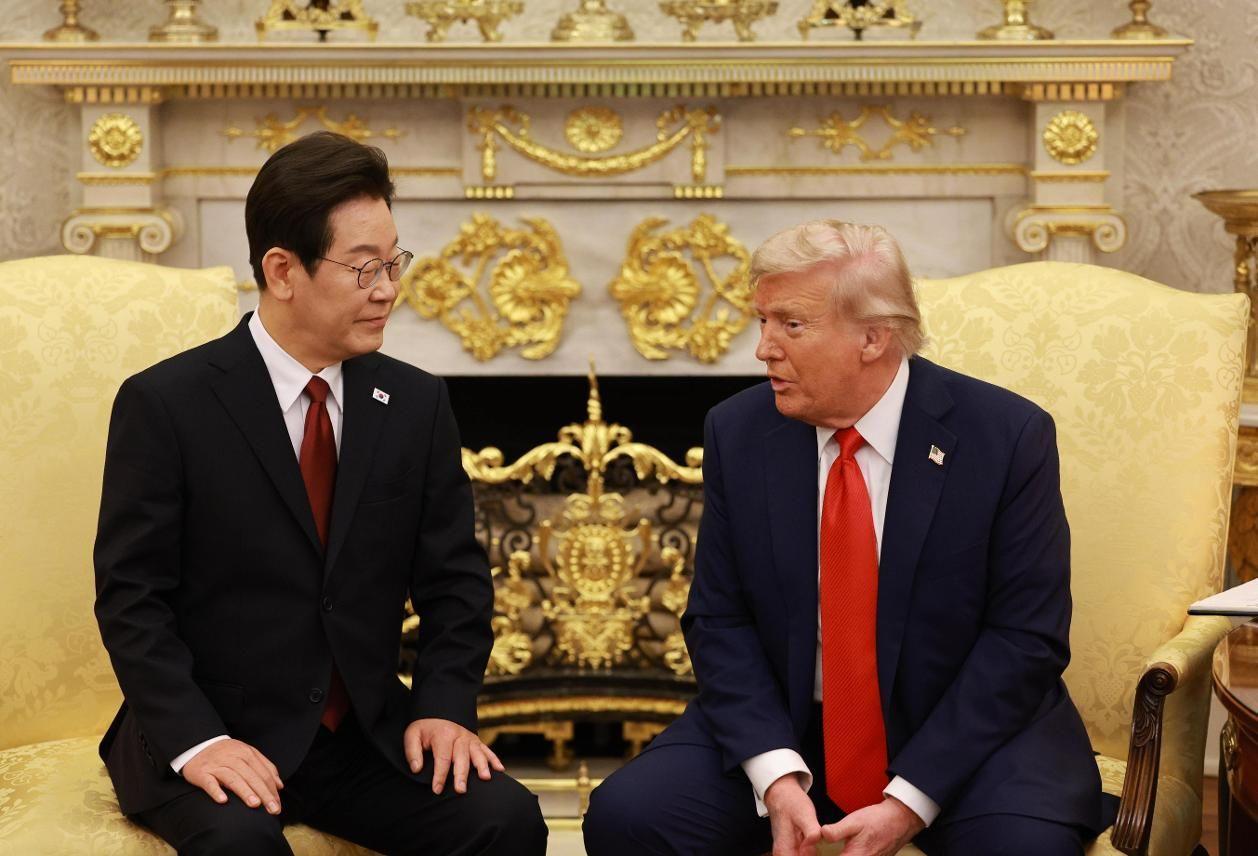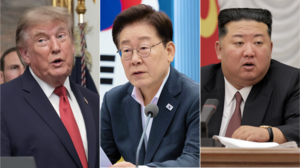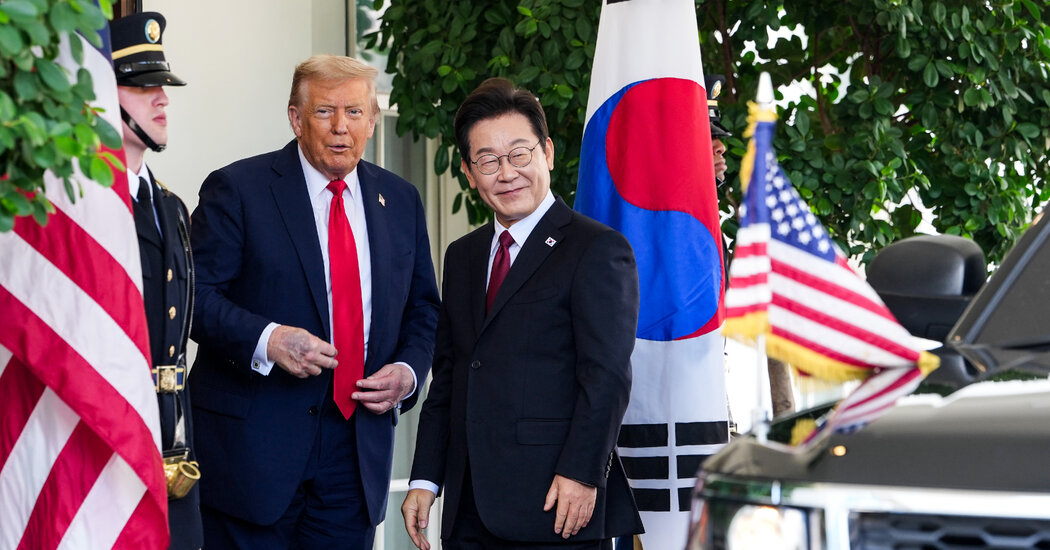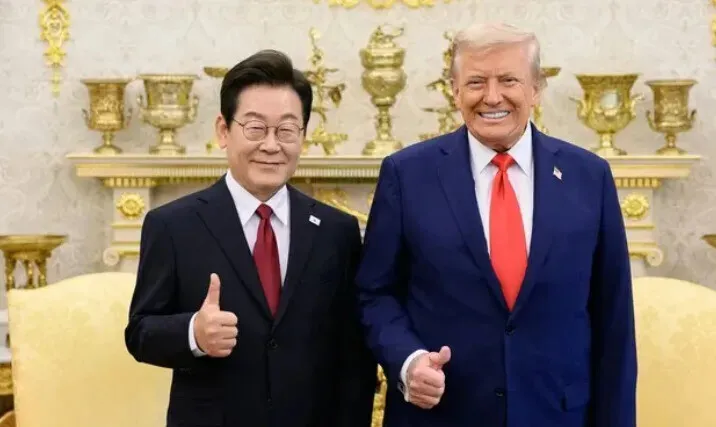
South Korean President Lee Jae Myung gives the thumbs up with US President Donald Trump during their first meeting at the White House Oval Office on Aug. 25, 2025. (via @WhiteHouse on X)
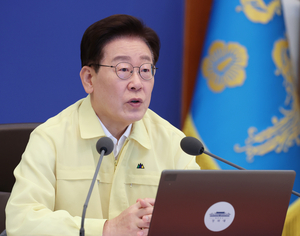
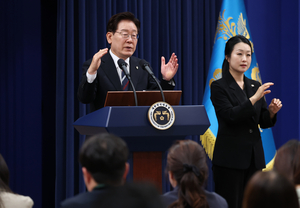
President Lee Jae Myung has stressed his role as “a pacemaker” amid speculation on a potential North Korea-US summit in November.Calling his American counterpart Donald Trump a “peacemaker,” Lee appears to view the proposed talks as an opportunity to lay the groundwork for lasting peace on the Korean Peninsula.On Wednesday evening, Lee on X wrote that he empathized “with President Trump’s dedication and efforts to create conditions for peace talks on the Korean Peninsula, even if it means that Korea-US military exercises and field training must be scaled back.”“President Trump’s message strikes me as a big decision reflecting the profound thought he put into overcoming hostility and conflict to establish peace on the Korean Peninsula,” he added.In a message posted to his social media platform Truth Social on Sunday, Trump ordered that the exercises be scaled back, saying, “Based on my very good relationship with Kim Jong Un, of North Korea, I am not happy with the fact that the United States has, long ago, agreed to participate in Joint Military Exercises with South Korea.”Lee pledged his best efforts to play pacemaker to Trump’s peacemaker.“I hope that President Trump’s decision will not only build confidence and resume dialogue between the US and North Korea but also pave the way for a stable peace regime on the peninsula,” he said. “As I have already stated on multiple occasions, I vow to do my best to fulfil my role as a pacemaker, contributing to President Trump’s efforts as a peacemaker.”During their summit last August, Lee proposed that South Korea serve as a “pacemaker” for US-North Korea dialogue, supporting efforts to advance denuclearization and establish peace on the Korean Peninsula.The South Korean president’s latest remarks appear to reflect a desire to use a summit between the leaders of North Korea and the US as an opportunity to bring a thaw to the current freeze in inter-Korean relations. In his address for National Liberation Day on Saturday, Lee vowed to “embark on a journey to end the war and replace the unstable armistice regime on the Korean Peninsula with a peace regime,” while proposing talks between stakeholders in ending the war. The remark appeared to be a reference to the roles of the US and China amid the deadlock in talks between the two Koreas. South Korean government agencies have swiftly reaffirmed their willingness to support efforts to resume US-North Korea dialogue in line with Lee’s vision.“The priority must be ending the war on the Korean Peninsula and creating a system of peace in which there is no need for us to fight one another,” the Ministry of Unification said, proposing that the North sit down with the US for talks. Meeting with reporters on Thursday, Unification Minister Chung Dong-young said, “Now is the time for the US and North Korea, the time for President Trump and Chairman Kim Jong-un.”“The first hurdle to clear on the way to stopping North Korea’s nuclear program is the meeting of North Korea and the US,” he went on. “We need to do our best to support this.” The Ministry of Foreign Affairs similarly vowed to support talks between Washington and Pyongyang.“As pacemaker and a stakeholder in peace on the Korean Peninsula, the administration will actively pursue efforts to restart North Korea-US dialogue and Korean peace under close cooperation with the US,” said Park Doo-soon, a spokesperson for the ministry. The president’s remarks also appear to come in response to outrage over what some viewed as Seoul being snubbed by the US in its quest to talk with North Korea. While Trump has warmed to Pyongyang with enthusiastic messages about a possible summit, he has remained cool toward Seoul, accusing South Korea of being uncooperative over investment projects in the US and security cooperation in the Strait of Hormuz. The drastic reduction in the scale of joint military drills with the US has led some conservatives in Korea to express criticism about the alliance being undermined. By Seo Young-ji, staff reporter; Jang Ye-ji, staff reporterPlease direct questions or comments to [english@hani.co.kr]