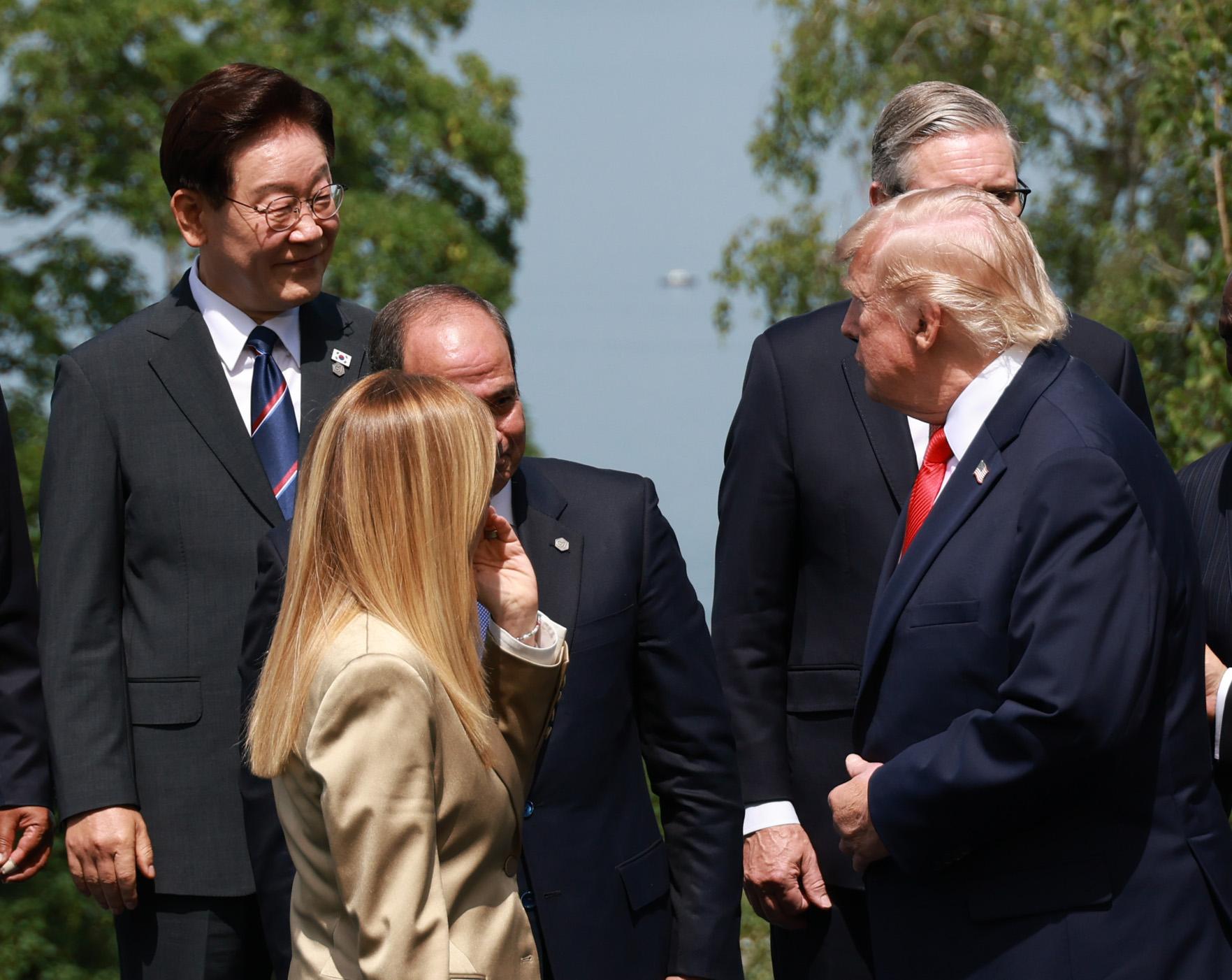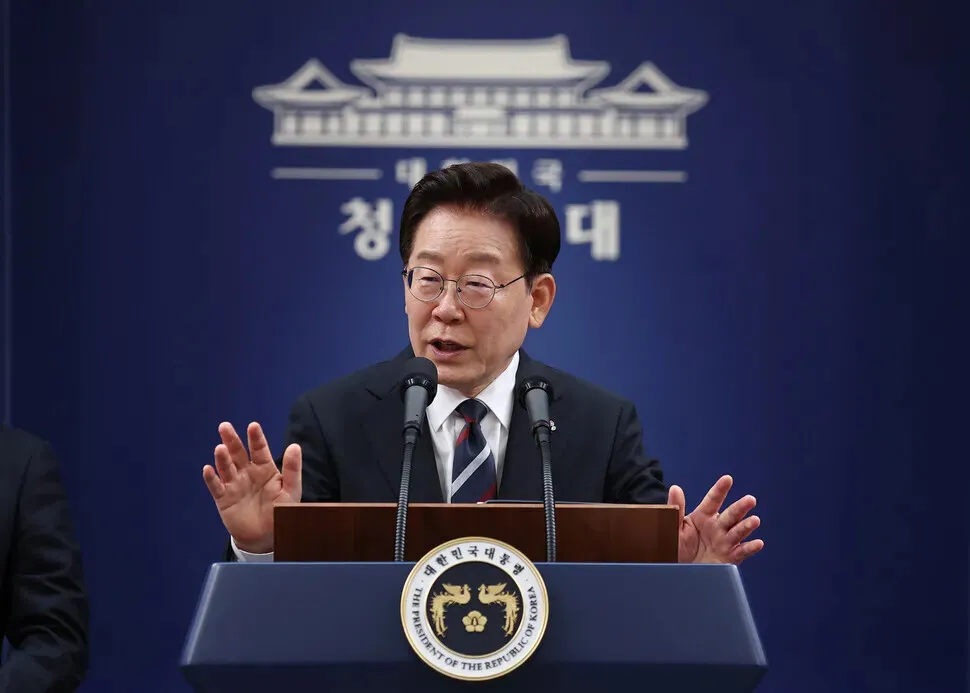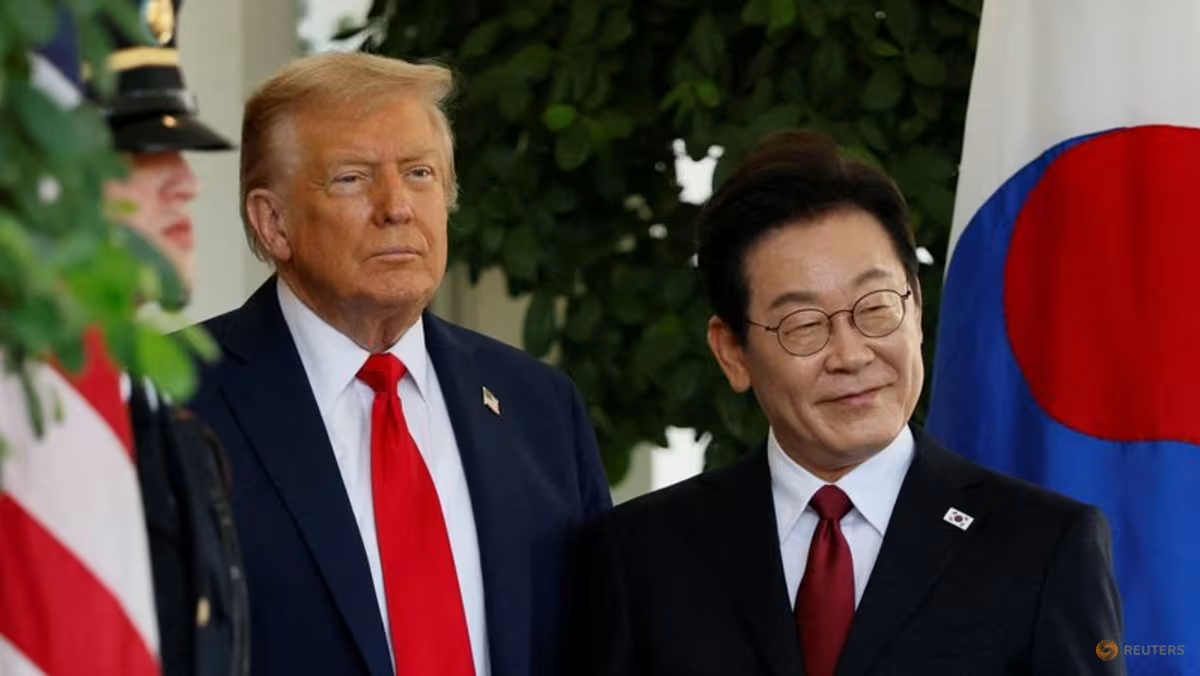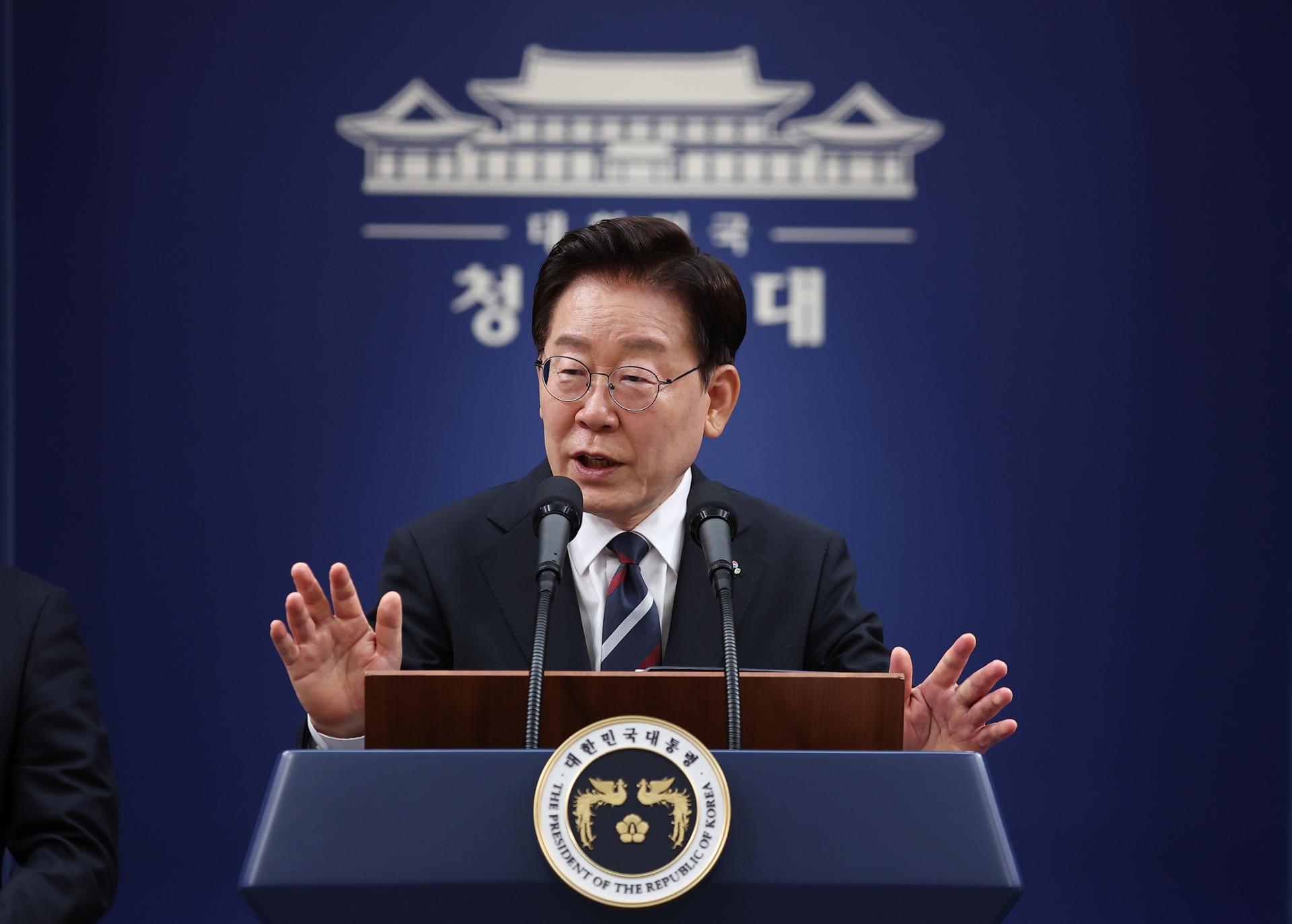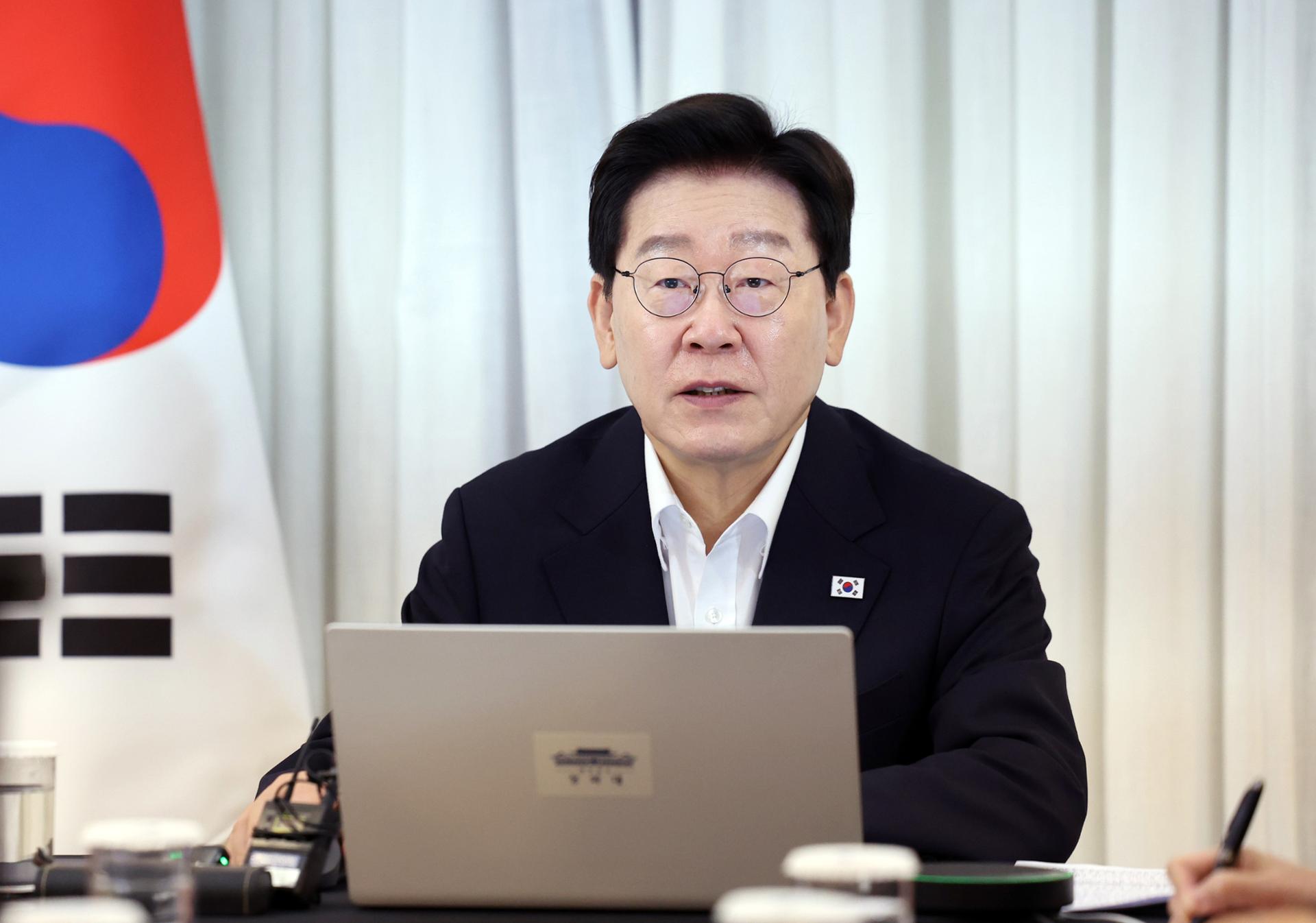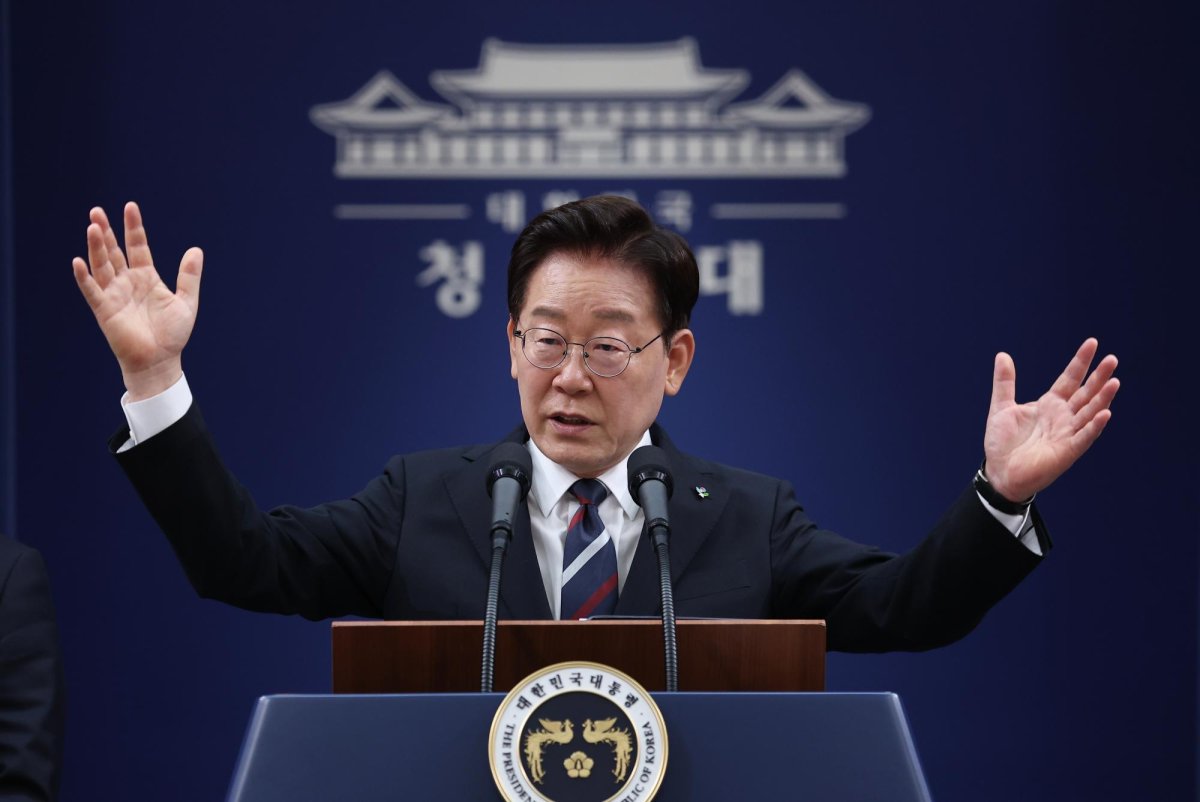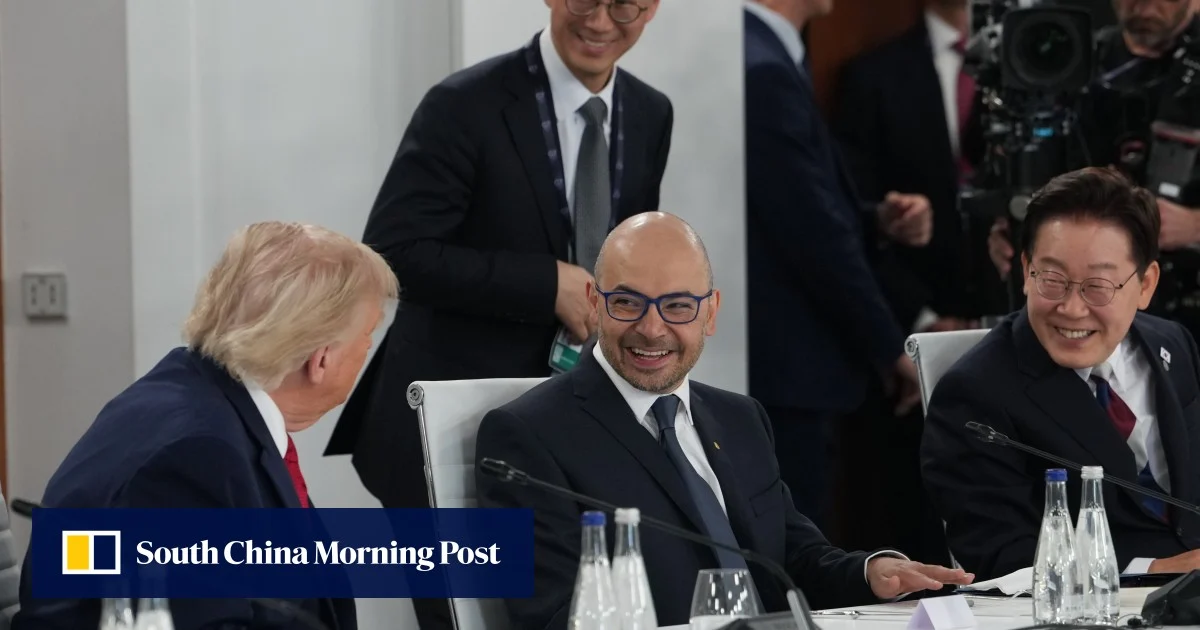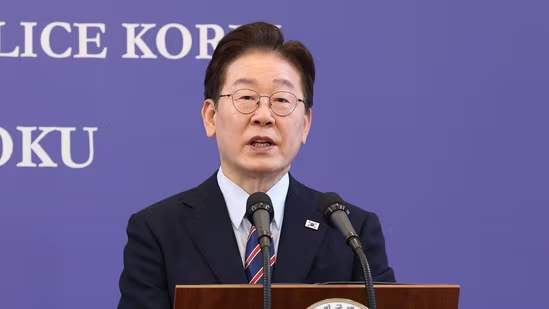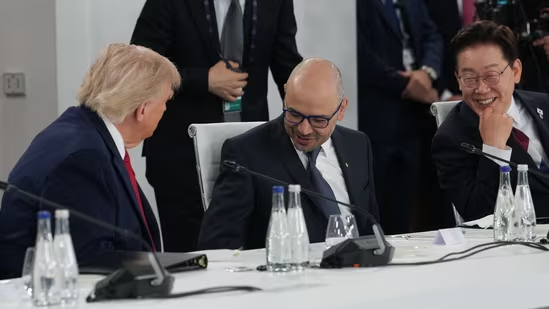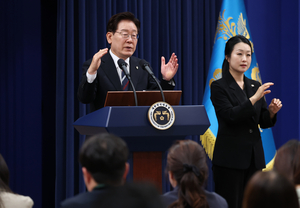
President says phased approach needed to freeze North Korea’s nuclear, missile programs President Lee Jae Myung on Friday speaks during a press brefing at Cheong Wa Dae in Seoul. (Yonhap) President Lee Jae Myung said Friday he told US President Donald Trump that Washington needs to play a central role in reviving diplomacy with North Korea.Stressing the need to first freeze Pyongyang’s nuclear and missile development, he explained that leaving the current deadlock unresolved would only allow the North to advance its weapons programs, making future talks more difficult.Lee made the remarks during a press briefing at Cheong Wa Dae in Seoul, a day after returning from his 10-day trip to Europe. His travels included visits to Belgium, Italy and the Vatican, as well as his attendance at the Group of Seven summit in Evian-les-Bains, France.The president said North Korea’s nuclear issue was one of the most extensively covered topics during a conversation with Trump that occurred on the sidelines of the G7 summit. The two leaders sat next to each other at a formal dinner hosted by French President Emmanuel Macron.Lee said the conversation, which lasted around 90 minutes, was more candid and substantive than a formal summit setting, allowing the two leaders to discuss the Korean Peninsula and South Korea-US relations in depth.Lee said he had expressed support for Trump’s efforts to stabilize the Middle East and resolve the Iranian nuclear issue and had asked the US president to "help resolve the North Korean issue" and build lasting peace on the Korean Peninsula.But Lee said the point was not to apply the same method used in the Middle East to North Korea. Rather, he said, the message was that Trump, having shown his ability to address major global security issues, should also help tackle the North Korean problem.Lee said he told Trump that the North Korean nuclear issue could not be resolved all at once, as Pyongyang continues to produce nuclear materials and appears to be in the final stages of developing intercontinental ballistic missile technology.He said simply repeating long-standing positions centered on North Korea’s denuclearization would leave little room for talks, and proposed dividing the goal into stages.As a first step, Lee said, the focus should be on preventing North Korea from producing additional nuclear materials, stopping it from transferring nuclear materials overseas and halting further development of ICBM technology.Even achieving a freeze at that level would be meaningful for the international community, he added.“First, we should stop it, and then create conditions where both sides can judge that there is no further threat to the regime, before moving toward denuclearization,” Lee said. “I explained at length that denuclearization should be set as a long-term goal through such a phased approach.”Lee said Trump also acknowledged the need to turn attention back to the North Korean issue and expressed a willingness to engage, while voicing regret that more effective steps had not been taken earlier.Lee said Trump responded by saying that such an approach “could be one way” and that he would “think about it carefully.”Alliance issuesLee said the two leaders also discussed broader South Korea-US cooperation, including shipbuilding and trilateral cooperation between Seoul, Washington and Tokyo.Lee said Trump asked whether South Korea could quickly build 10 US naval vessels, to which he replied that Seoul would do its best.Lee also addressed concerns over defense costs and the future role of South Korea in the alliance, saying he made clear that Seoul would act as a sovereign state while contributing to shared security responsibilities.He said there was no discussion on defense cost-sharing negotiations, a subject that has gained renewed attention under Trump’s second administration.Lee also said he corrected Trump’s repeated reference to the number of US troops stationed in South Korea.Trump has repeatedly cited 45,000 US troops in South Korea, a figure that has drawn confusion as the current number of US Forces Korea personnel is generally put at around 28,500.“When President Trump again said 45,000, I could not simply say he was wrong,” Lee said. “So I told him, ‘Yes, but currently it is 28,500.’ Then he said, ‘That is the number now, right? I understand.’”The comments came amid renewed debate over the future of the alliance, as Trump’s calls for allies to shoulder a greater share of defense responsibilities have raised questions over how his administration may approach US troop deployments overseas.Lee stressed, however, that his discussion with Trump was focused more on strengthening cooperation than on disputes over burden-sharing.
Lee highlights US role in breaking North Korea deadlock
President Lee Jae Myung said Friday he told US President Donald Trump that Washington needs to play a central role in reviving diplomacy with North Korea. Stres
745 words~3 min read