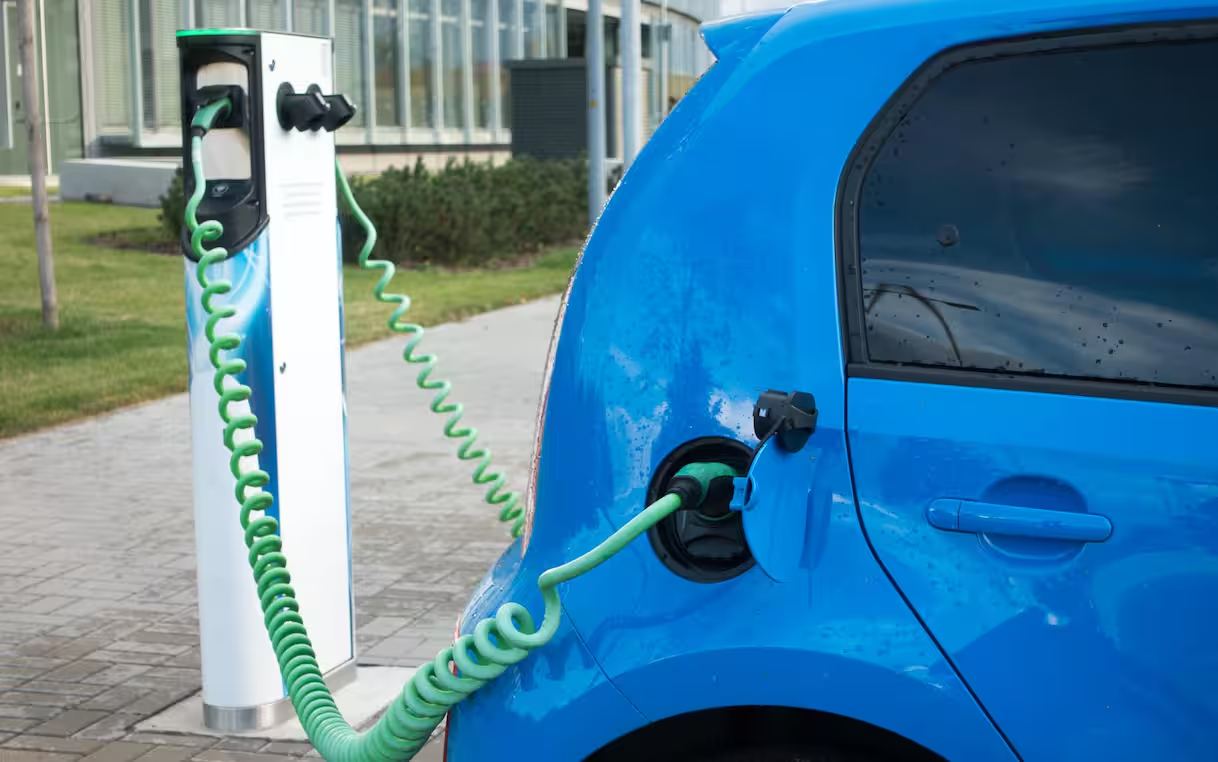
The European Commission has opened the door for Member States to use national escape-clause flexibility to finance energy security and fossil-fuel transition measures in 2026–2028. Eligible investments include renewables, batteries and energy storage, heat pumps, EV charging infrastructure and building renovations, subject to strict budgetary ceilings and eligibility criteria.
The European Commission has adopted a communication providing Member States with guidance on the possibility of extending the scope of the national escape clause (NEC) for defence to also include energy security measures during the 2026–2028 period.
In short, the EU executive is opening the door for Member States to use part of the budgetary flexibility provided under the national escape clause to finance new measures aimed at strengthening energy security and supporting the transition away from fossil fuels. However, the new guidance, published in Communication C/2026/4514, links access to this flexibility to criteria of additionality, effectiveness and the sustainability of public finances.
“The notice sets out the procedure for requesting budgetary flexibility, its treatment under the EU fiscal surveillance framework and the monitoring of its use,” the European Commission stated, recalling that the possibility of extending the NEC to cover energy security measures was announced on 3 June 2026 as part of the European Semester Spring Package and follows the “ongoing conflict in the Middle East”.