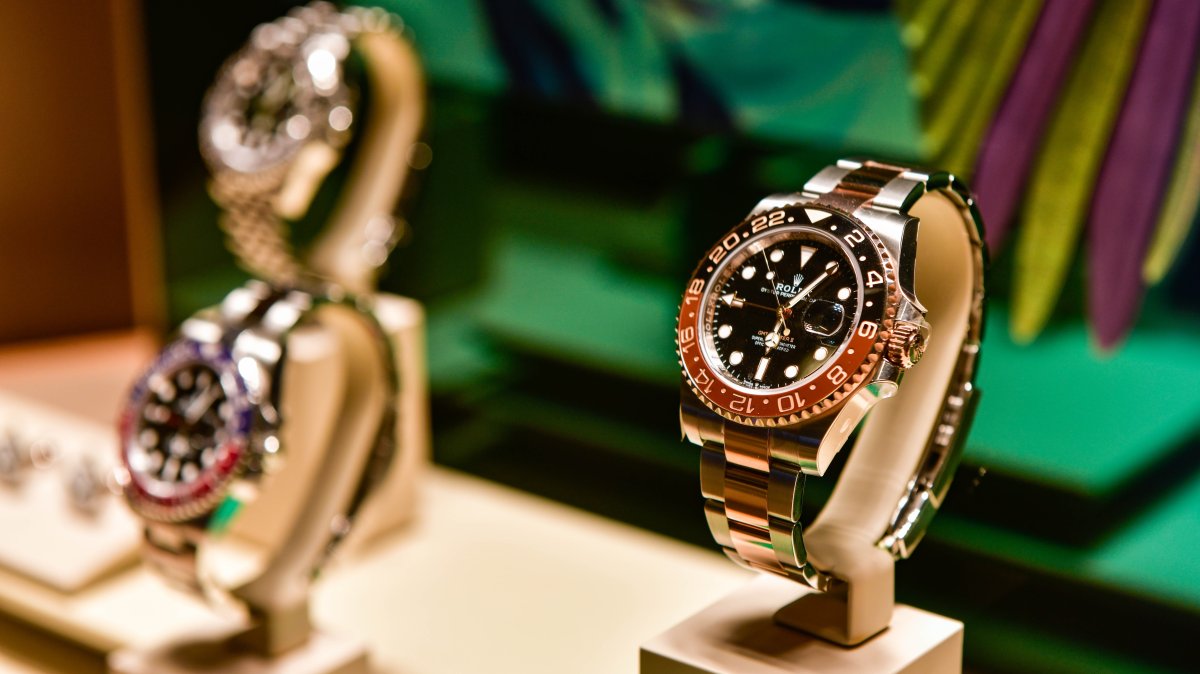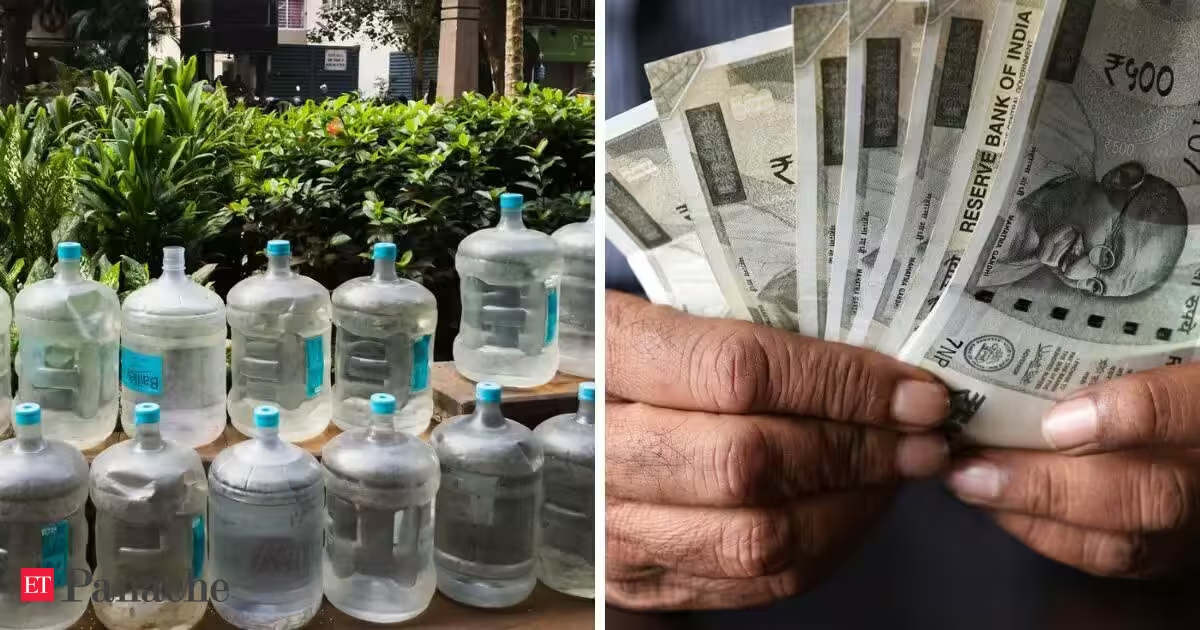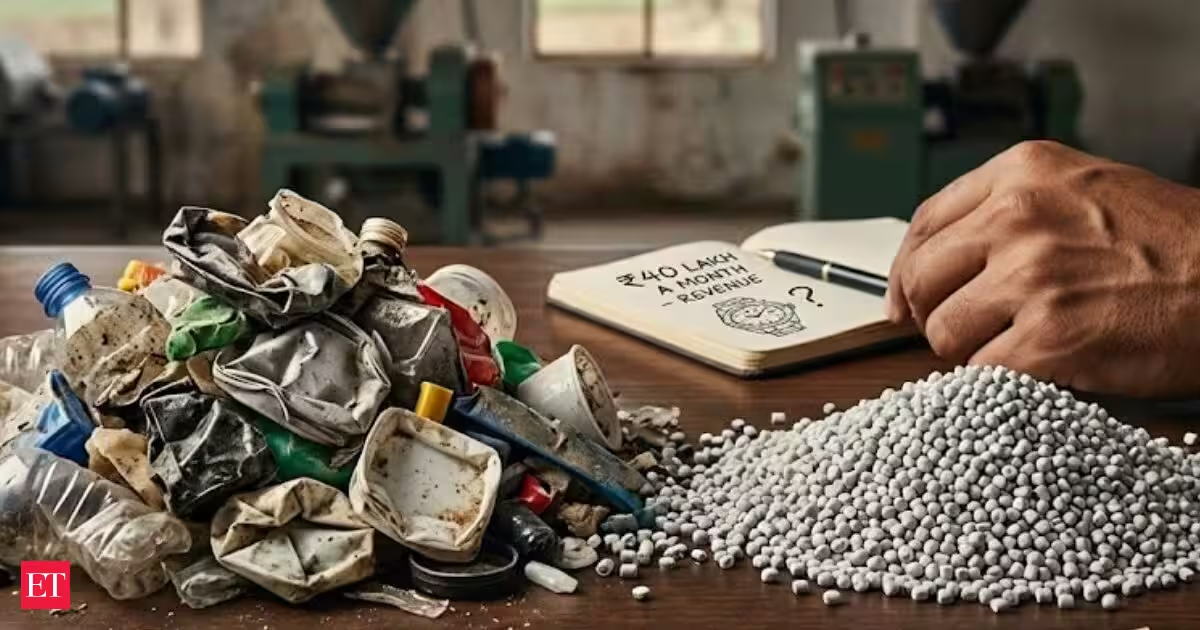
Thirteen rupees a kilo in, ninety rupees a kilo out. Somewhere in that gap sits a business quiet enough that even a close relative didn't know it existed, until an expensive Rolex watch gave it away. The story surfaced on X through a post by a user named Pratham. He'd run into his cousin at a family wedding, the kind of relative you nod at more than you actually talk to. This time, though, something caught his eye: a limited-edition Rolex, sitting comfortably on a wrist attached to someone he didn't think was doing anything unusual for a living.So he asked. What do you do?Also Read: He built China’s biggest property empire and became Asia’s richest man. Now Evergrande’s Hui Ka Yan is in prison for life, here’s why"Plastic business," came the reply. Pratham assumed buying and selling plastic in bulk, the kind of trading operation that exists in a industrial estates across the country. Nothing that screams Rolex money. Which is exactly why he pushed a little further and asked how the numbers actually worked out.Where the ₹13 Becomes ₹90Here's the part that made Pratham stop and recalculate everything he thought he knew about his cousin. The business isn't trading plastic at all. It's rescuing it.The factory buys waste plastic, bottles, cans, assorted scrap, for around ₹13 a kilo. This is the stuff destined for a landfill, a drain, or a roadside pile, priced accordingly low because, it's garbage.— CapitalLens_ (@CapitalLens_) From there, it goes through sorting and cleaning since different plastics melt and behave differently, and mixing them ruins the batch. Once separated and cleaned, the scrap is processed into recycled plastic granules: small pellets that manufacturers can melt down and remould into fresh products.Those granules don't sell like garbage. They sell for ₹80 to ₹90 a kilo, six to seven times the buying price, and they end up everywhere once they leave the factory: car and auto components, packaging, clothing fibres, pipes, household items, industrial parts. The bottle someone tossed into a bin last month could plausibly be part of a car dashboard by the time this article is read.Doing the MathRun the volume through the pricing, and the headline figure practically writes itself. At around 50 tonnes of granules produced every month, even at the lower end of ₹80 a kilo, that comes to roughly ₹40 lakh in monthly sales.One caveat worth sitting with: that's revenue, not profit. Pratham clarified as much himself once people started running their own calculations in the replies. Overheads, labour, machinery upkeep, transport, and processing costs would all take a bite before anything reaches an actual bank account. Even so, once you strip away the marketing gloss of "plastic business," it's not difficult to see where a limited-edition Rolex might come from.Also Read: ‘I travel 6 hours every day’: Man working in Mumbai says commute leaves time only to sleep, wakes up at 5amPratham's own verdict, once it all clicked: his cousin wasn't in the plastic business. He was in the waste-to-wealth business, and had simply never bothered to correct the assumption.The Internet Notices a Familiar PatternOne person wrote that most people hear "plastic business" and picture factories churning out new bottles, not someone quietly buying up everyone else's trash and turning it into the raw material entire industries still depend on. Another called it exactly what waste-to-wealth is supposed to look like: garbage turning into crores while nobody's paying attention.It's a familiar shape of story, and maybe that's why it travelled. A modest job title hiding a business nobody bothered to interrogate. A number that only makes sense once someone actually asks the follow-up question.
₹40 lakh a month from waste plastic bought at ₹13 per kg and sold for ₹90: How a Rolex at a wedding revealed a surprising business
A viral X post by Pratham has revealed the surprising economics behind his cousins plastic recycling business after a limited-edition Rolex sparked questions about his work. The business reportedly buys waste plastic for around ₹13 per kg, processes it into recycled plastic granules and sells them for ₹80-90 per kg. At about 50 tonnes of monthly production, the business generates roughly ₹40 lakh in monthly sales.
605 words~3 min read